.png)
 2 hours ago
8
2 hours ago
8
Article content
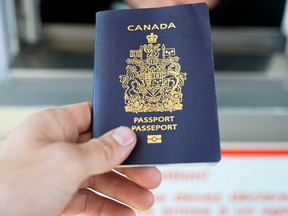
Canada’s immigration services have received an unusually high number of applications for citizenship in recent months, driven by those from the United States, departmental data shows. This comes as the government has implemented and clarified new rules under Bill C-3 that broaden the ability of parents to pass Canadian citizenship on to their children.

THIS CONTENT IS RESERVED FOR SUBSCRIBERS
Enjoy the latest local, national and international news.
- Exclusive articles by Conrad Black, Barbara Kay and others. Plus, special edition NP Platformed and First Reading newsletters and virtual events.
- Unlimited online access to National Post.
- National Post ePaper, an electronic replica of the print edition to view on any device, share and comment on.
- Daily puzzles including the New York Times Crossword.
- Support local journalism.
SUBSCRIBE FOR MORE ARTICLES
Enjoy the latest local, national and international news.
- Exclusive articles by Conrad Black, Barbara Kay and others. Plus, special edition NP Platformed and First Reading newsletters and virtual events.
- Unlimited online access to National Post.
- National Post ePaper, an electronic replica of the print edition to view on any device, share and comment on.
- Daily puzzles including the New York Times Crossword.
- Support local journalism.
REGISTER / SIGN IN TO UNLOCK MORE ARTICLES
Create an account or sign in to continue with your reading experience.
- Access articles from across Canada with one account.
- Share your thoughts and join the conversation in the comments.
- Enjoy additional articles per month.
- Get email updates from your favourite authors.
THIS ARTICLE IS FREE TO READ REGISTER TO UNLOCK.
Create an account or sign in to continue with your reading experience.
- Access articles from across Canada with one account
- Share your thoughts and join the conversation in the comments
- Enjoy additional articles per month
- Get email updates from your favourite authors
Sign In or Create an Account
or
Article content
Article content
Data shared with National Post by Immigration, Refugees and Citizenship Canada (IRCC) show that in January, the government received 8,900 proof of citizenship applications. This compares with 5,940 applications the previous January, an increase of almost 50 per cent.
Article content
Article content
By signing up you consent to receive the above newsletter from Postmedia Network Inc.
Article content
Of those applications, 2,470 (almost 28 per cent) were from the U.S. The next largest group was the U.K. with 290 applications, and then Mexico with 235. No other country had more than 140 applications. Most had 30 or fewer.
Article content
IRCC said that, between Dec. 15 of last year (when new rules first took effect) and Jan. 31, 2026, it received a total of 12,430 proof of citizenship applications.
Article content
“It is important to note that proof of citizenship applications are not limited to applications from individuals who applied on the basis of citizenship by descent,” a spokesperson told National Post. “They also include other categories of proof of citizenship applications (e.g., individuals born in Canada but applying for a certificate, individuals applying for a replacement certificate).”
Article content
The department noted that of the 6,280 applications for proof of citizenship that were processed in that time period, almost a quarter (1,480) were confirmed as citizens by descent under the new Act.
Article content
Article content
The first-generation limit to Canadian citizenship by descent was introduced in 2009. It meant that a child born or adopted outside Canada was not automatically a Canadian citizen by descent if their Canadian parent was also born or adopted outside Canada.
Article content
Article content
However, on Dec. 19, 2023, the Ontario Superior Court of Justice declared that key parts of the Citizenship Act relating to the first-generation limit to citizenship by descent were unconstitutional. The federal government did not appeal the ruling, as it agreed the law had unacceptable outcomes for children of Canadians who were born outside the country.
Article content
Under the new rules, people born after Dec. 15, 2025, outside Canada in the second generation (or later) may be Canadian if their parent was also born or adopted outside Canada to a Canadian citizen (i.e., the applicant’s grandparent was Canadian) and that same parent spent at least 1,095 days (three years) in Canada before the birth.
Article content
Similarly, adopted people can apply for Canadian citizenship if they were born and adopted outside Canada in the second generation or later and their Canadian parent spent at least 1,095 days in Canada before the adoption.

























 Bengali (BD) ·
  English (US) ·