.png)
 2 hours ago
7
2 hours ago
7
NEWYou can now listen to Fox News articles!
President Donald Trump could win the legal fight over his planned White House ballroom, say two legal experts who believe the U.S. the Supreme Court could end the case without weighing in on the underlying constitutional issue.
In a lengthy social media post Friday, Trump vowed to take the fight over his White House ballroom to the Supreme Court after the D.C. Circuit upheld a lower court order blocking above-ground construction. In a 2-1 decision, the appeals court ruled that the project cannot move forward without Congressional approval.
Trump pointed to the dissent written by Judge Neomi Rao, appointed by Trump in his first term, as grounds for appealing the decision to Supreme Court. Rao argued that the plantiffs, the National Trust for Historic Preservation, lack legal standing in the case.
The National Trust for Historic Preservation built its case for legal standing around Alison Hoagland, a member who lives near the White House and regularly visits President’s Park. Hoagland said she visits the area about once a month and argued that the proposed ballroom’s size and design would diminish her enjoyment of the area by overshadowing the White House and weakening its aesthetic.
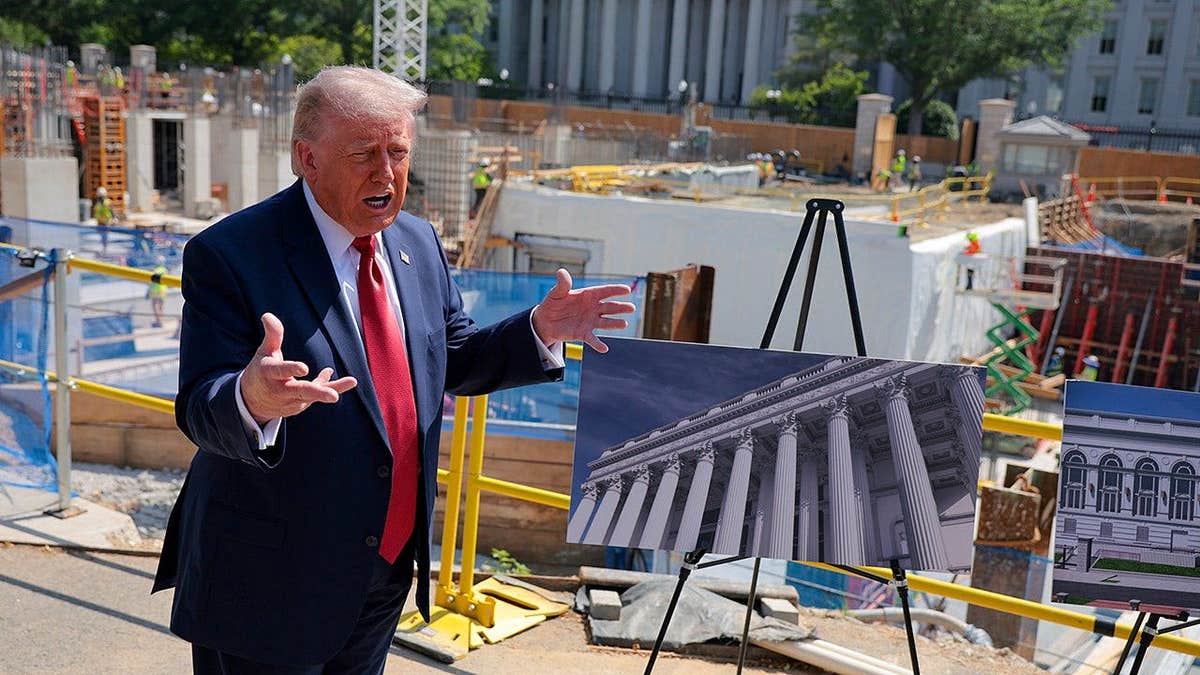
President Donald Trump has overseen ongoing construction of the underground military fortress that is going to be below the $400 million privately funded East Wing ballroom. (Chip Somodevilla/Getty Images)
But according to Rao, the National Trust did not establish the kind of injury necessary to invoke the courts’ authority to block the project.
"The district court elevated the aesthetic displeasure of a single passerby over the government’s security interests in the ballroom and the security risks of leaving an open construction site at the President’s home and office," Rao wrote.
Former Justice Department attorney Abhishek Kambli agreed, telling Fox News Digital the National Trust could face a particularly difficult hurdle on standing at the Supreme Court. He noted that, while Congress created the National Trust, the group still must show that its lawsuit is germaine to its interests.
"While they do have ownership of some properties, the President's Park, where the White House East Ballroom is, is not one of them," Kambli said. "And I think that's going to be a very tough argument to sustain, especially with the Supreme Court, that's more likely to agree with Rao than they are the [circuit court] majority, given the makeup of the Supreme Court, and the fact that the Supreme Court is very strict on standing."
OBAMA JUDGE RULES ON EFFORT TO BLOCK AMERICA 250 EVENTS AT WH AND LINCOLN MEMORIAL
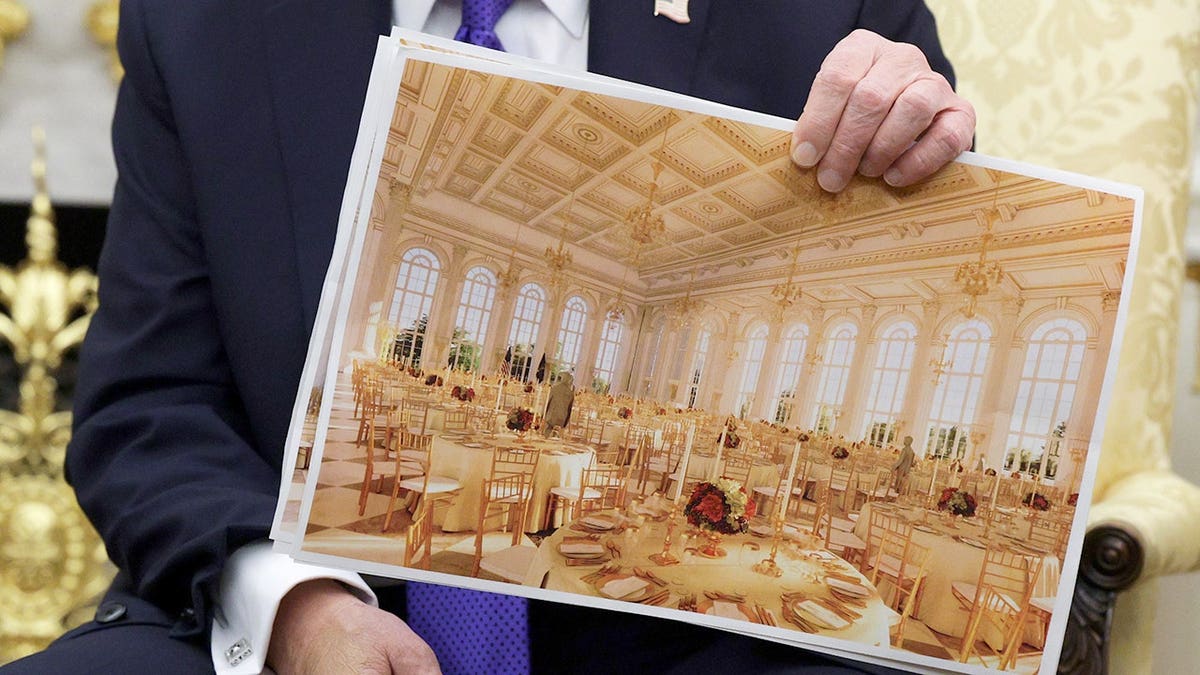
President Donald Trump displays a rendering of his proposed $250 million White House ballroom as he meets with NATO Secretary General Mark Rutte in the Oval Office of the White House in Washington, D.C., on Oct. 22, 2025. (Alex Wong/Getty Images)
Kambli also suggested that the National Trust faces a strong hurdle in proving it has standing based on aesthetic injury because it would have to prove it actually uses the space where the ballroom is being built
.
.
.
"Normally, aesthetic standing requires that you intend to use it," Kambli said. "So, for instance, if you're planning to be visiting the East Ballroom — and even this is kind of a stretch — that's one thing, but if you're someone on the outside that just passes it by, that's a little tougher."
A similar standing issue surfaced earlier in July when U.S. District Judge Amit Mehta, an Obama-appointed judge, rejected a lawsuit seeking to block the America 250 UFC event at the White House. He ruled that the plaintiffs had not met the standard of aesthetic harm to establish standing.
Hans von Spakovsky, a senior legal fellow at Advancing American Freedom, said he expects Trump to prevail on appeal as well, based on the standing issue.
"Under Supreme Court precedent, you cannot bring a claim, you cannot bring a lawsuit, until and unless you can demonstrate a concrete, actual injury," Spakovsky told Fox News Digital. "The idea that a passerby, who claims she will be aesthetically injured because of what she sees at the White House, has an actual injury is absurd, and obviously, and clearly defies that precedent."
If the Supreme Court takes the case, it could resolve it without deciding whether the administration had the legal authority to build the ballroom in the first place.
TRUMP WARNS JUDGE AGAINST SACRIFICING NATIONAL SECURITY BY BLOCKING WHITE HOUSE BALLROOM, DRONE BASE
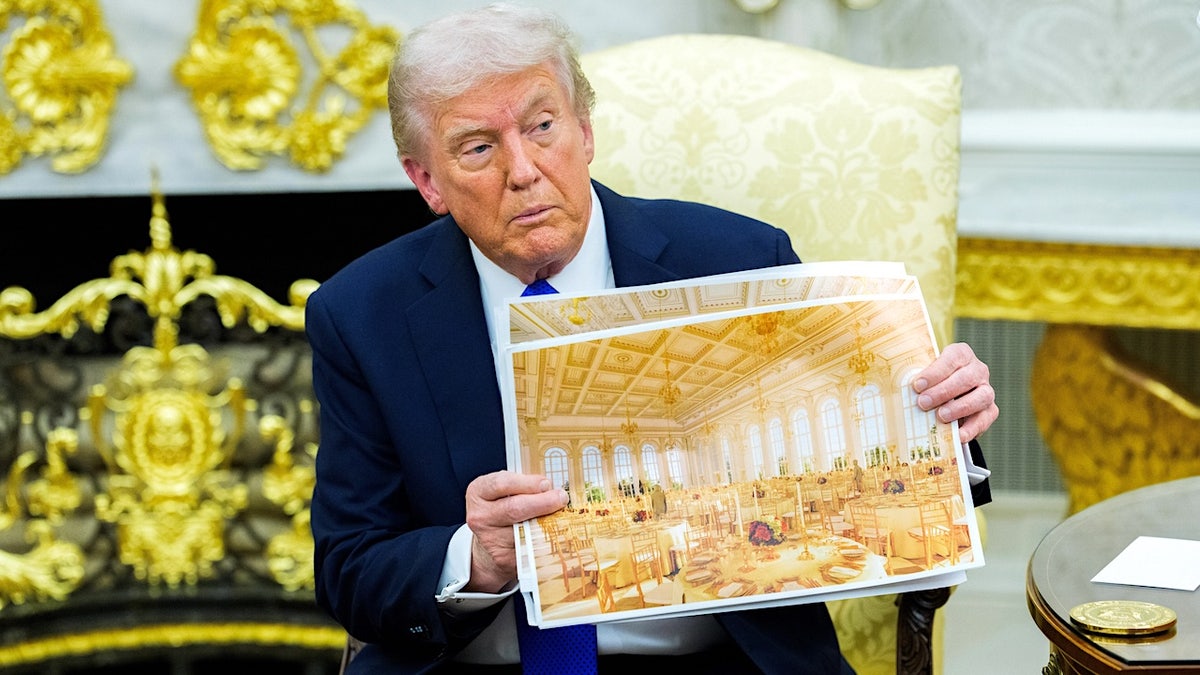
President Donald Trump holds design for a proposed White House ballroom while speaking to reporters. (Aaron Schwartz/CNP/Bloomberg)
"The Supreme Court won’t rule on the substantive issue if it can dismiss the case based on a lack of standing by the plaintiffs," von Spakovsky said. "I also don’t know of anyone else who could establish standing to bring a lawsuit. Perhaps Congress could collectively, but the chances of that happening are very slim given the partisan divides in both the House and Senate."
The National Trust argued in its lawsuit that federal law requires Congress to approve new construction on federal property in Washington, D.C., while the administration says existing law already gives the president authority to make alterations and improvements to federal property, including the White House.
Abhishek agreed with Rao’s reasoning that the terms "alteration" and "improvement" should be understood in their ordinary real-property sense.
"For instance, if I have an extension to my house, it doesn't become a new house," Abhishek said. "It's the same house, but that's an improvement done on the house. Or if I tear down some walls and then just create an open living space in my like between my living room and my kitchen, that's also not a new house at that point.
CLICK HERE TO DOWNLOAD THE FOX NEWS APP
"It's the same house, but there was an alteration or an improvement done, so if you're using real property terms, then it's pretty clear how how the statutory authority would make sense," Abhishek continued.
Elaine Mallon is a writer for Fox News Digital and Fox Business covering national politics.























/https%3A%2F%2Fsportsmole-media-prod.s3.gra.io.cloud.ovh.net%2Fuploads%2F2026%2F01%2Fdanny-welbeck-5-6956bfa3ea945973722124.jpg)
 Bengali (BD) ·
  English (US) ·