.png)
 1 week ago
19
1 week ago
19
Article content
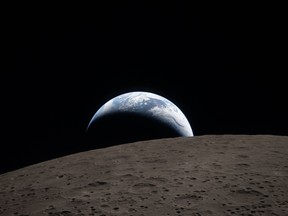
Astronomy is full of misnomers. The blue micromoon of May 30 will not be blue. Nor will it be particularly “micro” in size. It will, however, be the moon. Here’s what to know.

THIS CONTENT IS RESERVED FOR SUBSCRIBERS
Enjoy the latest local, national and international news.
- Exclusive articles by Conrad Black, Barbara Kay and others. Plus, special edition NP Platformed and First Reading newsletters and virtual events.
- Unlimited online access to National Post.
- National Post ePaper, an electronic replica of the print edition to view on any device, share and comment on.
- Daily puzzles including the New York Times Crossword.
- Support local journalism.
SUBSCRIBE FOR MORE ARTICLES
Enjoy the latest local, national and international news.
- Exclusive articles by Conrad Black, Barbara Kay and others. Plus, special edition NP Platformed and First Reading newsletters and virtual events.
- Unlimited online access to National Post.
- National Post ePaper, an electronic replica of the print edition to view on any device, share and comment on.
- Daily puzzles including the New York Times Crossword.
- Support local journalism.
REGISTER / SIGN IN TO UNLOCK MORE ARTICLES
Create an account or sign in to continue with your reading experience.
- Access articles from across Canada with one account.
- Share your thoughts and join the conversation in the comments.
- Enjoy additional articles per month.
- Get email updates from your favourite authors.
THIS ARTICLE IS FREE TO READ REGISTER TO UNLOCK.
Create an account or sign in to continue with your reading experience.
- Access articles from across Canada with one account
- Share your thoughts and join the conversation in the comments
- Enjoy additional articles per month
- Get email updates from your favourite authors
Sign In or Create an Account
or
Article content
What is a blue moon?
Article content
Article content
There are two types of so-called blue moon. The older definition refers to the third full moon in a season that has four (rather than the usual three) full moons.
Article content
The newer and more common use of the term refers to the second full moon in a month. It dates back to an error in a 1946 edition of Sky & Telescope magazine, a publication you’d think would know better.
Article content
Article content
What is a micromoon?
Article content
By signing up you consent to receive the above newsletter from Postmedia Network Inc.
Article content
Though the moon’s actual size never changes, its apparent size varies depending on where it is in its orbit when it’s fully illuminated.
Article content
A micromoon is at its apogee, or farthest point from Earth, about 407,000 kms away. A supermoon, in comparison, is at perigee, just 357,000 kms away. The difference between the two is about 14 per cent in size, and 30 per cent in brightness.
Article content
Is it blue?
Article content
Not really. However, in 1883 the volcano Krakatoa erupted and spread ash high into the atmosphere, filtering the light of the moon and turning it a somewhat blue-green hue.
Article content
More recent, though smaller, volcanic eruptions such as the 1983 eruption of El Chichon in Mexico and the eruptions of Mt. St. Helens in 1980 and Mount Pinatubo in 1991 have caused similar effects.
Article content
How rare are blue moons?
Article content
The phrase “once in a blue moon” refers to something very rare, but blue moons aren’t super-rare, averaging out to one every 33 months, or 41 times in a century.
Article content
That said, 2018 had a rare “double blue moon,” with a blue moon in January and another in March, plus no full moon in February — a so-called “black moon.” The next time that happens will be in 2037.
Article content
Article content
Seasonal blue moons are a little rarer, but they still happen every two to three years on average.
Article content
Article content
The next seasonal blue moon will be on May 20, 2027. The next twice-in-one-month blue moon will take place on New Year’s Eve, 2028. The next micro full moon is just a month away; June 29.
Article content
But the blue-micro combination won’t happen again until 2053.
Article content
How can I see it?
Article content
This is the easy part. The full moon will rise shortly after sunset on the evening of May 30, and it will be up all night. All you need are clear skies. As an added bonus, the bright star Arcturus will be just to one side of the full moon. It’s red. Honest!
Article content



























/https%3A%2F%2Fsportsmole-media-prod.s3.gra.io.cloud.ovh.net%2Fuploads%2F2026%2F05%2Fns-collage-background-v2-email-3-6a086d6eaa1a0057506880.jpg)
 Bengali (BD) ·
  English (US) ·