.png)
 2 hours ago
7
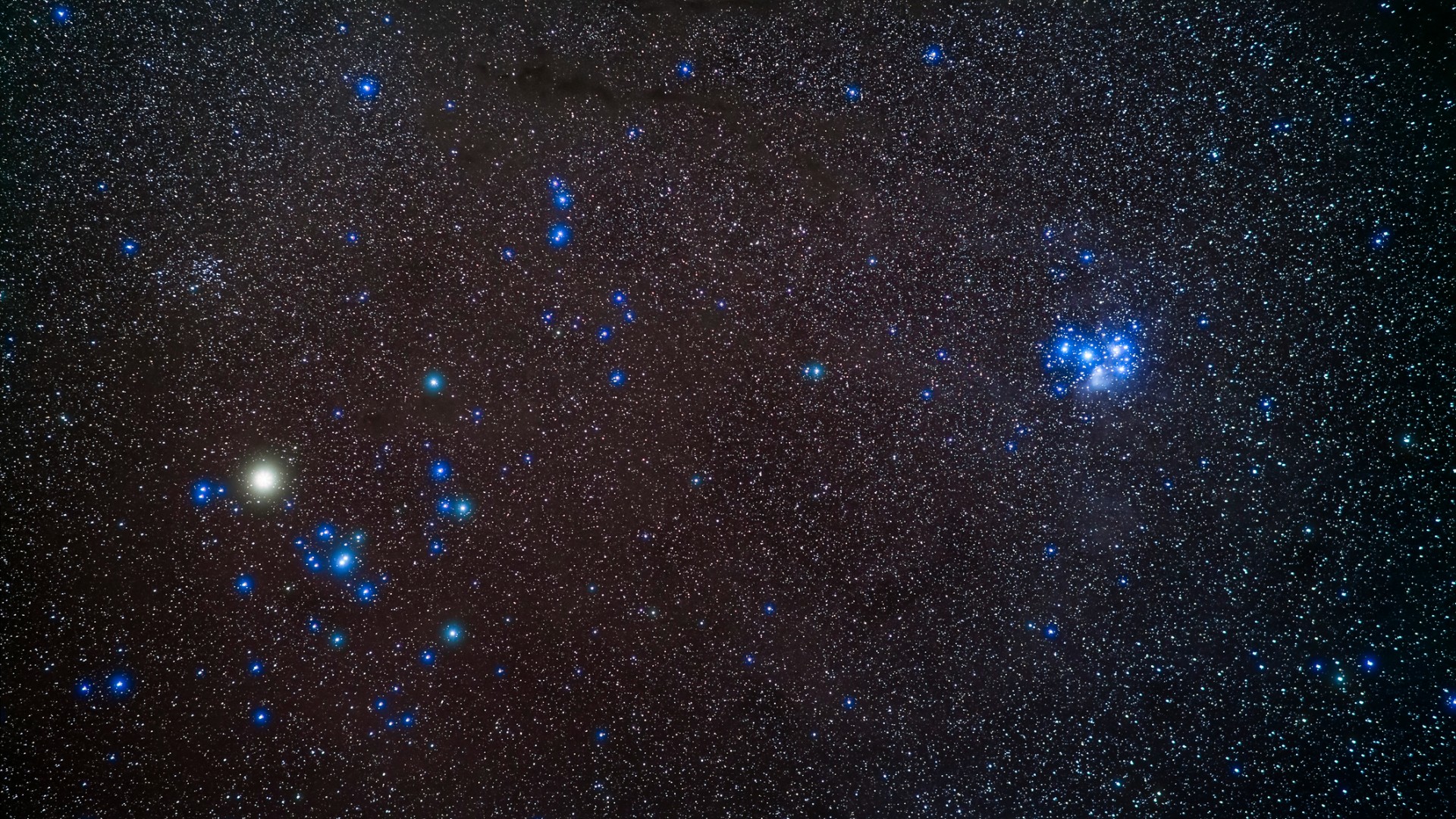
For years I looked at Taurus and saw something perfectly sensible. There was the Hyades, the big V-shaped cluster that forms the bull's face, with Aldebaran, noticeably brighter and more orange than the other stars, the dominant star. Every diagram reinforced the arrangement — Aldebaran was the eye of Taurus, the Hyades made the face, and in my head they became one object.
Then I discovered that Aldebaran has nothing to do with the Hyades. I remember going outside afterward and looking again, half expecting the deception to become obvious now that I knew. It didn't. Aldebaran still looked completely at home among the other stars. The difference is hidden in the one dimension our eyes judge poorly when we look into space — depth. Aldebaran is about 65 light-years away, while the Hyades are roughly 150 light-years distant. The orange eye of Taurus is a foreground star that happens to lie almost exactly along our line of sight toward the Hyades.
This fact exposes one of the most convincing tricks in stargazing. The night sky looks flat, and our brains are extremely willing to believe it. But it has incredible depth — and when you can see parts of the night sky in 3D, that's when you begin to appreciate that you're not looking at a flat map. Instead, you begin to see our cosmic neighborhood as it really is. By appreciating depth, you learn its geography.
What's happening and when to look
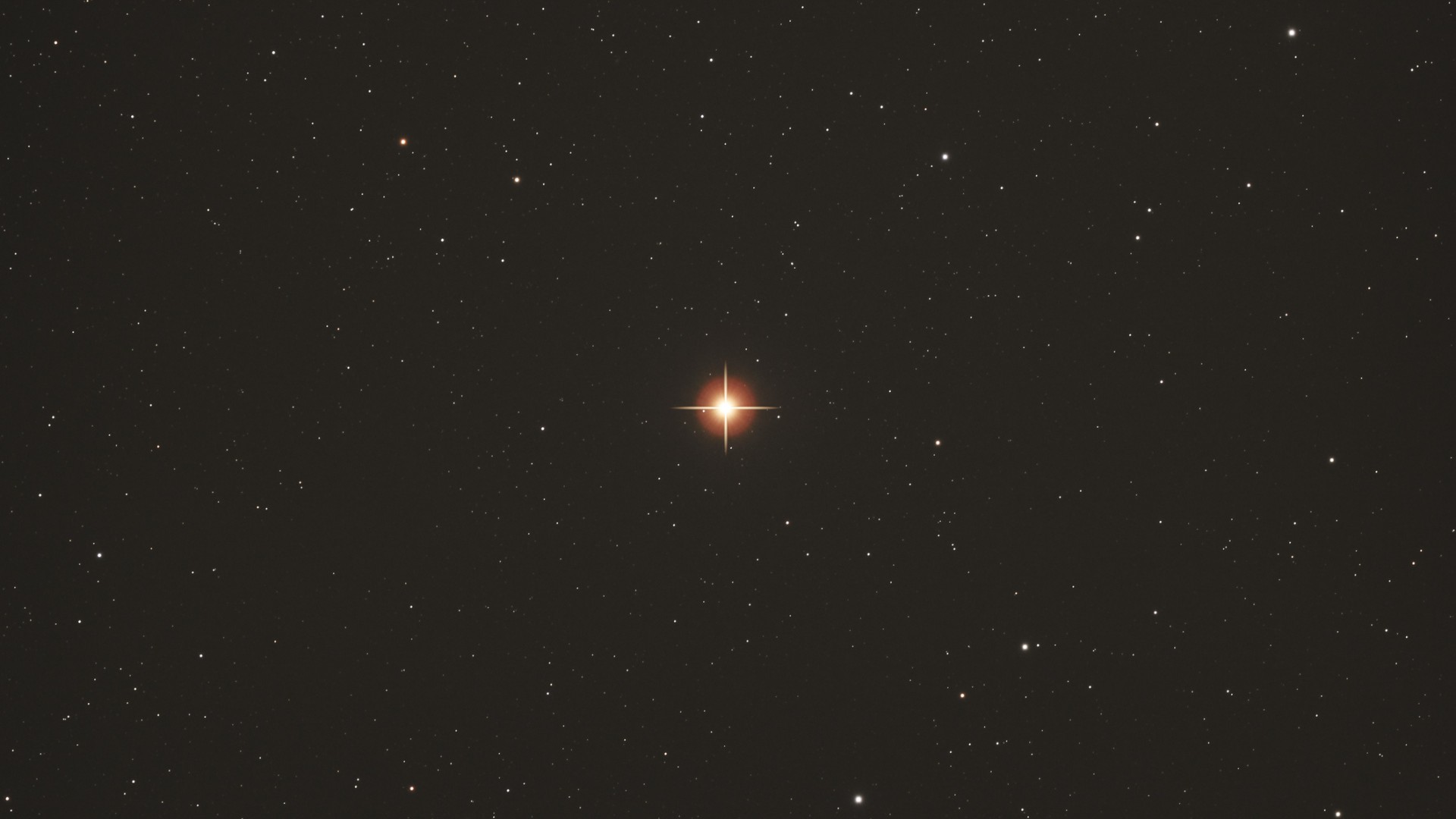
Taurus is now easy to find from the Northern Hemisphere during the evening. Once it's dark, look east for a small, tight knot of stars — the Pleiades open cluster (M45) — and then look nearby for a much larger V-shaped arrangement. That V is the Hyades, with unmistakably orange Aldebaran apparently sitting on one arm. Aldebaran's name is derived from the Arabic Al Dabarān, meaning "the follower," because it appears to trail the Pleiades across the night sky.
The Hyades is a real physical group of stars — an open cluster — that formed together and moves through our galaxy together. About 153 light-years away, the Hyades is the nearest open star cluster to Earth. The name means "the rainmakers" because their rising and setting times in the ancient Greek sky coincided with wet weather. The stars in the Hyades are of a similar age — and mostly sun-like stars, or similar — so astronomers can tell that they all formed together in the same nebula.
Orange-red star Aldebaran — the 14th-brightest star in the night sky — is the interloper, sitting less than half as far away from the sun. If you could somehow view the neighborhood from another part of the Milky Way, the familiar arrangement would fall apart. Aldebaran would no longer sit conveniently in the bull's face, and Taurus itself would stop looking like a bull.
Constellations aren't objects in the same sense as a planet or star cluster. They are merely views. Even stars that appear almost side by side can be separated by enormous distances. Our entire view of the night sky is a line-of-sight, 2D phenomenon — so all the patterns we see are an illusion.
How and when I'm watching it
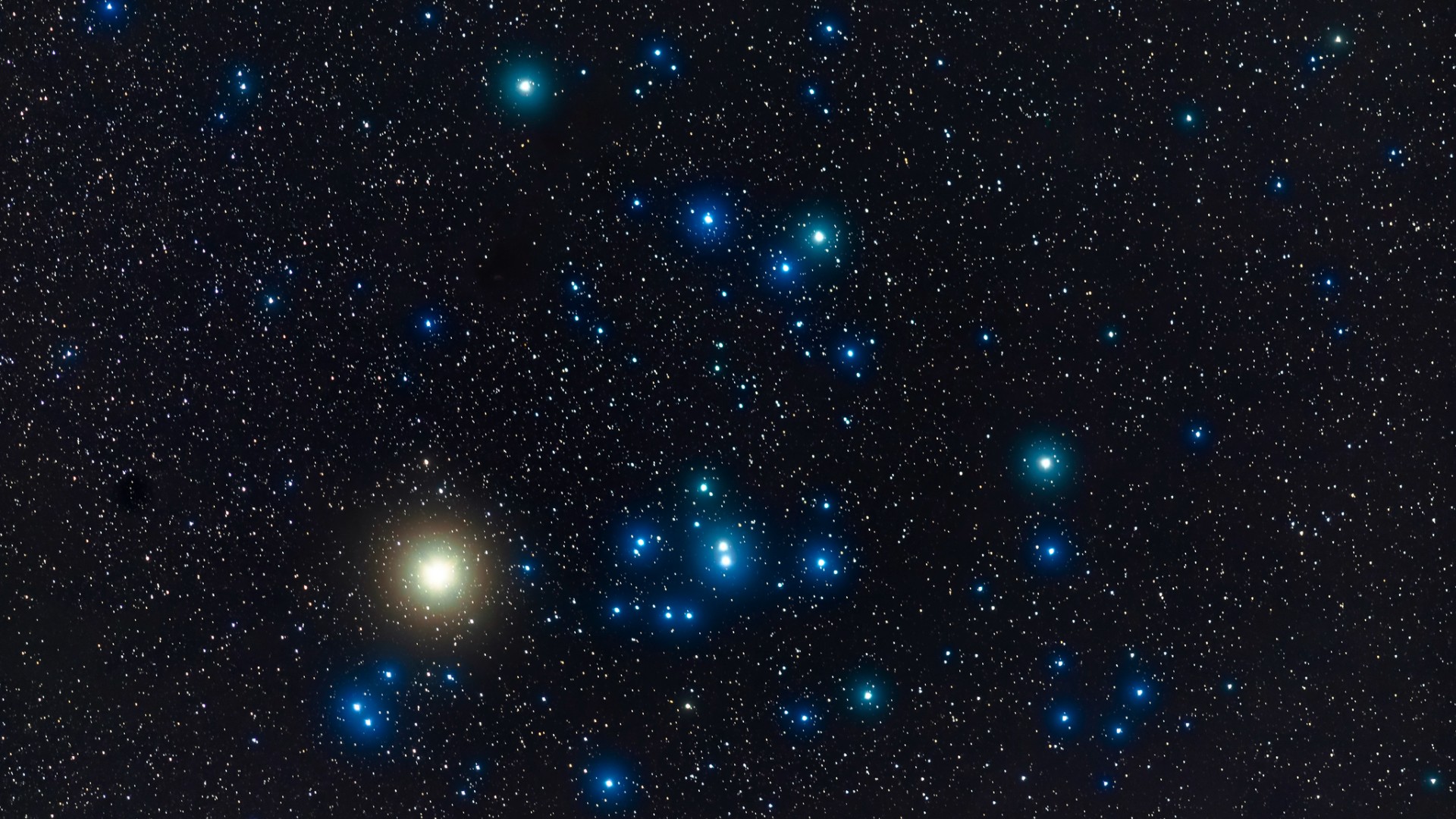
Start with Aldebaran and the Hyades using only unaided eyes. Once you have the V, remind yourself of the distances — roughly 65 light-years for Aldebaran and 150 for the Hyades — and try to imagine pulling the orange star toward you while leaving the rest of the cluster behind. Stargazing like this can be much harder than it sounds. Even the brains of seasoned stargazers are hard-wired to find patterns of stars — constellations — and they rarely practice seeing stars at their correct distances.
Binoculars are worth using for the Hyades because the cluster is broad, so low magnification suits it well. Binoculars show many additional stars, but that's not really the point. Knowing what you're looking at changes the observation more than magnification does.
Trying to see the night sky in 3D is best done one constellation at a time, but I warn you — it makes you suspicious of everything. Next time you trace Orion, Cassiopeia or Auriga, you'll always be wondering which stars are nearby and which merely look that way. Looking up the distances and working it all out for yourself is an eye-opening experience.
Learning constellations gets you around the sky in a basic sense, but learning how to dismantle them and put them back together is when you begin to know the night sky as it really is.
Stargazer's corner: November 20-26, 2026

This week is dominated by the moon. The moon is already waxing when the week begins and becomes the full Beaver Moon — a supermoon — on Nov. 24. That means progressively brighter evening skies and increasingly poor conditions for faint galaxies, nebulae and other low-contrast objects. Aldebaran and the main Hyades stars are bright enough to see from suburban skies even under strong moonlight, so you don't need to travel somewhere properly dark. Swapping your view from 2D to 3D takes only a little imagination. However, that could change in the few nights around the full moon — particularly on Nov. 23, when the waxing gibbous moon will move close to the nearby Pleiades, its strong light reducing the number of faint stars visible around them. Use binoculars to find some of its hundreds of stars.
Constellation of the week: Cepheus
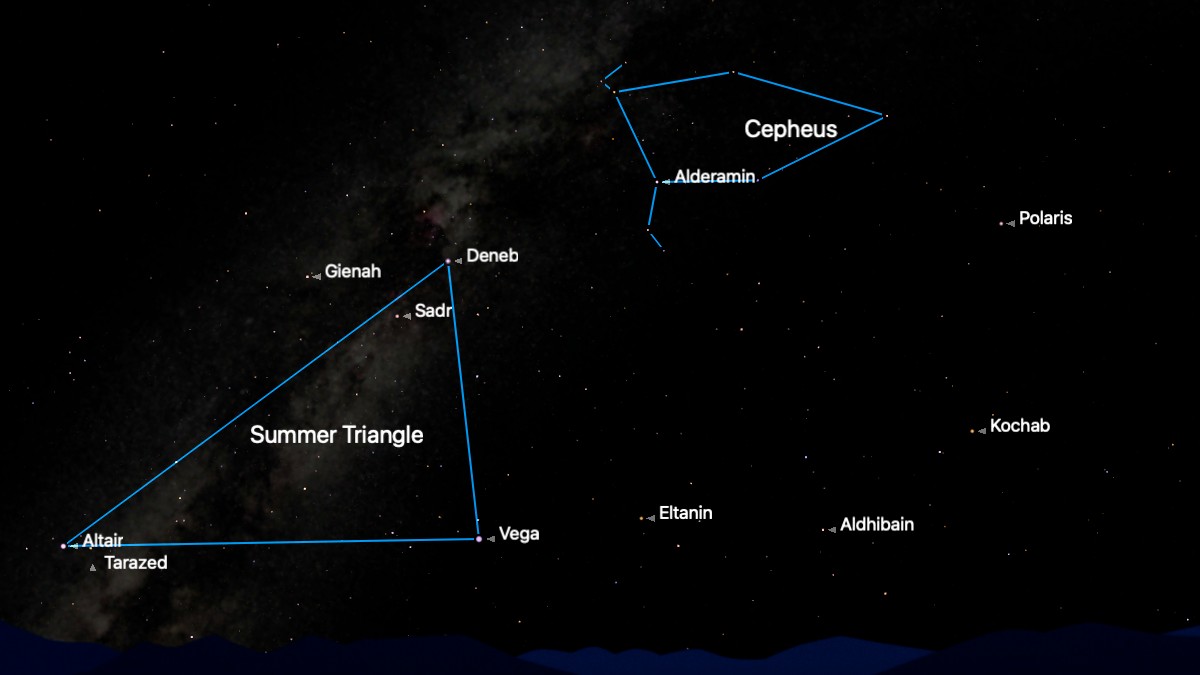
I'm a stargazer and not at all interested in Greek mythology, but it sometimes helps to know a few basic ancient myths when finding constellations. A good example is the constellation Cepheus. It's named after a king of Ethiopia, husband of Cassiopeia and father of Andromeda — all three of which are close by in the northern sky right now. Look west after dark, away from the bright moon, to find the Summer Triangle — Vega, Deneb and Altair — which by now is sinking into the west. From Deneb, look north for a distinctive five-star pattern resembling a child's drawing of a house, with a square base and pointed roof. That's Cepheus. Its brightest star is Alderamin, about 49 light-years away, which marks one corner of the "house."





























 Bengali (BD) ·
 English (US) ·