.png)
 1 week ago
3
1 week ago
3
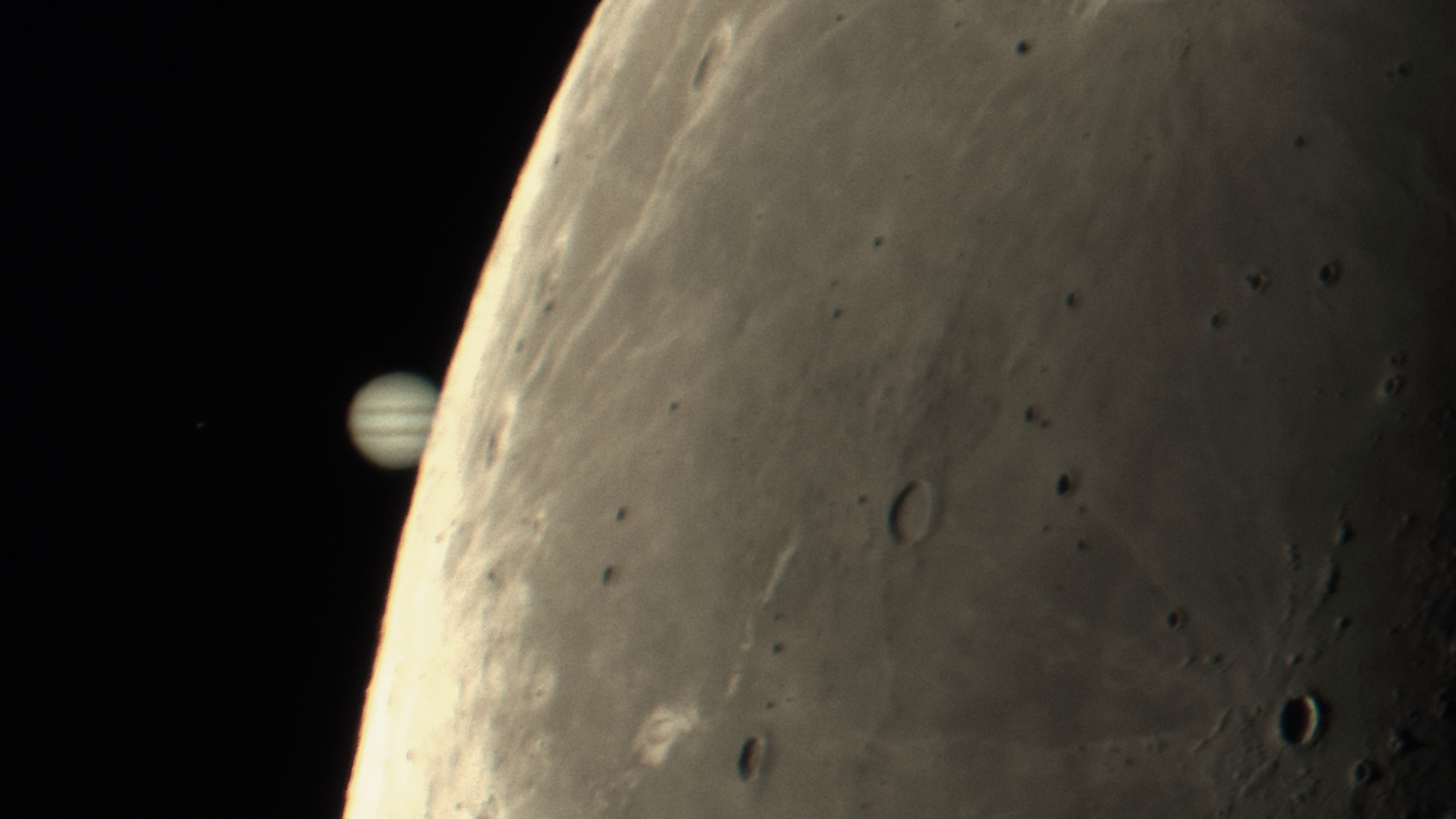
Millions of stargazers saw Jupiter vanish from the night sky on Tuesday (Oct. 6) as the moon's slender crescent passed directly in front of the gas giant in a spectacular display of orbital mechanics.
The full occultation was visible across a swath of North America, Western Africa and the Atlantic Ocean, where the moon passed directly between Jupiter and the observer.
Countless others outside of the path of occultation saw the 20%-lit moon shine just a few degrees away from Jupiter thanks to the parallax effect, which causes nearby celestial objects to appear in a subtly different location based on the viewer's location on Earth. (Reminder: Your clenched fist held at arm's length covers about 10 degrees of sky.)
Read on to see our favorite photos of the Oct. 6 lunar occultation.
Jupiter and the Crescent Moon dazzle in photos of Oct. 6 occultation
Peter Zay captured this beautiful image of Jupiter shining in the skies over North Carolina shortly before the gas giant slipped out of sight behind the lunar crescent.
"Astrophotography is unforgiving," Zay told Space.com in an email. "As a photojournalist, I don’t use techniques like composite[s] of various exposures. I stay true to authentic captures. I regularly photograph the Moon, its phases, solar and lunar eclipses, etc. Planning is key: gear, weather, location, and timing. But still, it’s hard, the very nature asks optical capabilities to be pushed to their limits."
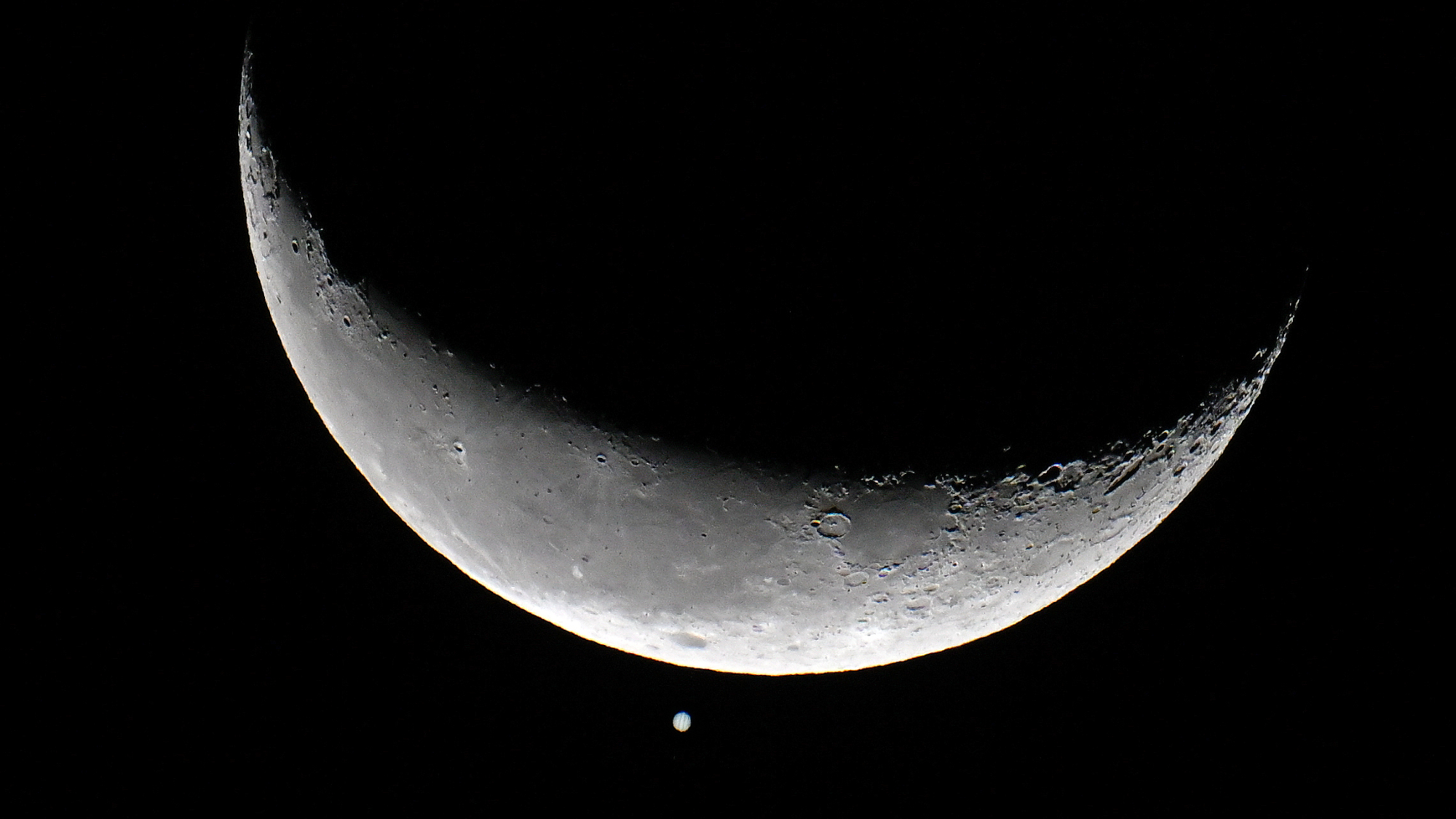
Zay also snapped Jupiter as it emerged from behind the night side of the moon, while fine-tuning his camera to reveal a different aspect of the stunning occultation.
"I knew that success meant balancing the luminance of the Moon's sunlit surface and of Jupiter's four moons. The exposure that is proper for the Moon's sunlit 20% would not reveal Io, Europa, Ganymede, and Callisto," continued Zay. "My photograph captures lunar craters, earthshine, and stars sprinkled in the background. My geographical position put Jupiter and its moons perfectly in the middle as it egressed the shadowed side of the Moon. Who could ask for more?"
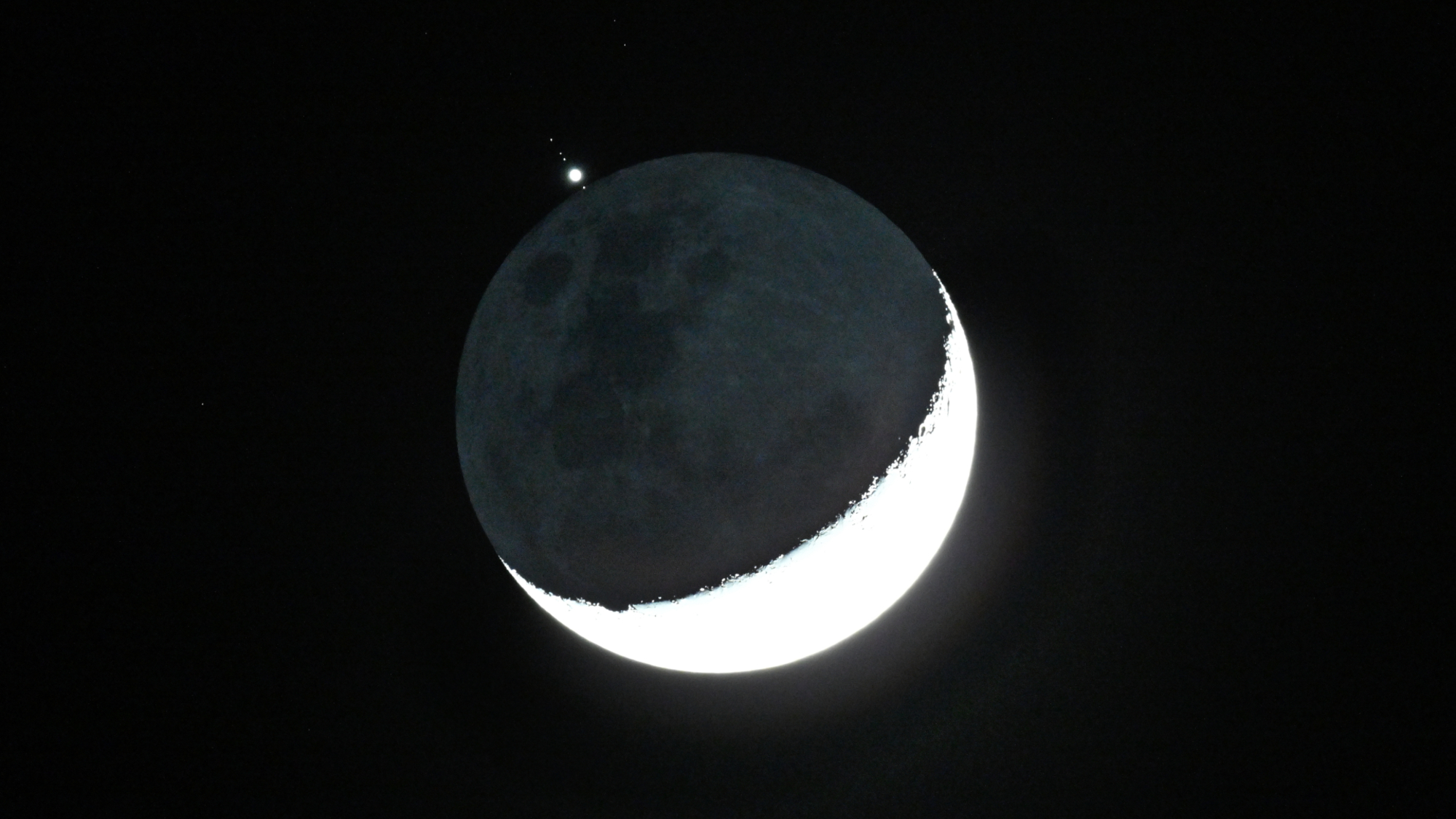
Astrophotographer Steven Bellavia witnessed the occultation from a dark sky site in Potters County, Pennsylvania, where he captured the scene with an Explore Scientific 152mm Maksutov-Cassegrain paired with a ZWO ASI 662MC astronomy camera.
"I was racing the clock just to put Jupiter onto the tiny sensor," Bellavia told Space.com. "I got it just in time to focus and start recording SER videos. I then took the best of thousands of images and sorted through those to get to my favorite. Aligning and stacking doesn't work well with two objects moving at different rates, so the image is a single 50 millisecond capture."
Josh McCollum, meanwhile, aimed his Skywatcher 400P Flextube dobsonian telescope and Celestron C11 Schmidt Cassegrain at Jupiter to take stunning views of the solar system rendezvous from the borough of Emmaus in Pennsylvania.
Images of the Jupiter/Lunar occultation this morning! https://t.co/3gWsSawxjGOctober 6, 2026
"The atmospheric conditions weren’t ideal, but Ganymede (the largest moon in the solar system) can be seen above Jupiter as it was nearing total occultation," McCollum told Space.com in an email. "Its return was easy to find, as Europa and Io were the first to poke out of the moon before Jupiter. The coolest part was seeing the silhouette of the moon as Jupiter stepped back into our night sky. I was so happy to get this shot, and it was extremely surreal to see an event like this."
Some more images from the lunar occultation of Jupiter this morning. https://t.co/U1rn32dCv6October 6, 2026
X user EricTheCat also posted gorgeous views of the occultation as it unfolded in the skies over Minnesota. "Since the event started at 6 degrees and finished at 15 degrees above my horizon I opted to expose to show the moons and earthshine rather than try for finer details," Eric noted in a post on the social media site.
Time-lapse of the lunar occultation of Jupiter this morning. https://t.co/UXBtNPXA5pOctober 6, 2026
Want to try your hand at astrophotography? Then be sure to check out our roundups of the best cameras and lenses for astrophotography, along with our picks of the top telescopes and binoculars for exploring the night sky.
Editor's Note: If you would like to share your planetary or lunar astrophotography with Space.com's readers, then please send your photo(s) and comments, along with your name and location to [email protected].























/https%3A%2F%2Fsportsmole-media-prod.s3.gra.io.cloud.ovh.net%2Fuploads%2F2026%2F10%2Fronaldo-portugal-6abeaa661f6ac972531182.jpg)
 Bengali (BD) ·
  English (US) ·