.png)
 2 hours ago
4
2 hours ago
4
The Group of Seven (G7) countries said Friday that the nations would release 100 million barrels of oil and fuel products in the coming months, starting with “substantial” amounts of diesel. The move comes amid a global shortage largely attributed to slowdowns of the passage of oil through the Strait of Hormuz.
A joint statement from the G7 nations—Canada, France, Germany, Italy, Japan, the United Kingdom, and the U.S.—confirmed that the International Energy Agency (IEA) will coordinate the release over the next four months.
It calls the move a part of “decisive, coordinated measures to stabilize immediate energy supplies” amid record-high fuel prices driven by the war in Iran and the recent escalation of fighting between Russia and Ukraine.
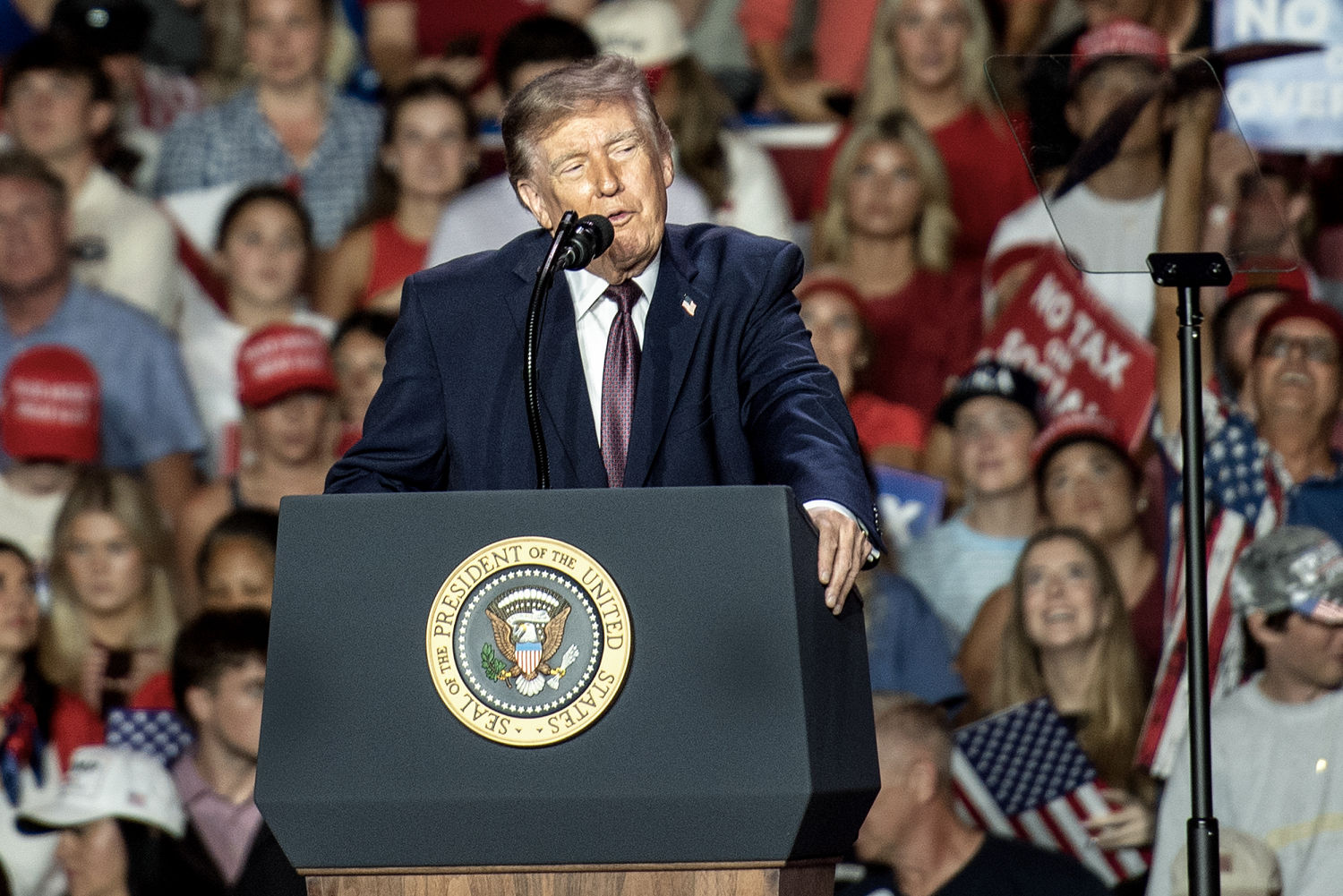
“Europe has just agreed to release a massive amount of their heavily stocked Diesel Oil,” President Donald Trump wrote on Truth Social on Friday. “The process will begin immediately.”
In talks leading up to the announcement on Friday, Trump had been pushing European partners for the release, citing high fuel prices for Americans. Last month, the Trump Administration threatened to temporarily suspend its exports of diesel—earning immediate backlash from countries that rely on it, including Canada, Mexico, and much of Europe.
European leaders and oil executives at the time said that such a ban would be disastrous for long-term oil flow. For that reason, experts believe the threat helped pressure those nations to release their fuel reserves.
The agreement could offer some relief for Americans even if the released diesel stays in Europe, because Europe buys some of its diesel from the U.S. Releasing European reserves could ease competition for U.S. diesel and potentially reduce prices for American buyers.
This is especially critical as the cost of Brent crude oil sits at $102 per barrel as of Oct. 3 and on-highway diesel hit a high of $6.529 per gallon as of last month, according to the U.S. Energy Information Administration.
But how much relief consumers will actually see—and how quickly—will depend on what type of fuel is released, how much reaches the market and when, and whether supply disruptions persist.
What is actually being added to the market?
Although the G7 shared how much fuel it would release, it did not specify the full breakdown of the release by fuel type. Its statement did say, however, that there will be a “frontloaded” and substantial release of diesel fuel within the first 20 days.
While crude oil must be refined into products like gasoline before consumers can use it, diesel is already a finished fuel. That means a diesel release could address the immediate shortage more directly.
The planned release could help ease shortages of both crude oil and refined fuels, with supplies disrupted by the wars in Iran and Ukraine.
The supply of crude oil has been heavily disrupted this year after the U.S. and Israel launched joint strikes that ignited a war with Iran in February. In response, Iran effectively closed the Strait of Hormuz in March. More recent negotiations to end the war have largely failed to address differing opinions on ownership and control over the Strait. This has critically restricted the passage of oil-carrying vessels through the waterway, with daily shipping traffic in the single digits last month, down from pre-war averages of roughly 138 to 140 daily transits.
Diesel, meanwhile, is essential to U.S. transportation, agriculture, and manufacturing: Most goods, food, and manufacturing supplies across the country are transported by heavy-duty trucks and trains running on diesel engines. The war in Iran has driven diesel prices up and lowered supply, but Russia and Ukraine’s targeting of one another’s energy infrastructure has further exacerbated the issue.
While the U.S. in particular does not heavily rely on Russian diesel, America is vulnerable to the volatility caused by Russia removing it from the global market. Trump has claimed outright that Ukraine’s targeting of Russian oil infrastructure is to blame for diesel shortages.
What could Americans feel, and when?
Jason Bordoff, founding director of the Center on Global Energy Policy at Columbia University, says it’s difficult to predict the consumer impact given the scarce details shared so far.
“It makes a big difference if the release is in the next two weeks or if it's four months from now,” Bordoff says.
“I think if we saw some announcement tomorrow from Germany or France that gave concrete, specific numbers for a substantial amount—50 million barrels or so—of diesel, then it could have a real impact if this release actually happens in a timely fashion,” Bordoff says.
At the same time, Jeff Colgan, a professor of political science at Brown University, cautions that American consumers may see limited benefits.
“Releasing diesel could make a difference on price, especially in tight markets in Europe,” Colgan says. “But American consumers are unlikely to see much of a price drop from this policy move unless the diesel share of that 100 million barrels is very large.”
With a timely release of diesel, Bordoff predicts that Americans could see a drop by as much as 25 cents per gallon after a few weeks—but, he adds, the markets seem pretty unsure that that will actually happen.
And market perception is central to whether or not prices drop in the short term.
“I think they’re saying: Show me the barrels, so I have confidence this is real, and it's going to happen quickly,” he says.
David Bieri, an economist and associate professor of urban affairs and planning at Virginia Tech, tells TIME that international interventions like this help “signal” to markets that governments are a credible safety net in prolonged periods of uncertainty.
“That's the main mechanism, because they want to influence market sentiment,” Bieri says. “Then, futures markets begin to price more optimistically, and then eventually the hope is that prices will come down.”
The effect Bieri is describing has already begun: The price of diesel futures in the United States fell 8% on Friday morning, a sign of more optimism in the market.
Bordoff adds that they are also, in part, a response to Trump dropping his threat of a diesel export ban—a threat that was lifted as a condition of the G7 agreement.
The release itself may not impact the markets “an awful lot,” Bieri says, given the broader context of the war with Iran.
“In fact, consumers might not necessarily notice it, ever. That's how insignificant the quantity itself is,” he says of the 100 million barrels. “But it's the importance of the cooperative signal that hopefully will make things better this fall.”
Bieri also cautions that any savings could take time to reach consumers, as carriers and other distributors may use lower fuel costs to rebuild their margins.
“[They] have been bleeding on increased fuel costs,” he says. “This is going to be, if anything, a welcome reprieve for their profit margins, and they're not going to pass that on immediately to consumers.”
What happens if the supply gap is still there when releases taper off?
This October announcement is not the first of its kind: Following the initial market shock of the war in Iran, IEA member countries announced a 400-million-barrel release in March—80% of which has already been released. Notably, the latest announcement did not clearly establish how much of the forthcoming release would be additional to earlier commitments.
In March, the IEA said that the majority of the barrel release would be crude oil; however, reports show that Europe has primarily contributed refined oil, like diesel—which could suggest more of the same in this latest round.
In either event, such fuel releases are just a matter of sticking a bandage over the larger issue of two unresolved wars and continued global energy disruption, says Bordoff.
“We're going to continue to have oil, gasoline, and diesel price shocks until that conflict comes to some sort of resolution, and energy flows can get going again,” he says. “Inventories, and stocks and other schemes like waiving state fuel taxes or something can help on the margin for temporary disruptions, but at some point this isn't temporary anymore.”
Michael Noel, economist at Texas Tech University, agrees with Bordoff, telling TIME that “unless something dramatic happens to end the Ukraine and Iran conflicts, the supply shortage will persist.”
Negotiations between Iranian leadership and the Trump Administration have stalled multiple times in the last six months. Trump said on Sept. 9 that he expected a resolution to come after the midterm elections, which take place in the U.S. on Nov. 3.
“I think the war's going to end immediately after the election because they can't hold out any longer,” he said last month. “Right after the election, oil prices are going to be tumbling downward.”
Axios reported, however, that senior Trump Administration officials met at Camp David to discuss the war on Friday. The talks come as the U.S. last week added economic pressure in the region with a series of sanctions aiming to curtail funding streams and stymy industrial lifelines for Iran.
Experts argue that the fuel crisis and volatility exposes the need for the U.S. to adapt to a changing energy ecosystem. Notably, Colgan says that would include “the national security advantages of clean technologies like EVs, batteries, and renewable energy.”





















/https%3A%2F%2Fsportsmole-media-prod.s3.gra.io.cloud.ovh.net%2Fuploads%2F2026%2F09%2Fmikel-arteta-21-6ab9a6087b35f019707296.jpg)
 Bengali (BD) ·
  English (US) ·