.png)
 4 days ago
21
4 days ago
21
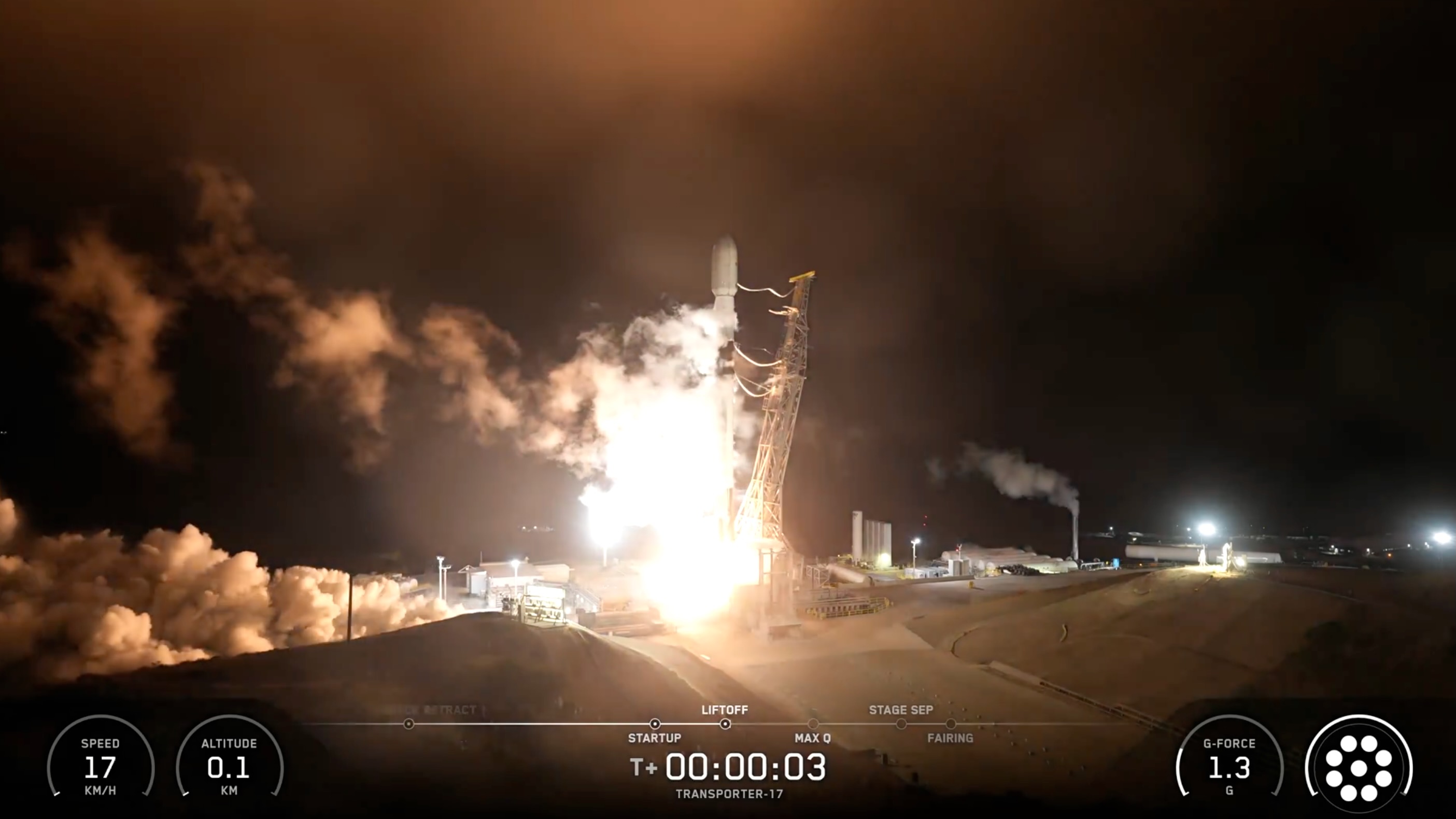
SpaceX launched a passel of satellites to orbit early Tuesday morning (July 7).
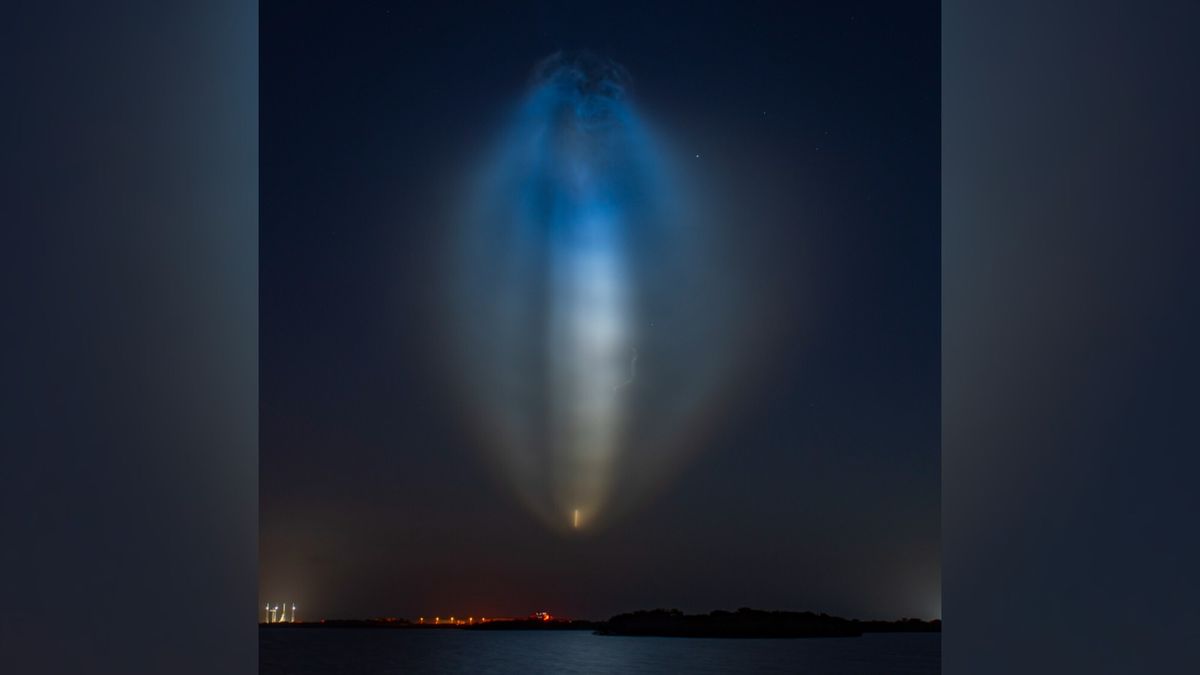
A Falcon 9 rocket carrying 81 payloads lifted off from California's Vandenberg Space Force Base on Tuesday at 3:12 a.m. EDT (0712 GMT; 12:12 a.m. local California time), kicking off a mission SpaceX called Transporter-17.
As that name suggests, Transporter-17 was the 17th flight of SpaceX's Transporter rideshare program. The company operates another rideshare series as well, called Bandwagon, which has launched four missions to date.
The 20 Transporter and Bandwagon missions that flew before Transporter-17 sent more than 1,800 payloads to Earth orbit. Transporter-1 lofted 143 of those back in January 2021, which remains the global single-launch record.
The 81 payloads that went up on Transporter-17 included "cubesats, microsats, hosted payloads and orbital transfer vehicles carrying eight of those payloads to be deployed at a later time," SpaceX wrote in a mission description.
Perhaps the biggest satellite riding the Falcon 9 on Tuesday was CAS500-4, a South Korean Earth-observation craft that tips the scales at about 1,100 pounds (500 kilograms).
The satellite, whose name is short for "Compact Advanced Satellite 500-4," is the fourth member of a planned five-satellite CAS500 fleet in low Earth orbit (LEO). CAS500-4 will help the South Korean government monitor crops and forests, among other tasks.
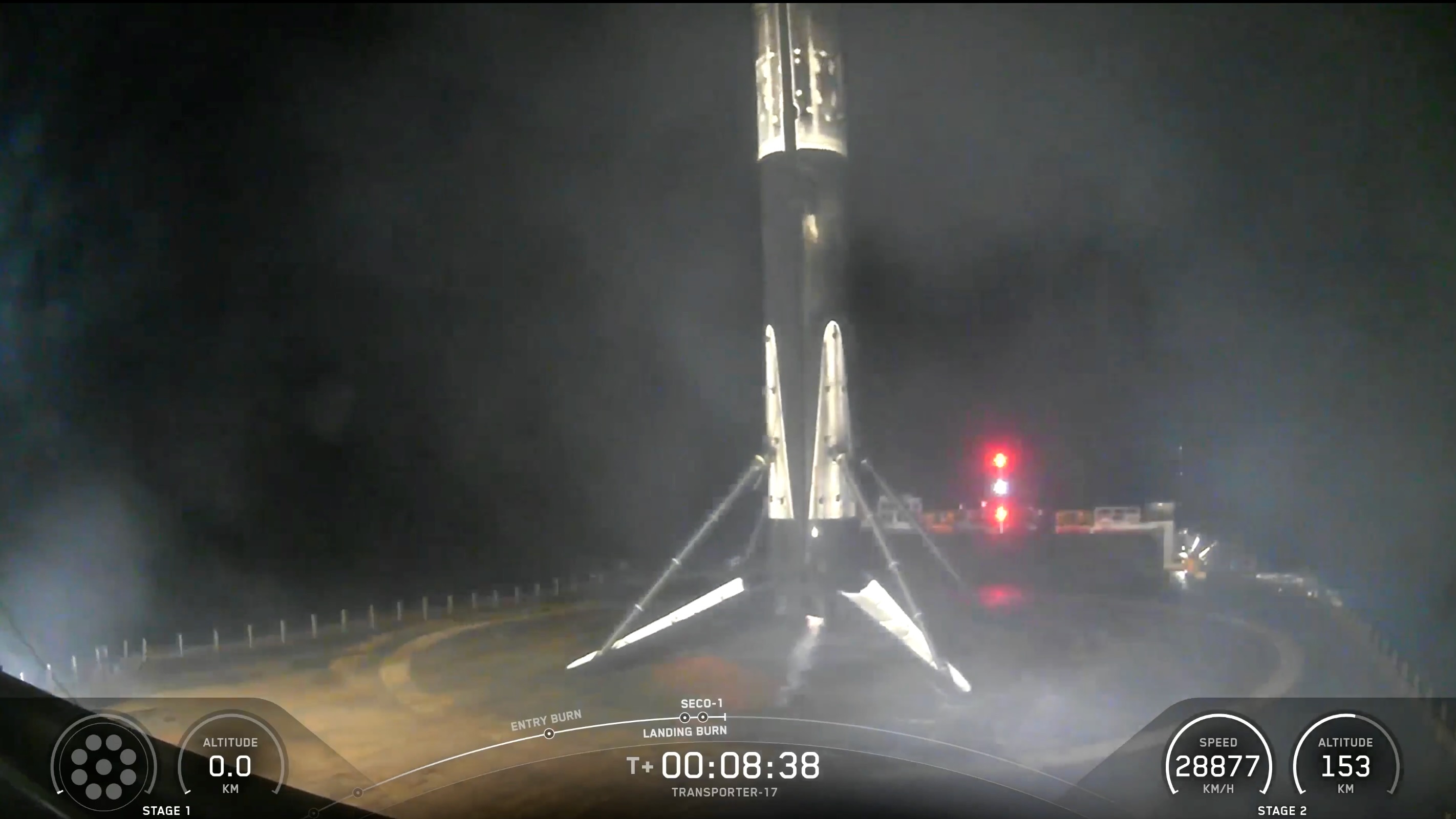
The first stage of the Transporter-17 Falcon 9 landed about 8.5 minutes after launch on the SpaceX droneship "Of Course I Still Love You," which was stationed in the Pacific Ocean. It was the 11th flight for this particular booster, according to the company's Transporter-17 mission description.
The Falcon 9's upper stage, meanwhile, continued hauling the 81 payloads to LEO, where they'll be deployed starting about 50.5 minutes after launch. CAS500-4 won't be released until nearly 2.5 hours after liftoff.
Transporter-17 was the 79th Falcon 9 launch of 2026. Nearly 80% of this year's missions have been devoted to building out Starlink, SpaceX's giant broadband constellation in LEO.
Editor's note: This story was updated at 3:25 a.m. ET on July 7 with news of successful launch and rocket landing.























 Bengali (BD) ·
  English (US) ·