.png)
 1 hour ago
8
1 hour ago
8
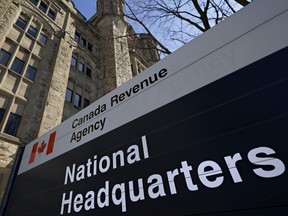
Article content
Scammers regularly try to convince their intended victims that they are from the Canada Revenue Agency, says the CRA.

THIS CONTENT IS RESERVED FOR SUBSCRIBERS
Enjoy the latest local, national and international news.
- Exclusive articles by Conrad Black, Barbara Kay and others. Plus, special edition NP Platformed and First Reading newsletters and virtual events.
- Unlimited online access to National Post.
- National Post ePaper, an electronic replica of the print edition to view on any device, share and comment on.
- Daily puzzles including the New York Times Crossword.
- Support local journalism.
SUBSCRIBE FOR MORE ARTICLES
Enjoy the latest local, national and international news.
- Exclusive articles by Conrad Black, Barbara Kay and others. Plus, special edition NP Platformed and First Reading newsletters and virtual events.
- Unlimited online access to National Post.
- National Post ePaper, an electronic replica of the print edition to view on any device, share and comment on.
- Daily puzzles including the New York Times Crossword.
- Support local journalism.
REGISTER / SIGN IN TO UNLOCK MORE ARTICLES
Create an account or sign in to continue with your reading experience.
- Access articles from across Canada with one account.
- Share your thoughts and join the conversation in the comments.
- Enjoy additional articles per month.
- Get email updates from your favourite authors.
THIS ARTICLE IS FREE TO READ REGISTER TO UNLOCK.
Create an account or sign in to continue with your reading experience.
- Access articles from across Canada with one account
- Share your thoughts and join the conversation in the comments
- Enjoy additional articles per month
- Get email updates from your favourite authors
Sign In or Create an Account
or
Article content
As a result, the agency has issued guidance aimed at protecting the public.
Article content
Article content
“Know when to be suspicious,” the CRA says. For example, a scam could arrive as a text notification promising your tax refund. That’s one of the latest cons, with tax season recently ended. But the CRA is clear that it “will not” send refunds other than by official means. That includes direct deposit into your bank account or a cheque mailed to your home.
Article content
Article content
Meanwhile the CRA says it will not request payment by e-transfer or phone. Nor does the agency accept payment by cryptocurrency, prepaid credit cards or retail gift cards. Instead, payments are to be sent securely, for example through CRA My Payment. Some banks and credit unions allow the CRA to be added as bill payee. And then there is the old-fashioned option of mailing a cheque.
Article content
By signing up you consent to receive the above newsletter from Postmedia Network Inc.
Article content
The CRA insists that it will also not threaten to arrest you or set up a public meeting to collect payment.
Article content
Most of all, the CRA will not ask for personal or financial information in a voicemail or email.
Article content
That’s not to say the CRA doesn’t contact taxpayers by phone, automated message or email.
Article content
During a phone call with a CRA agent, you could be asked for personal information to verify your identity. You could also be asked for banking information. But before you provide any personal or financial information, you are urged to “verify it’s the CRA calling” by taking the person’s name and phone number. You can verify a number as being from the CRA using the agency’s confirmation tool.
Article content
The only time the CRA will send a text is as part of its multi-factor authentication sign-in process.
Article content
Article content
The agency urges Canadians to be wary of fake websites, which use look-a-like web addresses that will have extra words (for example, cra-login-canada.com, cra-account-notice.info, crareturnreview.cfd), unusual endings (.info, .su, .sfd, .com), extra characters or unusual abbreviations (crra, c-ra, carev, revagency).
Article content
“The official website for the CRA uses web addresses that either start in canada.ca or end in cra-arc.gc.ca. If it doesn’t, it could be a fake website pretending to be a CRA website,” says the agency’s guidance.
Article content
In its tips on how to avoid fake sites, the CRA urges: “When in doubt, don’t click! Since scammers want you to click on links, forms, or attachments, they usually send a message to try and trick you into clicking on a link. If you are ever unsure about a message you received, contact the department … directly.”
Article content
Here are some of the latest scams:
Article content
Tax refunds: A text message of an image with the Government of Canada logo claiming to be from the Canada Revenue Agency offering a refund by Interac e-transfer deposit. A separate text message will contain a link to an impersonation of your bank’s sign-in portal. Don’t fill it in.


























/https%3A%2F%2Fsportsmole-media-prod.s3.gra.io.cloud.ovh.net%2Fuploads%2F2026%2F05%2Fchamp-69fa166311171530187348.jpg)


 Bengali (BD) ·
  English (US) ·