.png)
 1 hour ago
4
1 hour ago
4
Article content
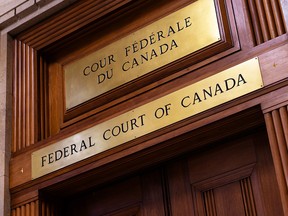
A claim for refugee protection in Canada by a family of three has been rejected because their appeal was apparently generated by artificial intelligence tools and riddled with fake cases and false legal arguments.

THIS CONTENT IS RESERVED FOR SUBSCRIBERS
Enjoy the latest local, national and international news.
- Exclusive articles by Conrad Black, Barbara Kay and others. Plus, special edition NP Platformed and First Reading newsletters and virtual events.
- Unlimited online access to National Post.
- National Post ePaper, an electronic replica of the print edition to view on any device, share and comment on.
- Daily puzzles including the New York Times Crossword.
- Support local journalism.
SUBSCRIBE FOR MORE ARTICLES
Enjoy the latest local, national and international news.
- Exclusive articles by Conrad Black, Barbara Kay and others. Plus, special edition NP Platformed and First Reading newsletters and virtual events.
- Unlimited online access to National Post.
- National Post ePaper, an electronic replica of the print edition to view on any device, share and comment on.
- Daily puzzles including the New York Times Crossword.
- Support local journalism.
REGISTER / SIGN IN TO UNLOCK MORE ARTICLES
Create an account or sign in to continue with your reading experience.
- Access articles from across Canada with one account.
- Share your thoughts and join the conversation in the comments.
- Enjoy additional articles per month.
- Get email updates from your favourite authors.
THIS ARTICLE IS FREE TO READ REGISTER TO UNLOCK.
Create an account or sign in to continue with your reading experience.
- Access articles from across Canada with one account
- Share your thoughts and join the conversation in the comments
- Enjoy additional articles per month
- Get email updates from your favourite authors
Sign In or Create an Account
or
Article content
The Federal Court issued a sharp rebuke of a court filing that challenges an Immigration and Refugee Board (IRB) decision that refused asylum to the trio, with Justice Roger Lafrenière saying the appeal is riddled with nonsense and calling it “an abusive document.”
Article content
Article content
Advertisement 1
Article content
A lawyer representing the failed refugee claimants had requested the court accept the late filing of its documentation in their appeal. The IRB had previously found the asylum claim “manifestly unfounded.”
Article content
By signing up you consent to receive the above newsletter from Postmedia Network Inc.
Article content
Lafrenière said the mistake over the filing date might have been excused until he saw the arguments relied on “fictitious citations” and “wholly inaccurate references to legal precedents.”
Article content
Lafrenière said the lawyer’s arguments cited case law from five prior Federal Court cases. The “cases,” however, cannot be found at the citations provided, nor do the citations to real cases make the argument the filing claims.
Article content
“The Applicants’ Memorandum of Argument is replete with inaccurate and, dare one say, misleading arguments,” Lafrenière wrote in a decision released Monday. In some of the cases, the precedent cited says the opposite of what the filing claims.
Article content
For example, the document cites two cases in support of an argument over judicial discretion. “However, nothing of the sort is stated in either of the two cases,” wrote Lafrenière. The document also gives one citation as being found in paragraphs 28–33 of a judgment that has only 10 paragraphs, and it is on an irrelevant subject.
Article content
Advertisement 2
Article content
“Citing fake cases in court filings is an abuse of process and is tantamount to making a false statement to the Court,” Lafrenière wrote in his judgment. “In addition, making misleading arguments to the Court violates professional ethics and counsel’s fundamental legal duty of candor.”
Article content
Article content
Government lawyers flagged concerns over the written material of the three applicants. The parties were given an opportunity to answer the allegations but failed to respond, court said.
Article content
“I can only conclude that AI was used in the drafting of the Applicants’ Memorandum of Argument without careful human judgment being applied to the output,” said Lafrenière.
Article content
“AI tools promise efficiency; however, their indiscriminate use in drafting legal arguments constitutes a pernicious threat to the integrity of the judicial process. Fabricated case citations distort and corrupt the case law. Superficial fluency also creates an illusion of competence and genuine legal reasoning that masks underlying inaccuracies. In addition, inaccurate legal arguments shaped by AI also results in the waste of scarce resources, both judicial and those of the opposing party.



























 Bengali (BD) ·
  English (US) ·