.png)
 16 hours ago
14
16 hours ago
14
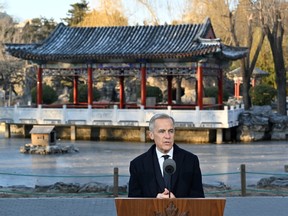
Article content
In his spring 2026 address at Davos, Prime Minister Mark Carney told world leaders that the post-Cold War order had collapsed, leaving states across the globe scrambling to defend their interests in a more dangerous world.

THIS CONTENT IS RESERVED FOR SUBSCRIBERS
Enjoy the latest local, national and international news.
- Exclusive articles by Conrad Black, Barbara Kay and others. Plus, special edition NP Platformed and First Reading newsletters and virtual events.
- Unlimited online access to National Post.
- National Post ePaper, an electronic replica of the print edition to view on any device, share and comment on.
- Daily puzzles including the New York Times Crossword.
- Support local journalism.
SUBSCRIBE FOR MORE ARTICLES
Enjoy the latest local, national and international news.
- Exclusive articles by Conrad Black, Barbara Kay and others. Plus, special edition NP Platformed and First Reading newsletters and virtual events.
- Unlimited online access to National Post.
- National Post ePaper, an electronic replica of the print edition to view on any device, share and comment on.
- Daily puzzles including the New York Times Crossword.
- Support local journalism.
REGISTER / SIGN IN TO UNLOCK MORE ARTICLES
Create an account or sign in to continue with your reading experience.
- Access articles from across Canada with one account.
- Share your thoughts and join the conversation in the comments.
- Enjoy additional articles per month.
- Get email updates from your favourite authors.
THIS ARTICLE IS FREE TO READ REGISTER TO UNLOCK.
Create an account or sign in to continue with your reading experience.
- Access articles from across Canada with one account
- Share your thoughts and join the conversation in the comments
- Enjoy additional articles per month
- Get email updates from your favourite authors
Sign In or Create an Account
or
Article content
His advice was simple. Middle powers, he said, should band together to defend themselves against the great powers and build a new global order. Left unsaid at Davos and in the speeches that followed was the inconvenient truth that maximizing middle power influence instead demands staying anchored inside the U.S. orbit.
Article content
Article content
Article content
A key Pentagon official has now put voice to this reality. In a series of July 14 posts on X, U.S. Under Secretary of War Elbridge Colby said the idea of a middle-powers coalition is “based on a faulty understanding of international relations” and that these countries “don’t have a coherent basis for alignment.”
Article content
By signing up, you consent to receive the above newsletter from Postmedia Network Inc.
Article content
Colby is correct. The messy truth is that middle powers have little influence absent great power patronage. They face economic and military exposure to the great powers, bespoke (if not conflicting) national interests, geographic distance from one another and vulnerability to great power punishments. This means that few will succeed at insulating themselves from great power politics.
Article content
The fantasy future where middle powers call their own shots is rooted in the failure to understand that the outsized influence they wielded in the last global order was not the natural state of international affairs. It was the result of their privileged place inside the U.S. orbit at a highly unique moment in history. As one of two superpowers at the end of the Second World War and soon enough basking in overwhelming power at the end of the Cold War, the United States championed a new form of global hegemony — an international rules-based order that mediated tensions between states and sheltered lesser powers by constraining stronger ones. It was that order — and the American hegemony that underpinned it — that allowed middle powers to exercise more influence than their objective power warranted.
Article content
Article content
The world has now changed, with hostile states on the rise and the United States laser-focused on holding them in check. The rules-based order is collapsing on cue, taking down with it the middle powers’ golden era.
Article content
Having failed to understand that the rules-based order was a passing historical moment, the middle powers made fateful errors when they allowed their militaries to atrophy and ensnared themselves in Beijing’s economic traps. The truth they must now face is that they are wholly unprepared for the return of politics as usual.
Article content
The middle powers are now deeply dependent on the United States to protect them, and the imperative of keeping the U.S. onside requires that their national strategies rest on three key pillars: not being burdens, making themselves useful and not playing footsie with America’s adversaries. This same strategic logic applies to their bilateral relations: each must calibrate its relationships with the others in ways that first and foremost protect its relationship with the U.S.
Article content
With power politics back in play, the middle powers’ best strategic play is to maximize their influence and protect against U.S. overreach by joining forces in coalitions of the capable. These coalitions’ must-do lists are short and sharp: advance the strategic objectives they share with the United States, build the military capabilities they need at the alliance level and lessen their vulnerability to adversaries — in particular, China and Russia.






















/https%3A%2F%2Fsportsmole-media-prod.s3.gra.io.cloud.ovh.net%2Fuploads%2F2026%2F03%2Ficonsport-361551-0102-1-69b560866f7b6508942731.jpg)

 Bengali (BD) ·
  English (US) ·