.png)
 2 hours ago
9
2 hours ago
9
Article content
Last year, the government moved around $900 million from the unpermitted surplus into its coffers. The year before that, the unpermitted surplus was around $1.9 billion.
Article content
“I think that is an outrageous thing to do,” Harlow said.
Article content
“I, at least, have never heard of another pension scheme where the employer, if the pension scheme exceeds a certain amount, has the right to just unilaterally take a portion of those funds set aside for that purpose and then spend it on anything it so pleases,” Harlow added.
Article content
In a statement, Nathan Prier, president of the Canadian Association of Professional Employees, said the lack of bargaining power and the government’s complete control over public service pensions would be “unacceptable” in any other environment.
Article content
“Federal public service employees are some of the only unionized workers in Canada who cannot negotiate their pension, and they watch helplessly as their retirement savings are routinely raided by their employer to pay for its operations,” Prier’s statement added.
Article content
Holbrook argues that the federal government should instead use surpluses to wind back the two-tier pension system installed by Stephen Harper, the prime minister at the time, that increased the retirement age for those hired after 2013.
Article content
Article content
Framing of changes in Budget 2025 ‘insulting’
Article content
Federal public service union leaders are also angered by how the proposed change was framed in the budget, arguing it purported to be a benefit for public servants, rather than a clawback.
Article content
“This will save federal employees up to $1,100 in annual pension contributions, while maintaining their pension benefit levels,” the budget said in bold text.
Article content
Harlow called the framing in the budget “an insulting attempt to mislead public servants into thinking that they were somehow getting a benefit here.”
Article content
‘A very Byzantine process’
Article content
It’s unclear when the federal government intends to change pension contributions. Degand-Emmanuel did not answer the Ottawa Citizen’s question on when the changes to contributions may take place.
Article content
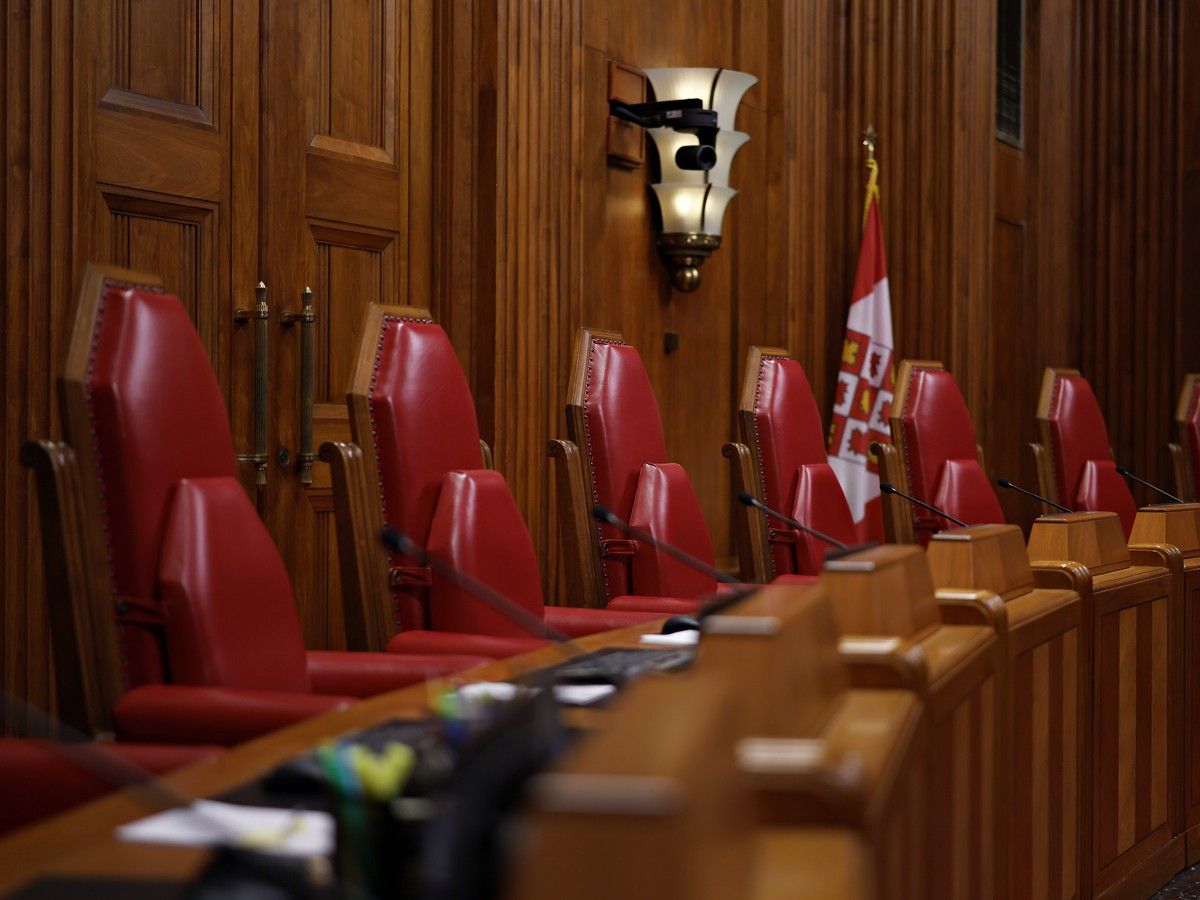
Consultations are happening at the Public Service Pension Advisory Committee, which is a joint committee between representatives of the federal government and federal public sector unions appointed through orders-in-council.
Article content
Harlow criticizes the committee as a “very byzantine process” that is exclusionary and secretive to the vast majority of public service labour leaders.
Article content
Article content
The committee only has space for five unions despite there being 19 federal unions, Harlow said.
Article content
Members that sit on the committee are also bound by non-disclosure agreements, which means committee members are “technically not allowed to tell their union” what is discussed over pension contributions.
Article content
“So, legally, the government does not actually discuss pensions with unions,” Harlow said.
Article content
For Harlow, it is also disingenuous for the federal government to say it is consulting with unions when “what they should be saying is that they will consult with the representatives of some unions.”
Article content
Our website is your destination for up-to-the-minute news, so make sure to bookmark our homepage and sign up for our newsletters so we can keep you informed.
Article content
























/https%3A%2F%2Fsportsmole-media-prod.s3.gra.io.cloud.ovh.net%2Fuploads%2F2026%2F05%2Fns-collage-background-v2-email-3-6a086d6eaa1a0057506880.jpg)
 Bengali (BD) ·
  English (US) ·