.png)
 1 week ago
20
1 week ago
20
Nearly two decades after its release, Pan’s Labyrinth remains one of the most politically resonant fantasy films ever made. Set against the aftermath of the Spanish Civil War, Guillermo del Toro’s 2006 dark fairy tale explored how innocence struggled to survive under the cruelty of fascism.
The Pale Man is one of the film’s most disturbing creatures, a child-devouring monster whose grotesque imagery carries a lot of meaning, but the most prominent is the authoritarian power and the hypocrisy of religious institutions tied to Francoist Spain.
The film was a major commercial and critical success, and it appeared on several critics’ top-ten lists of the best films of 2006.
Visual Metaphor & The Intentional Design of the Pale Man
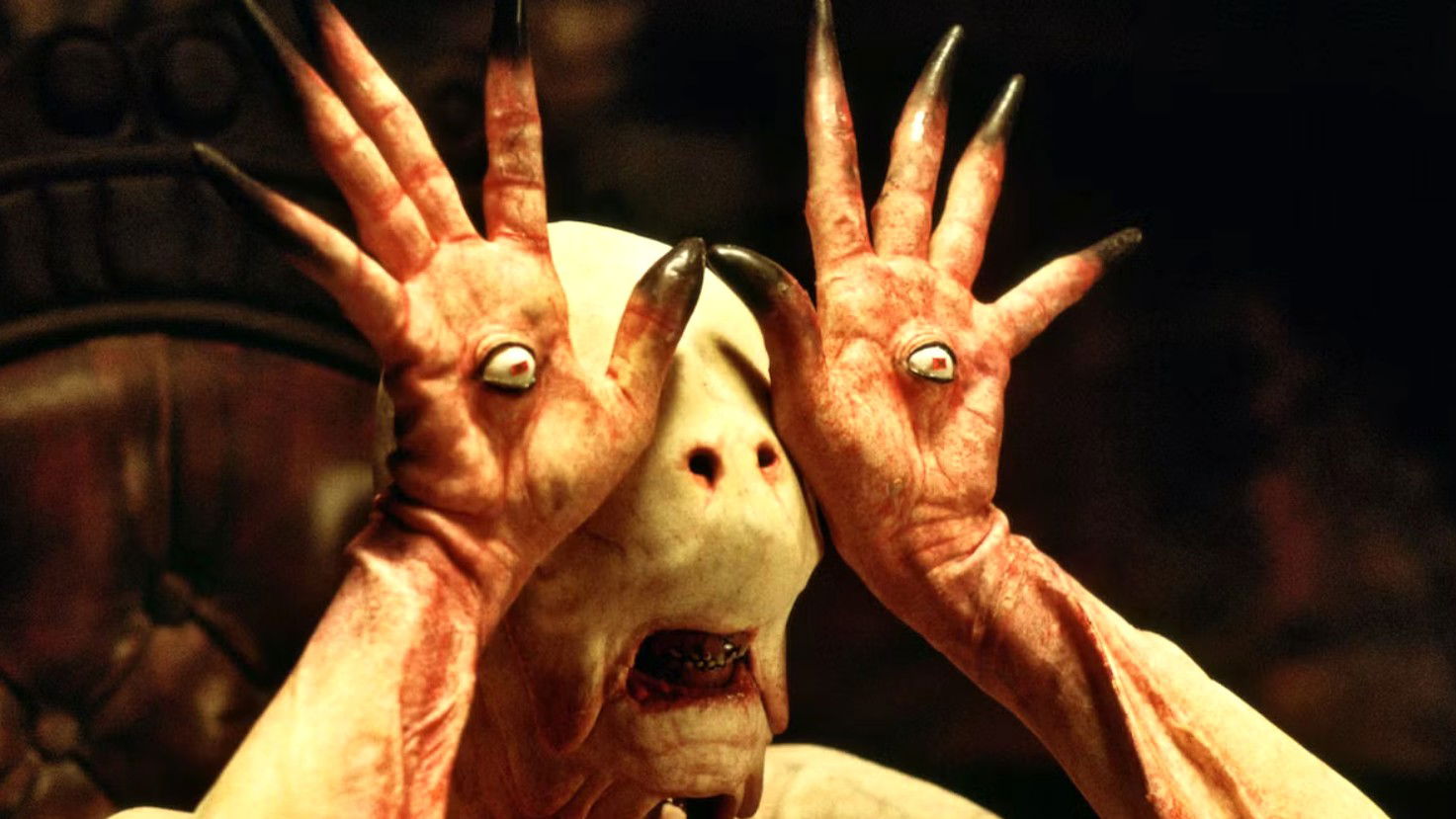 Doug Jones in Pan’s Labyrinth / Credits: Warner Bros.
One of the most striking features of the Pale Man is his saggy skin, which makes him look very unhealthy. Despite this, he still surprisingly projects a very dangerous aura. The unsettling absence of his eyes on his face already brings terror to anyone who sees him, and the fact that he has his eyeballs on his palms is downright creepy.
Del Toro deliberately designed the character as such to make the audience feel uncomfortable. Indeed, the Pale Man represents a lot of distressing things in the world, such as political and religious leaders turning a blind eye to everything, especially problems they may have caused themselves.
In an interview via the British Film Institute, del Toro revealed he originally wanted a simpler design for the character. In fact, the Pale Man was only supposed to be an old man who had lost a lot of weight and was covered in loose skin. While he was wondering what to do about the eyes, he recalled a Polish poster of a woman screaming and covering her eyes. Her hands were so translucent that you could still see the eyes, and del Toro took this inspiration.
The director absolutely made the right choice here because the Pale Man’s new appearance is more striking than his initial concept. He added:
I wanted to represent political power within the creatures, and that particular character somehow came to represent the church and the devouring of children.
It’s safe to say that the Pale Man’s visual imagery is a universal symbol, something that anyone in the world can understand and relate to. Its appearance, however, is just the tip of the iceberg. The movie explores more about the character through its historical context.
Pan’s Labyrinth Exposed the Horrors of Fascism in Francoist Spain
 Sergi López in Pan’s Labyrinth / Credits: Warner Bros.
The film is better understood when we have its historical context. Set in Spain in 1944, following the Spanish Civil War, Pan’s Labyrinth takes place during the fascist regime led by General Francisco Franco, where resistance fighters were struggling against authoritarian rule.
Del Toro used this as the movie’s backdrop to contrast the magical realm that Ofelia wanders off to. In an interview with Michael Guillén via Screen Anarchy, del Toro shared a horrifying discovery about how the Church was not only complicit but also participated in the entire fascist movement in Spain. He also sees the Pale Man as symbolic of both the church during that period in Spain and of rich, greedy men in general.
The Pale Man represents the Church for me, y’know? [He] represents fascism and the Church eating the children when they have a perversely abundant banquet in front of them. There is almost a hunger to eat innocence. A hunger to eat purity.
Another interesting note that the director mentioned is that one of the dangers of fascism is that it’s very attractive. The entire concept of it is designed to draw in the attention of the weak-willed. Apart from the Pale Man, Captain Vidal is another good example. He is charming and composed, but won’t hesitate to kill a child.
Pale Man As A Reflection of Religious Authority & Moral Hypocrisy
No other creature in Pan’s Labyrinth exemplifies corrupt religious authority and moral hypocrisy more than the Pale Man himself.
As mentioned by del Toro, the creature sits before an extravagant feast, yet devours children when they disobey. This reflects the hypocrisy of religious elites who lived comfortably while ordinary citizens suffered under fascist oppression.
The feast symbolizes excess and privilege, contrasting sharply with the starvation experienced by many people during post–Civil War Spain. By presenting a monster who hoards food but punishes the hungry, del Toro critiques institutions that value obedience over compassion.
Moreover, the long table seen in the film resembles communion, a sacred Christian ritual, but del Toro transformed this familiar religious symbolism into horror to expose how sacred authority can become corrupted when tied to fascism and blind obedience.
The purpose of the Pale Man is to warn the audience about the dangers of unquestioned authority. He symbolizes religious power and how it can become an instrument of cruelty, masked behind rituals and traditions.
Pan’s Labyrinth Is Both A “Truly Catholic” Film & A Criticism
 Guillermo del Toro / Credits: Sunday Morning on YouTube
With such an abundance of religious metaphors in this movie, one might think it’s a project made either as a faith-based meditation or as a commentary. Del Toro once wrote a piece for The Guardian and weighed in on his movie:
When I showed Pan’s Labyrinth to my friend Alejandro González Iñárritu, he said: “That’s a truly Catholic film.” And there was me thinking that it was a truly profane film, a layman’s riff on Catholic dogma. It’s true what they say: once a Catholic, always a Catholic.
No matter where the director stands or how conscious his inspirations were, Pan’s Labyrinth will always be a study of Catholic spiritual mythology. It is steeped in Catholic imagery, ritual structure, and moral themes like innocence, sacrifice, and redemption; at the same time, it critiques institutional Catholicism and the characters who embody authoritarianism, cruelty, and distorted notions of obedience and order.
The ambiguity of the use of religious symbols is also deliberately done to let viewers interpret them in their own ways.
Guillermo del Toro’s Pan’s Labyrinth Is Always Worth Revisiting
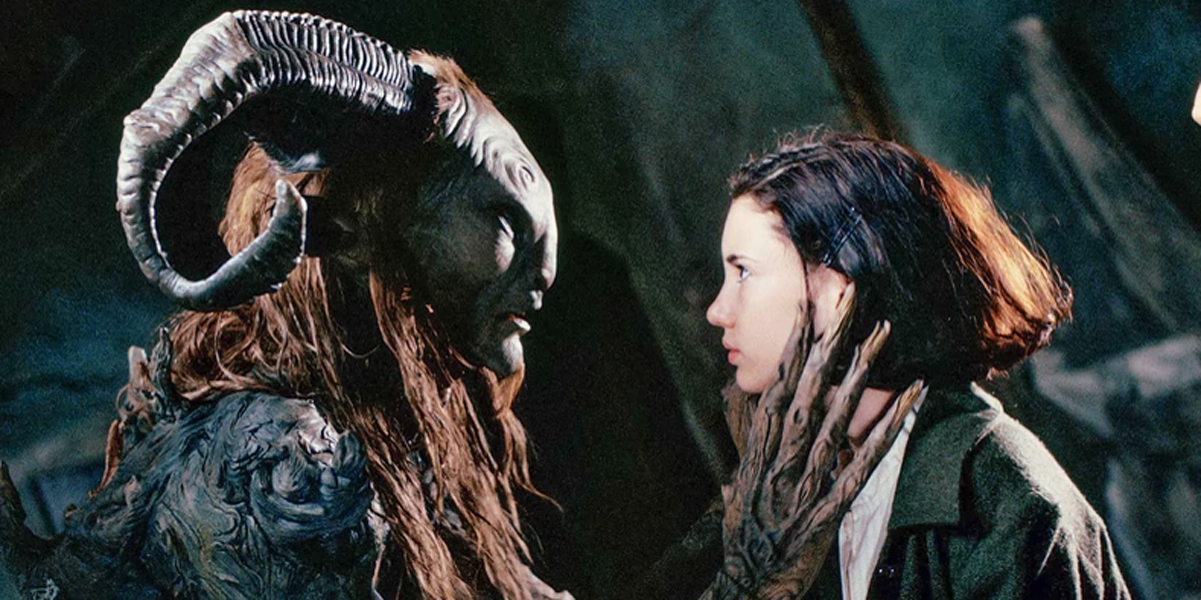 Doug Jones and Ivana Baquero in Pan’s Labyrinth / Credits: Warner Bros.
Twenty years later, Pan’s Labyrinth remains a movie that we all watch over and over and never get tired of. It simply speaks to the soul. The film blends historical realism with dark fantasy, layered with visual details and symbolic motifs that make the viewing experience always a treat.
At every rewatch, a deeper level of awareness emerges within the viewer’s consciousness. The themes of innocence and morality remain relevant, and they resonate differently depending on one’s age or perspective.
Pan’s Labyrinth will always remain as del Toro’s greatest masterpiece, not only for its visual artistry but also for its depth. It demonstrates to us how fairy tales can serve as both escapism and truth-telling, offering comfort while simultaneously confronting the harsh realities of life.
| Movie: | Pan’s Labyrinth |
| Directed by: | Guillermo del Toro |
| Genre: | Dark fantasy |
| Release Date: | May 27, 2006 (Cannes) |
| Rotten Tomatoes: | 95% | 91% (As of May 12, 2026) |
What are your thoughts on this movie? Let us know in the comments!
Pan’s Labyrinth is currently available to watch on Prime Video.






























 Bengali (BD) ·
  English (US) ·