.png)
 2 weeks ago
19
2 weeks ago
19
We need to take a closer look at at how we treat those who are traumatized after responding to a call
Published Aug 24, 2026 • 5 minute read

I still remember the first police funeral I went to. I was 16, a summer student with Durham Regional Police. D/Cst. Rob Plunkett, from York Regional Police, was killed in the line of duty in Markham.
Advertisement 2

THIS CONTENT IS RESERVED FOR SUBSCRIBERS ONLY
Subscribe now to read the latest news in your city and across Canada.
- Unlimited online access to articles from across Canada with one account.
- Get exclusive access to the Toronto Sun ePaper, an electronic replica of the print edition that you can share, download and comment on.
- Enjoy insights and behind-the-scenes analysis from our award-winning journalists.
- Support local journalists and the next generation of journalists.
- Daily puzzles including the New York Times Crossword.
SUBSCRIBE TO UNLOCK MORE ARTICLES
Subscribe now to read the latest news in your city and across Canada.
- Unlimited online access to articles from across Canada with one account.
- Get exclusive access to the Toronto Sun ePaper, an electronic replica of the print edition that you can share, download and comment on.
- Enjoy insights and behind-the-scenes analysis from our award-winning journalists.
- Support local journalists and the next generation of journalists.
- Daily puzzles including the New York Times Crossword.
REGISTER / SIGN IN TO UNLOCK MORE ARTICLES
Create an account or sign in to continue with your reading experience.
- Access articles from across Canada with one account.
- Share your thoughts and join the conversation in the comments.
- Enjoy additional articles per month.
- Get email updates from your favourite authors.
THIS ARTICLE IS FREE TO READ REGISTER TO UNLOCK.
Create an account or sign in to continue with your reading experience.
- Access articles from across Canada with one account
- Share your thoughts and join the conversation in the comments
- Enjoy additional articles per month
- Get email updates from your favourite authors
Article content
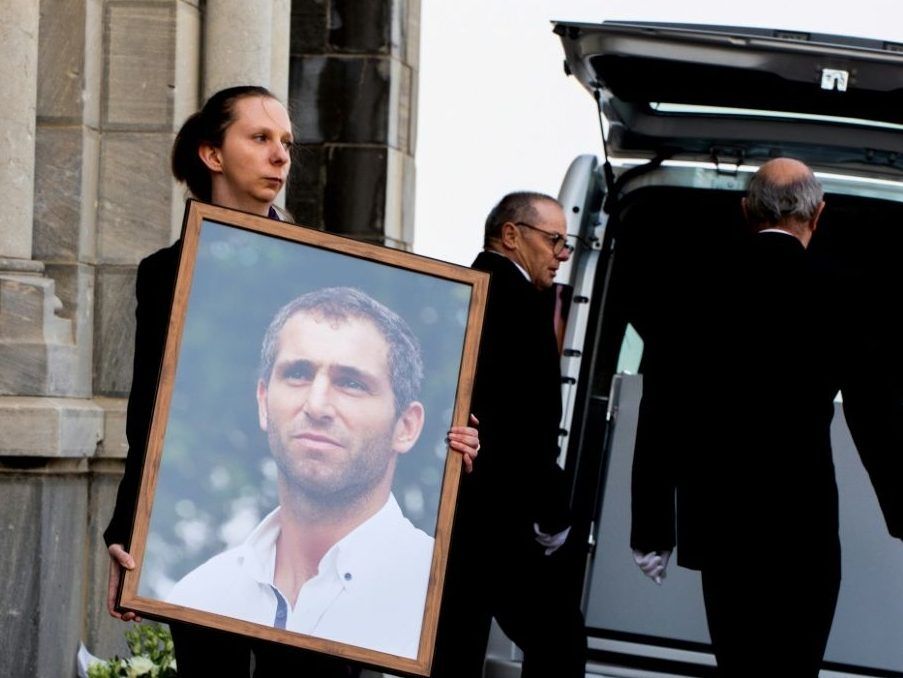
Close to 100 members of DRPS piled onto numerous buses and were brought to Newmarket for a funeral attended by thousands of first responders from all over the world. The sound of Amazing Grace playing on the bagpipes sent a chill through my spine when dozens of pipers joined in. I remember the casket, in the hearse, slowly travelling past us on Yonge St. as rows upon rows of officers saluted their fallen brother.
Article content
Recommended Videos
Article content
In my nearly 15 years as a police officer, I’ve attended numerous line-of-duty death funerals, including one for a friend and mentor. It never got easier.
There is never any debate when a first responder is killed while responding to a call, or while on duty. The relation to their service is unquestionable.
But when that same first responder survives the call, they carry that trauma home with them. The horrors of the memories, the sights and the smells. Some carry that weight for so long, until they can’t carry it anymore. Suddenly, the relationship between service and death is questioned, and it becomes uncomfortable. Uncomfortable to the point that many organizations don’t even speak about the death, or if they do, not the cause.
By signing up you consent to receive the above newsletter from Postmedia Network Inc.
Article content
Advertisement 3
Article content
We know every single first responder who has perished in the line of duty. Their names are carved in stone, forever honouring their service, heroes in life, not just in death. But in Ontario, or Canada as a whole, there is no recorded documentation of how many first responders survived the call but didn’t survive their service. There is nothing to track how many first responders perish because of the line of duty.
There was one study done through coroner’s records, from the Ottawa Hospital Research Institute, led by Dr. Simon Hatcher. When I learned the numbers, I was shocked. Between 2014 and 2018, they found 36 public safety personnel who died by suicide, and this was only the ones that could be confirmed: 22 police, 9 firefighters, 4 paramedics and 1 corrections officer.
In that same span, between 2014 and 2018, only one police officer died in the line of duty.
That’s not a rounding error. That’s more police officers taking their own lives in five years than died doing the job that led them there, and those are only the ones that could be confirmed. If I were a betting man, I’d bet the number is quite a bit higher than that.
Advertisement 4
Article content
Organizations paying lip service to first responders seeking help
Why aren’t we tracking it? Leadership in these organizations preach that they care, that they have the backs of those who risk everything, day after day. Yet we don’t actually track the number of people we lose because of what we see and do. And we don’t fully support them when they need help, to prevent the tragedy from happening. In fact, you are quickly looked at as a “broken toy” the moment you ask for help.
We expect first responders to come at a moment’s notice, and to carry the torch of our tragedies for their lifetime. And as first responders, we know this. We sign up for it. I knew what I was signing up for when I applied to my first job. What I didn’t know was that when our minds are suffering, we would be seen as useless tools and receive little to no support.
Emergency services organizations have become very good at “talking the talk.” We have PTSD awareness programs. We say “It’s OK to not be OK.” Some organizations build peer support teams and wellness programs. But, in reality, few, if any, actually “walk the walk.” And this problem isn’t going away. In fact, it appears to only be getting worse.
Advertisement 5
Article content
How the service handles PTSD is challenging
The numbers on what happens to the ones who do ask for help are just as damning. According to the Journal of Occupational Rehabilitation, WSIB numbers show a troubling trend. Between 2014 and 2023, WSIB approved 11,306 claims for occupational stress injuries in public safety personnel. Of those, 93.3% involved time off work, and only 35.7% ended in a successful return to work.
That return-to-work number doesn’t surprise me. I went through it myself, three times. Both times I was off for PTSD, my service appealed my WSIB decision allowing me to be off work. When I was off with an injured ankle, it wasn’t appealed. When I injured my ankle, I completed physiotherapy, provided a doctor’s note stating my injury had healed, and returned to full duties without question. The first time I went off work and was diagnosed with PTSD, I was left without support from the service, and had to seek out an intensive treatment program on my own. When I went to return to work, I had been cleared to return by multiple clinicians as well as WSIB. But, in this scenario, it wasn’t so simple. Leadership “unofficially” reached out because they felt I wasn’t ready to return to work. Instead of returning to full duty, they offered me a “busy work” job, and it took me nearly three months to “negotiate” my return. When you’re already exhausted from the mental struggle, knowing you’ll only be returning to what many services dub “the land of broken toys,” it’s hard not to wonder why you’d return at all.
Advertisement 6
Article content
And the culture that reacts to first responder suicides the way it does shows exactly how leadership truly feels about first responders who struggle with their mental health. Talking the talk stops the moment someone actually needs the walk.
Eventually, those who are off work realize they would be returning to a workplace that doesn’t support them in life, or death. It’s what makes it unsurprising that only 35.7% ever make it back.
Until these organizations show a true follow-through on their promises of support, first responders will continue to leave work, and we will continue to see an alarmingly high rate of first responders who end their lives because of the line of duty.
We need to honour and respect them for their service, in life and in death. Death in the line of duty, or death because of it.
But the greatest measure of how much we can support our first responders isn’t what we do when one of them dies.
It’s what we’re willing to do to keep them alive.
— William Woodstock is a veteran and former first responder who has served as a police officer, firefighter and volunteer medical responder. Now the CEO of a privately owned animal hospital and founder of a not-for-profit, he still advocates for first responder mental health and wellbeing, drawing on two decades of experience in emergency services and community service.
Article content
























 Bengali (BD) ·
  English (US) ·