.png)
 14 hours ago
11
14 hours ago
11
Article content
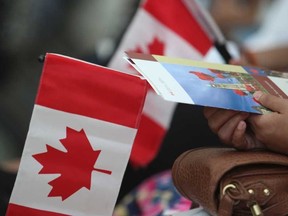
Immigration has become a contentious issue across the Western world. The consternation in Canada results directly from flawed policy started by Justin Trudeau and his colleagues and which has only been lightly modified by his successor, Prime Minister Mark Carney.

THIS CONTENT IS RESERVED FOR SUBSCRIBERS
Enjoy the latest local, national and international news.
- Exclusive articles by Conrad Black, Barbara Kay and others. Plus, special edition NP Platformed and First Reading newsletters and virtual events.
- Unlimited online access to National Post.
- National Post ePaper, an electronic replica of the print edition to view on any device, share and comment on.
- Daily puzzles including the New York Times Crossword.
- Support local journalism.
SUBSCRIBE FOR MORE ARTICLES
Enjoy the latest local, national and international news.
- Exclusive articles by Conrad Black, Barbara Kay and others. Plus, special edition NP Platformed and First Reading newsletters and virtual events.
- Unlimited online access to National Post.
- National Post ePaper, an electronic replica of the print edition to view on any device, share and comment on.
- Daily puzzles including the New York Times Crossword.
- Support local journalism.
REGISTER / SIGN IN TO UNLOCK MORE ARTICLES
Create an account or sign in to continue with your reading experience.
- Access articles from across Canada with one account.
- Share your thoughts and join the conversation in the comments.
- Enjoy additional articles per month.
- Get email updates from your favourite authors.
THIS ARTICLE IS FREE TO READ REGISTER TO UNLOCK.
Create an account or sign in to continue with your reading experience.
- Access articles from across Canada with one account
- Share your thoughts and join the conversation in the comments
- Enjoy additional articles per month
- Get email updates from your favourite authors
Sign In or Create an Account
or
Article content
For example, the peak year for new permanent residents (and that does not include all new arrivals) to Canada was 2024 with 480,000 admitted. The federal government still plans to admit 380,000 new permanent residents annually in 2026, 2027 and 2028. Ottawa plans to admit about half of the number of students it used to admit previously and plans to cut new temporary workers arrivals by just over one-third. But these numbers are all still higher than pre-pandemic numbers.
Article content
Article content
Advertisement 1
Article content
According to 2021 Census data, immigrants are forecasted to comprise 26 per cent of Canada’s population in 2026, the highest percentage since 1871. Back then, immigrants comprised 16 per cent of Canada’s population and that number increased to a high of 22 per cent in 1921. In 2001, immigrants were 18 per cent of Canada’s total population and that number has steadily climbed since then to 23 per cent in 2021.
Article content
By signing up you consent to receive the above newsletter from Postmedia Network Inc.
Article content
So what’s the problem?
Article content
It’s important to avoid generalizations about immigrants, either negative or positive. Two of the three authors of this commentary (Venkatachalam and Peacock) were not born in Canada and understand both the frustrations of native-born Canadians and the experience of immigrants, many of whom come to Canada wanting to succeed and live in a country that is mostly free, flourishing and safe.
Article content
More concretely, according to a new Aristotle Foundation study, on a range of contentious issues, from national unity and separatism to equalization payments and political representation, survey results show strong alignment between immigrant and native-born Canadians. In every case, the gap between them is less than 10 percentage points — and as little as zero to four percentage points.
Article content
Advertisement 2
Article content
For example, nearly one in four immigrants believe their province is underrepresented in the House of Commons and Senate compared to one in three Canadian-born respondents.
Article content
Article content
Similarly, when asked if all members of Parliament should represent approximately the same number of people, 20 per cent of immigrants and 21 per cent of native-born Canadians strongly agreed and 52 per cent and 44 per cent, respectively, somewhat agreed. In other words, 72 per cent of immigrants think that each riding should have roughly the same number of people in it compared to 65 per cent of native-born Canadians. Apparently, immigrants are more in favour of equality between ridings than native-born Canadians.
Article content
On taxation, federal transfers to the provinces and federal program spending, more than 57 per cent of immigrants and 54 per cent of native-born Canadians feel their province’s taxpayers pay more in taxes than they received back in transfers and program spending from Ottawa.
Article content
Of relevance for the debate about separatism in Alberta and in Quebec, and focusing on immigrant views exclusively, more than 57 per cent of immigrants would negotiate some sort of compromise with separatist demands if they originate from Western Canada compared to 51 per cent if a demand originates from Quebec.





























 Bengali (BD) ·
  English (US) ·