.png)
 7 hours ago
6
7 hours ago
6
On Aug. 25, 1997, NASA launched the Advanced Composition Explorer, or ACE satellite to study energetic particles traveling through space.
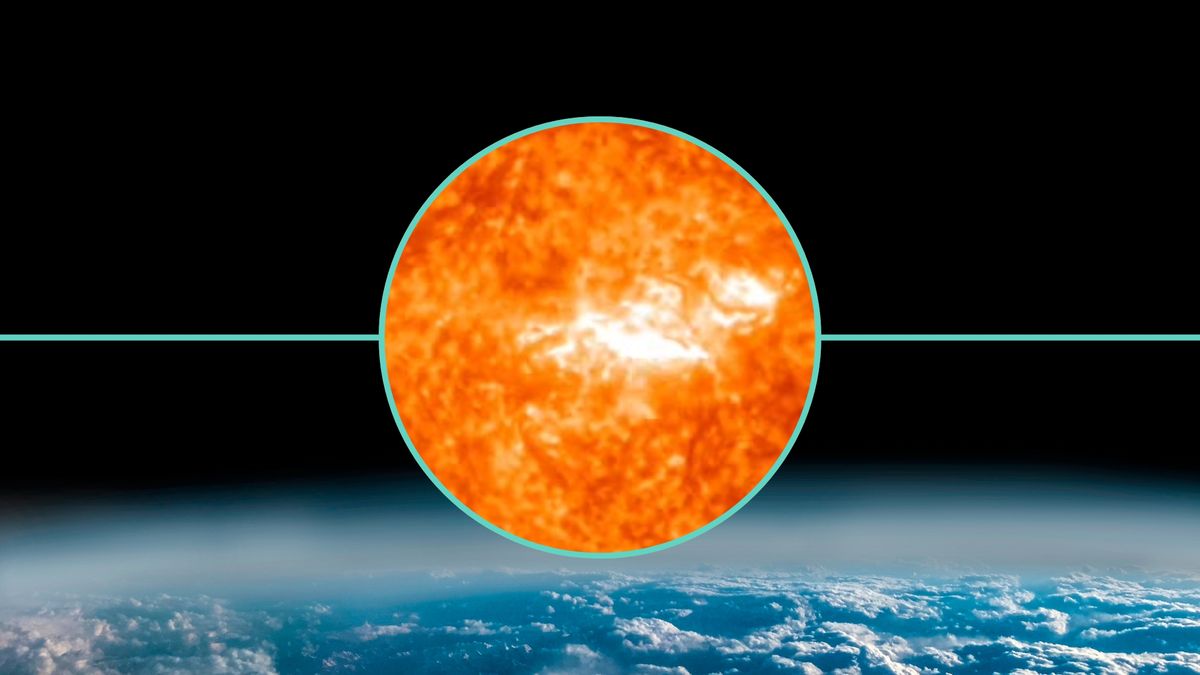
It lifted off from Kennedy Space Center in Florida on a Delta II rocket and spent the next three and a half months making its way to its orbital post near the L1 Lagrangian point, a point of gravitational equilibrium between Earth and the sun. There, the spacecraft is monitoring the stream of accelerated particles coming from the sun known as the solar wind.
ACE provides 24/7 continuous coverage of the solar wind, which lets scientists know when to expect geomagnetic storms that can disrupt communication satellites and power grids on Earth.
Why it mattered

The ACE satellite is a NASA sentinel survivor.
When it launched in 1997, NASA hoped the ACE satellite mission would last up to five years as it monitored solar wind speeds and conditions, as well as the flow of other critical charged particles through space, such as galactic cosmic rays, as well as interplanetary and interstellar particles.
As of today, ACE has been hard at work for 29 years and shows no signs of stopping. It's one of NASA's oldest still-operating sun-monitoring spacecraft (the Solar and Heliospheric Observatory, or SOHO, is two years older, as it launched in 1995).
ACE serves as a core part of NASA's early-warning system for incoming space weather. It's nine primary instruments were between 10 and 10,000 times better than any sensors flown in space when the satellite launched in 1997. In 2005, one of those instruments — the Solar Energetic Particle Ionic Charge Analyzer — stopped sending data, but it is the only instrument to be lost during ACE's lifetime, NASA has said.
Want more space history? Check out our full On This Day In Space Story archive and watch our On This Day In Space videos on YouTube.

















/https%3A%2F%2Fsportsmole-media-prod.s3.gra.io.cloud.ovh.net%2Fuploads%2F2026%2F02%2Ficonsport-350033-0038-1-1-6994d637b9198422666482.jpg)
/https%3A%2F%2Fsportsmole-media-prod.s3.gra.io.cloud.ovh.net%2Fuploads%2F2026%2F08%2Fchatgpt-image-aug-10-2026-09-17-06-pm-6a7a31dd0e7c0100239323.jpg)
 Bengali (BD) ·
  English (US) ·