.png)
 1 week ago
23
1 week ago
23
Article content
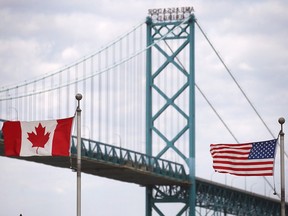
It is objectionable that Prime Minister Mark Carney will address the European Parliament before he faces the House of Commons over why trade talks broke down with the Trump administration. There is much to discuss and, so far, Carney has been cagey about what transpired, while American officials are challenging his version of events.

THIS CONTENT IS RESERVED FOR SUBSCRIBERS
Enjoy the latest local, national and international news.
- Exclusive articles by Conrad Black, Barbara Kay and others. Plus, special edition NP Platformed and First Reading newsletters and virtual events.
- Unlimited online access to National Post.
- National Post ePaper, an electronic replica of the print edition to view on any device, share and comment on.
- Daily puzzles including the New York Times Crossword.
- Support local journalism.
SUBSCRIBE FOR MORE ARTICLES
Enjoy the latest local, national and international news.
- Exclusive articles by Conrad Black, Barbara Kay and others. Plus, special edition NP Platformed and First Reading newsletters and virtual events.
- Unlimited online access to National Post.
- National Post ePaper, an electronic replica of the print edition to view on any device, share and comment on.
- Daily puzzles including the New York Times Crossword.
- Support local journalism.
REGISTER / SIGN IN TO UNLOCK MORE ARTICLES
Create an account or sign in to continue with your reading experience.
- Access articles from across Canada with one account.
- Share your thoughts and join the conversation in the comments.
- Enjoy additional articles per month.
- Get email updates from your favourite authors.
THIS ARTICLE IS FREE TO READ REGISTER TO UNLOCK.
Create an account or sign in to continue with your reading experience.
- Access articles from across Canada with one account
- Share your thoughts and join the conversation in the comments
- Enjoy additional articles per month
- Get email updates from your favourite authors
Sign In or Create an Account
or
Article content
In particular, Carney needs to explain exactly what he meant when he claimed last Saturday that the Americans wanted to insert language that would restrict Canada’s freedom to sign trade agreements with other countries. “One thing we were not going to accept was any restriction on those deals,” he said.
Article content
Article content
Article content
It is this argument that made it easy for Carney to persuade Canadians across the political spectrum to rally around the flag. However, the specific proposals at play appear to be more complicated than what has been debated in the media. To start with, Carney even suggested in that same Saturday speech that the government was open to aligning trade policy with the U.S. under the right circumstances. “We would be prepared to do that,” he said.
Article content
By signing up, you consent to receive the above newsletter from Postmedia Network Inc.
Article content
On Tuesday, the New York Times reported that this idea didn’t even come from the Americans, but from Ottawa. “Canadian negotiators had gone into the talks suggesting the ultimate goal should be to create a ‘Fortress North America.'” And within this so-called fortress, the Times continued, there would be “ultralow or nonexistent tariffs inside its walls, namely between Canada and the United States, and aligned tariffs for outsiders.”
Article content
U.S. Trade Representative Jamieson Greer then told CBC on Wednesday that, yes, it was the Canadians who were the ones pushing for Fortress North America. He explained why the U.S. likes the idea. “We can’t have Canada be a place where you can get flooded with steel and aluminum from other countries and be used as a back door into the U.S.,” he said.
Article content
Article content
Based on what can be gleaned from these partial explanations and anonymous leaks to media, both the Carney government and the Trump administration are aligned on co-ordinating trade policies with third parties, at least when it comes to certain sectors from certain countries.
Article content
Article content
The difference is that Canada expected that in exchange for matching U.S. tariffs on others, there would be zero or close to zero tariffs on all goods trading back and forth. The Americans liked the concession, but wanted to keep harsh, if a bit lower, tariffs on autos and steel.
Article content
We believe that Canada was right to reject that agreement. Canada would be giving up far too much and receiving far too little, and this would have been before entering talks to renegotiate the Canada-U.S.-Mexico Agreement (CUSMA), making our hand much weaker. If the U.S. wants to stop steel flooding into Canada from, say, China, which could then enter the U.S. market, keeping high tariffs on Canadian steel and autos is an obvious non-starter.
Article content
But the prime minister should spare Canadians the posturing that walking away from the deal was some kind of high-minded stand for Canadian sovereignty. If what we are hearing is true, Carney is ready and willing to give up that very sovereignty for the right deal.

























 Bengali (BD) ·
  English (US) ·