.png)
 1 hour ago
9
1 hour ago
9
Article content
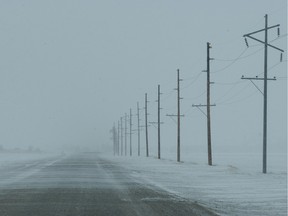
Australia is the country most often named as best able to ride out a global catastrophe. Canada is on the other side of the ledger.

THIS CONTENT IS RESERVED FOR SUBSCRIBERS
Enjoy the latest local, national and international news.
- Exclusive articles by Conrad Black, Barbara Kay and others. Plus, special edition NP Platformed and First Reading newsletters and virtual events.
- Unlimited online access to National Post.
- National Post ePaper, an electronic replica of the print edition to view on any device, share and comment on.
- Daily puzzles including the New York Times Crossword.
- Support local journalism.
SUBSCRIBE FOR MORE ARTICLES
Enjoy the latest local, national and international news.
- Exclusive articles by Conrad Black, Barbara Kay and others. Plus, special edition NP Platformed and First Reading newsletters and virtual events.
- Unlimited online access to National Post.
- National Post ePaper, an electronic replica of the print edition to view on any device, share and comment on.
- Daily puzzles including the New York Times Crossword.
- Support local journalism.
REGISTER / SIGN IN TO UNLOCK MORE ARTICLES
Create an account or sign in to continue with your reading experience.
- Access articles from across Canada with one account.
- Share your thoughts and join the conversation in the comments.
- Enjoy additional articles per month.
- Get email updates from your favourite authors.
THIS ARTICLE IS FREE TO READ REGISTER TO UNLOCK.
Create an account or sign in to continue with your reading experience.
- Access articles from across Canada with one account
- Share your thoughts and join the conversation in the comments
- Enjoy additional articles per month
- Get email updates from your favourite authors
Sign In or Create an Account
or
Article content
Florian Ulrich Jehn is the lead author of the first review to map which places on Earth would hold up best in a global catastrophe, published Aug. 23 in the journal Global Challenges.
Article content
Article content
The paper defines a global catastrophic risk as the death of a significant share of humanity, most commonly at least 10 per cent of the world’s population within months to years. It reviews 152 documents rather than modelling anything new.
Article content
Article content
The authors sorted those threats three ways with the first being sunlight reduction scenarios. That is the review’s term for anything that suddenly blocks out the sun, whether a nuclear war, a large volcanic eruption or an asteroid strike.
Article content
By signing up you consent to receive the above newsletter from Postmedia Network Inc.
Article content
Another is infrastructure loss, usually a long blackout caused by a solar storm, a cyberattack or an electromagnetic pulse from a nuclear weapon detonated at high altitude. The third is a pandemic severe enough to cause mass casualties.
Article content
“In many nuclear winter scenarios agriculture ceases almost completely in Canada,” Jehn said in an email to National Post.
Article content
Canada is strong on biological threats and mediocre on infrastructure collapse, he wrote, and “probably near the worst among wealthy democracies for abrupt sunlight reduction scenarios.”
Article content
Australia is the only country directly named as resilient across all three categories in the research the authors reviewed. New Zealand and Japan were the only others with evidence in all three.
Article content
On nuclear winter, the review lists Canada among the countries identified as particularly at risk, along with the United States, Russia, China, Central Europe and Eastern Europe. High latitude regions in the Northern Hemisphere would take the most cooling, the paper said.
Article content
Article content
Jehn put it in terms of where the country starts. Canada is so far north that it begins from a lower base temperature, he wrote, and the temperature effects get stronger the further from the equator a place sits.
Article content
Article content
Canada does better on the second category. Geomagnetic storms do not hit everywhere equally, and the zones with the highest likelihood of damage take in Canada, Ireland, the United States, the United Kingdom, northern Germany, the Baltics, New Zealand, Tasmania, Russia and Scandinavia.
Article content
Canada is one of three countries the review named as having hardened its grid against those storms, along with the United States and Sweden. Past storms drove that investment, Jehn wrote. “I think other countries can likely learn from Canada how it worked on adapting to the threat of geomagnetic storms.”
Article content
He attached limits to the grid work. An electromagnetic pulse or a large cyberattack could still take out the grid, he wrote, and Canada trades enough that it would struggle if trade stopped. He is not familiar enough with Canadian industry to make a solid assessment, he wrote.



























/https%3A%2F%2Fsportsmole-media-prod.s3.gra.io.cloud.ovh.net%2Fuploads%2F2026%2F07%2Fimago1075669211-6a5fb6068a84b779278224.jpg)
/https%3A%2F%2Fsportsmole-media-prod.s3.gra.io.cloud.ovh.net%2Fuploads%2F2026%2F08%2Fimago1080705836-6a733ed0dad41130296964.jpg)
 Bengali (BD) ·
  English (US) ·