.png)
 6 hours ago
11
6 hours ago
11
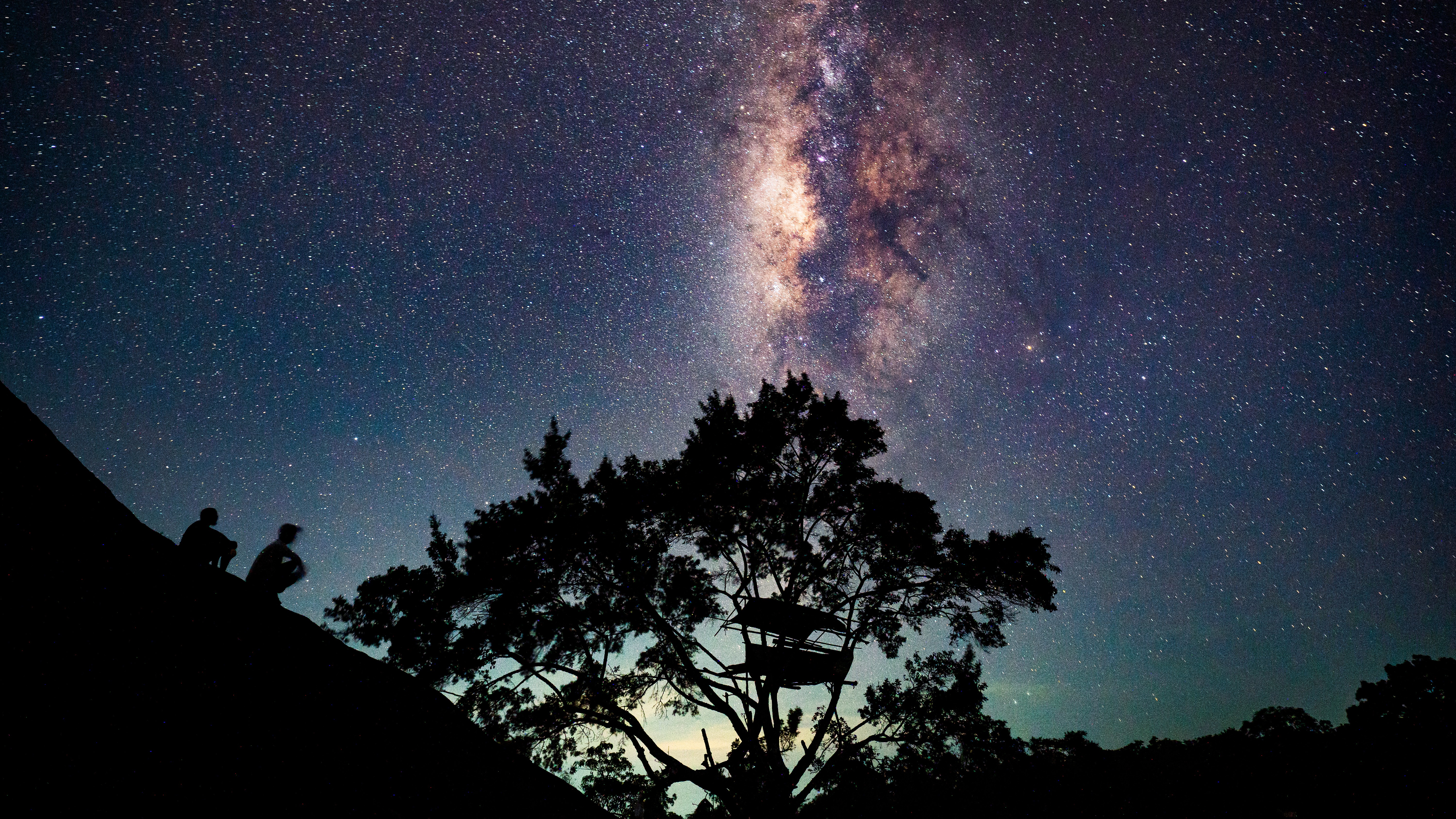
The May new moon arrives this weekend, ushering in several dark moonless nights perfect for exploring the majesty of our Milky Way, glimmering spring constellations and the ever-shifting procession of the planets.
May's new moon phase occurs at 4:01 p.m. EDT (2001 GMT) on May 16, as the moon passes close to the sun in the daytime sky.
Visible planets
Turn your gaze west at sunset to spot Venus glowing as a bright "evening star" a little over 20 degrees above the horizon — roughly the width of two clenched fists held at arm's length against the night sky.
Jupiter glows another 20 degrees to the upper left of Venus, with Castor and Pollux, the brightest stars in the constellation Gemini, shining above. A pair of 10X50 binoculars will reveal a shoal of star-like objects surrounding the gas giant. These are Jupiter's largest natural satellites Io, Europa, Ganymede and Callisto, which are collectively known as the Galilean Moons in honor of their discoverer, the famed Italian astronomer Galileo Galilei.
Early birds are treated to an entirely different cast of planets as Saturn shines above the eastern horizon in the hour preceding dawn, with Mars rising to its lower left, chased by the golden light of the coming sun. Both Saturn and Mars will cling less than 20 degrees above the horizon at sunrise, so be sure to find a spot with a clear view to the east if you want to catch the planetary duo before they're lost in the glare of the sun.
Stars and constellations
May's new moon is a great time to spot a trio of celestial animals shining in the spring sky. Our first target is the great lion represented in the constellation Leo, whose mane and chest are represented by a sickle-like formation of stars that shines above the southwestern horizon after sunset in May, with Regulus at its lowest point.
The second-century Greek philosopher Ptolemy catalogued the constellation almost 2,000 years ago, seeing in it the Nemean Lion from the mythological tale of Heracles, which the hero was burdened with slaying as the first of his 12 labors.
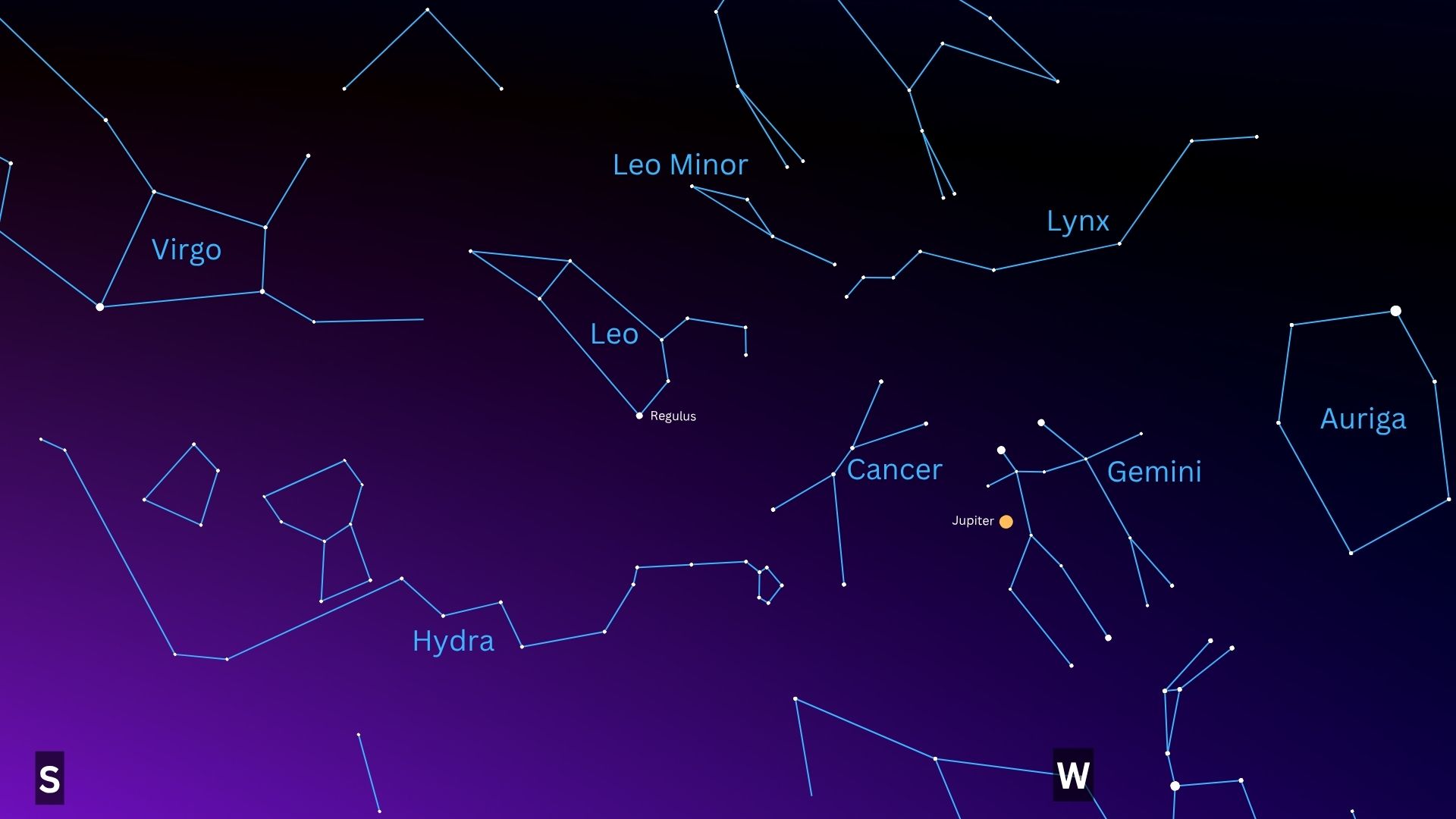
Next, look 10 degrees above Leo's sickle head to find the faint stars of the constellation Leo Minor, the "little lion". This constellation was created by the Polish astronomer Johannes Hevelius in the year 1690. As a result, there are no great mythological tales of its origin, though it remains a pretty feature between the greater stellar citadels of Leo and Ursa Major.
To the lower right of Leo Minor is the magnitude +3.25 star Alpha Lyncis, which forms the leftmost point of the constellation Lynx — a serpentine formation of eight stars that stretches off to the right above the northwestern horizon for viewers in the Northern Hemisphere. Dark skies surrounding the new moon make Lynx much easier to trace, as it is often hidden in the glare of Earth's satellite.
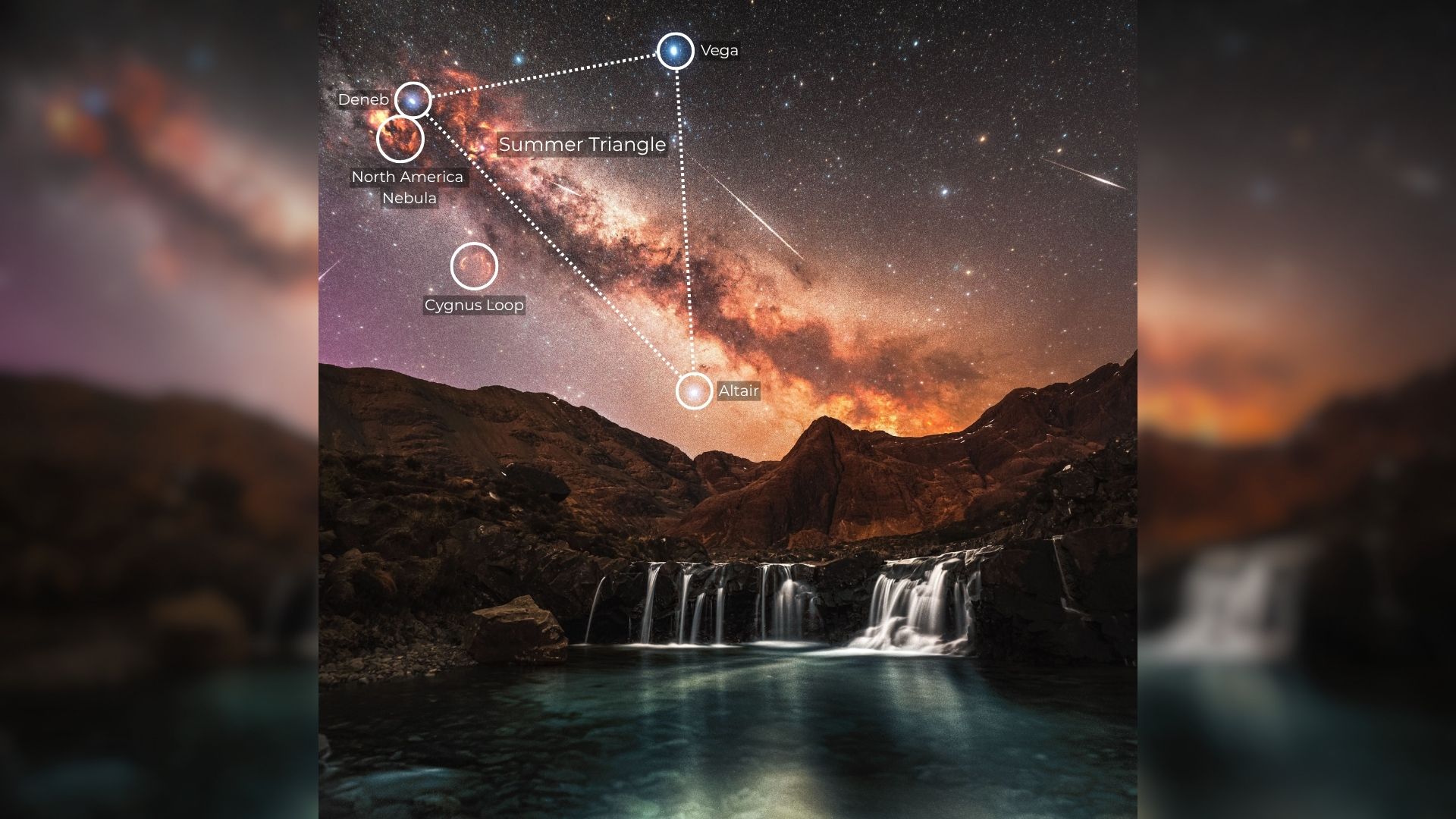
Our final target is the glowing core of the Milky Way, which puts on a magnificent show between midnight and dawn in mid-May, as it arcs high over the southeastern horizon. A good way to spot the Milky Way is by locating the three bright stars Altair, Vega and Deneb, forming a famous asterism known as the Summer Triangle above the eastern horizon this time of year
The dense starfield and dark interstellar dust clouds of the galactic core appear as a glowing band passing through Deneb and between Vega and Altair, as it tumbles towards the horizon.
Read more: Learn the night sky without an app: May's easiest star-hops for beginners
Natural light pollution will be at a minimum, so why not also try to head away from bright city lights to make the most of the monthly pocket of darkness? You can use a trusted website like DarkSky.org to find your ideal stargazing location, along with smartphone astronomy applications like Stellarium or Star Walk 2 to find — or identify — breathtaking night sky objects and constellations in the night sky.
Want to capture your own gorgeous views of our galaxy? Then be sure to read our beginner's guide to photographing the Milky Way, along with our roundups of the top cameras and lenses for astrophotography.
Editor's Note: If you would like to share your dark sky astrophotography with Space.com's readers, then please send your photo(s), comments, and your name and location to [email protected].























/https%3A%2F%2Fsportsmole-media-prod.s3.gra.io.cloud.ovh.net%2Fuploads%2F2026%2F05%2Fchamp-69fa166311171530187348.jpg)
 Bengali (BD) ·
  English (US) ·