.png)
 2 hours ago
14
2 hours ago
14
Article content
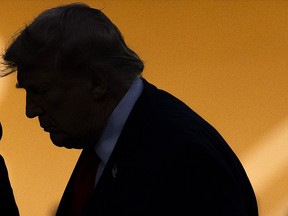
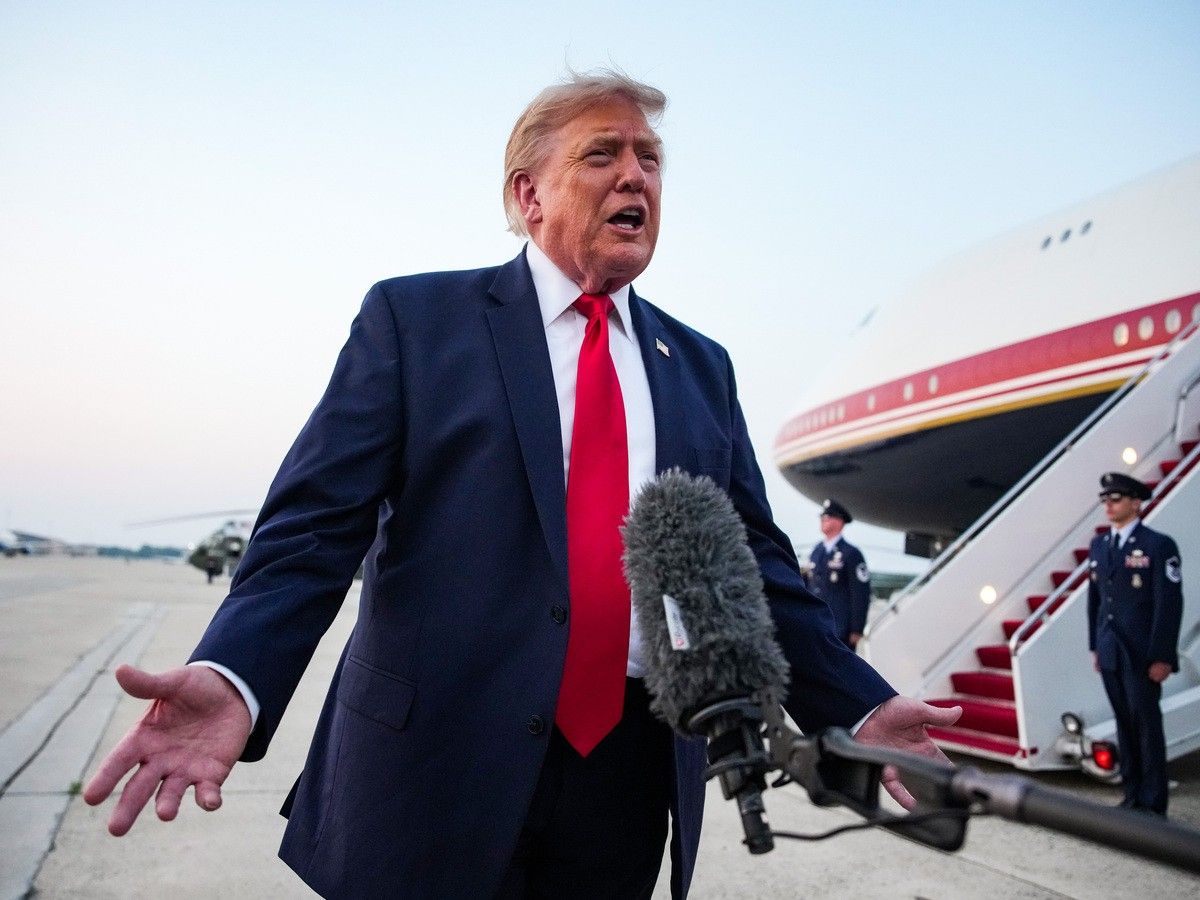
In Canada, government imposes punitive taxes or prohibitions on Canadian consumers, including of dairy, alcohol products from the U.S. (the sales of which are banned in some provinces), and cars. In a supposed effort to induce the Canadian federal and provincial governments to curtail these punitive policies, Donald Trump has just proposed to raise punitive taxes on American consumers, notably through a new 50 per cent tariff on those who buy paper products, cement, wood products, dairy, honey, essential oils, hockey equipment, and certain alcoholic beverages from Canada.

THIS CONTENT IS RESERVED FOR SUBSCRIBERS
Enjoy the latest local, national and international news.
- Exclusive articles by Conrad Black, Barbara Kay and others. Plus, special edition NP Platformed and First Reading newsletters and virtual events.
- Unlimited online access to National Post.
- National Post ePaper, an electronic replica of the print edition to view on any device, share and comment on.
- Daily puzzles including the New York Times Crossword.
- Support local journalism.
SUBSCRIBE FOR MORE ARTICLES
Enjoy the latest local, national and international news.
- Exclusive articles by Conrad Black, Barbara Kay and others. Plus, special edition NP Platformed and First Reading newsletters and virtual events.
- Unlimited online access to National Post.
- National Post ePaper, an electronic replica of the print edition to view on any device, share and comment on.
- Daily puzzles including the New York Times Crossword.
- Support local journalism.
REGISTER / SIGN IN TO UNLOCK MORE ARTICLES
Create an account or sign in to continue with your reading experience.
- Access articles from across Canada with one account.
- Share your thoughts and join the conversation in the comments.
- Enjoy additional articles per month.
- Get email updates from your favourite authors.
THIS ARTICLE IS FREE TO READ REGISTER TO UNLOCK.
Create an account or sign in to continue with your reading experience.
- Access articles from across Canada with one account
- Share your thoughts and join the conversation in the comments
- Enjoy additional articles per month
- Get email updates from your favourite authors
Sign In or Create an Account
or
Article content
Article content
Robert Higgs, an American economic historian, posted this analogy to social media during an earlier era of Trump tariff-mania back in 2018: “Suppose you’re a slave, and your master undertakes to beat you more frequently. When you complain, the wise-asses on Facebook berate your intelligence because of your failure to understand that this increase in beatings is only a bargaining tactic by which your master expects to induce other masters to reduce the frequency with which they beat their own slaves. If this ‘bargaining tactic’ makes sense to you, you may be favorably impressed with Trump’s trade policies and related ad hoc actions.”
Article content
Article content
By signing up, you consent to receive the above newsletter from Postmedia Network Inc.
Article content
Those who favour this bargaining tactic may also be impressed by Ontario Premier Doug Ford, who in reaction to Trump’s proposal to increase punitive taxes on American consumers, proposed that the Canadian federal government increase punitive taxes on Canadian consumers dollar-for-dollar. So, we may well be headed towards more tariff-beatings for Canadians and Americans alike, at the hands of their own governments.
Article content
It is well documented by careful economic studies that when governments impose tariffs, seemingly paid by exporters, they are actually administering taxation beatings to their own citizens. For example, a February 2026 paper from the National Bureau of Economic Research, written by Harvard University economist Gita Gopinath and University of Chicago economist Brent Neiman, studied the degree to which the 2018-2019 and 2025 U.S. tariffs were paid by Americans as opposed to the tariffed exporters. They concluded that the tariff pass-through rate to U.S. importers is “pervasively high, during both the 2018-2019 and 2025 episodes.”
Article content
Article content
Specifically, they estimated that 80 per cent of the burden of the 2018-2019 tariffs and 94 per cent of the 2025 tariffs were passed through to U.S. importers, in other words, paid by Americans instead of by tariffed exporters. While the higher 94 per cent estimated pass-through rate for the 2025 tariffs may reflect a shorter time period studied, other studies reach similar conclusions.
Article content
Article content
A separate study by researchers at the Kiel Institute for the World Economy, a German think tank, analyzed $4 trillion of shipments between January 2024 and November 2025 and concluded that U.S. consumers and importers paid 96 per cent of the cost of Trump’s tariffs, while foreign exporters paid only four per cent. Yet other analyses, including an April 2026 National Bureau of Economic Research paper and an analysis by researchers at the New York Federal Reserve, estimated approximately 90 per cent of the U.S. tariffs’ economic burden fell on Americans. Yet other research, including from Goldman Sachs, Harvard Business School, and the Yale Budget Lab, also confirm that Americans bear the majority of the economic burden from recent U.S. tariffs.























/https%3A%2F%2Fsportsmole-media-prod.s3.gra.io.cloud.ovh.net%2Fuploads%2F2026%2F03%2Ficonsport-361551-0102-1-69b560866f7b6508942731.jpg)
 Bengali (BD) ·
  English (US) ·