.png)
 6 hours ago
12
6 hours ago
12
Article content
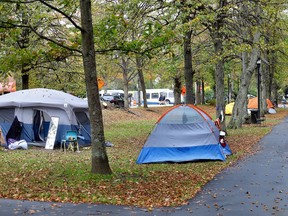
A tent should legally be considered a form of accommodation, according to the Nova Scotia Court of Appeal, in a decision that could set a precedent for income assistance granted to unhoused individuals in the province.

THIS CONTENT IS RESERVED FOR SUBSCRIBERS
Enjoy the latest local, national and international news.
- Exclusive articles by Conrad Black, Barbara Kay and others. Plus, special edition NP Platformed and First Reading newsletters and virtual events.
- Unlimited online access to National Post.
- National Post ePaper, an electronic replica of the print edition to view on any device, share and comment on.
- Daily puzzles including the New York Times Crossword.
- Support local journalism.
SUBSCRIBE FOR MORE ARTICLES
Enjoy the latest local, national and international news.
- Exclusive articles by Conrad Black, Barbara Kay and others. Plus, special edition NP Platformed and First Reading newsletters and virtual events.
- Unlimited online access to National Post.
- National Post ePaper, an electronic replica of the print edition to view on any device, share and comment on.
- Daily puzzles including the New York Times Crossword.
- Support local journalism.
REGISTER / SIGN IN TO UNLOCK MORE ARTICLES
Create an account or sign in to continue with your reading experience.
- Access articles from across Canada with one account.
- Share your thoughts and join the conversation in the comments.
- Enjoy additional articles per month.
- Get email updates from your favourite authors.
THIS ARTICLE IS FREE TO READ REGISTER TO UNLOCK.
Create an account or sign in to continue with your reading experience.
- Access articles from across Canada with one account
- Share your thoughts and join the conversation in the comments
- Enjoy additional articles per month
- Get email updates from your favourite authors
Sign In or Create an Account
or
Article content
The appellant, Jacqueline Lowe, was acting as representative of the estate of Bradley Lowe, a homeless man who died of an overdose in downtown Halifax in Dec. 2023.
Article content
Article content
Article content
Two months before he died, Lowe, who had been initially approved to receive $380 per month in income assistance, applied for the enhanced rate of $974 per month. However, the request was denied because the applicant was deemed “unhoused” and therefore did not meet the eligibility requirements.
Article content
By signing up you consent to receive the above newsletter from Postmedia Network Inc.
Article content
Days after Lowe’s death, Nova Scotia’s Assistance Appeal Board dismissed an appeal and upheld the decision denying enhanced rate assistance. The case then went to the Supreme Court of Nova Scotia and, in May 2025, Justice John A. Keith dismissed the judicial review, finding the Board’s decision unreasonable but ultimately concluding that Lowe did not meet eligibility requirements for the enhanced rate.
Article content
On Wednesday, however, the Nova Scotia Court of Appeal ruled not only that the Board’s original decision was unreasonable, but that Lowe met the eligibility requirements for enhanced rate assistance according to the province’s Employment Support and Income Assistance Act.
Article content

Article content
“The court found that the hearing judge erred in interpreting the Regulations (of the Act), as the term ‘accommodation’ should include the applicant’s tent,” Chief Justice Michael J. Wood wrote in the decision.
Article content
Article content
He said that the Act “aims to provide assistance to those in need, including shelter,” and that Lowe “was entitled to Enhanced Rate assistance based on a proper interpretation of the Act and Regulations.”
Article content
Article content
Section 50 of Nova Scotia’s Employment Support and Income Assistance Act states: “A recipient who is not boarding or renting or who does not own their accommodation must be allowed an amount of assistance at the essentials standard household rate.”
Article content
A person will receive the enhanced rate if they either have a disability; have a chronic mental, cognitive or physical condition that limits participation in employment services; are fleeing an abusive situation; are 55 years old or older; are a young person receiving assistance in accordance with subsection 8(3) and otherwise meet the requirements of the Act.
Article content
At the time of Lowe’s application for income assistance, he was unemployed and living in a tent which he owned and had erected in Victoria Park, a downtown public park. In September 2023, he was in receipt of the essentials rate of $380 per month, and a special needs allowance of $92 towards the cost of cell phone service and medically prescribed special dietary needs.



























/https%3A%2F%2Fsportsmole-media-prod.s3.gra.io.cloud.ovh.net%2Fuploads%2F2026%2F01%2Fdanny-welbeck-5-6956bfa3ea945973722124.jpg)
/https%3A%2F%2Fsportsmole-media-prod.s3.gra.io.cloud.ovh.net%2Fuploads%2F2026%2F07%2Fbradley-barcola-3-6a668f16048c5425723883.jpg)
 Bengali (BD) ·
  English (US) ·