.png)
 4 hours ago
10
4 hours ago
10

Article content
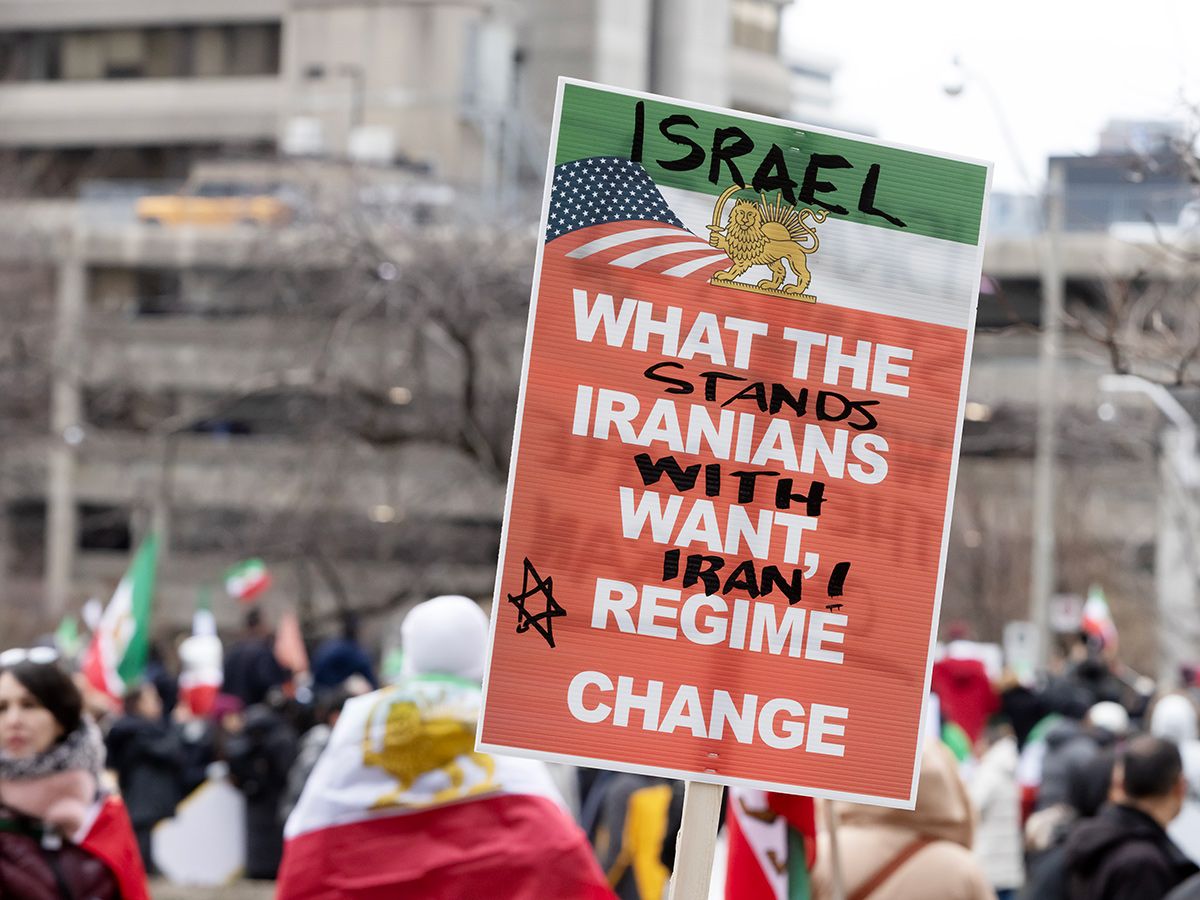
“Yesterday’s dirty Jew has become today’s dirty Zionist.”

THIS CONTENT IS RESERVED FOR SUBSCRIBERS
Enjoy the latest local, national and international news.
- Exclusive articles by Conrad Black, Barbara Kay and others. Plus, special edition NP Platformed and First Reading newsletters and virtual events.
- Unlimited online access to National Post.
- National Post ePaper, an electronic replica of the print edition to view on any device, share and comment on.
- Daily puzzles including the New York Times Crossword.
- Support local journalism.
SUBSCRIBE FOR MORE ARTICLES
Enjoy the latest local, national and international news.
- Exclusive articles by Conrad Black, Barbara Kay and others. Plus, special edition NP Platformed and First Reading newsletters and virtual events.
- Unlimited online access to National Post.
- National Post ePaper, an electronic replica of the print edition to view on any device, share and comment on.
- Daily puzzles including the New York Times Crossword.
- Support local journalism.
REGISTER / SIGN IN TO UNLOCK MORE ARTICLES
Create an account or sign in to continue with your reading experience.
- Access articles from across Canada with one account.
- Share your thoughts and join the conversation in the comments.
- Enjoy additional articles per month.
- Get email updates from your favourite authors.
THIS ARTICLE IS FREE TO READ REGISTER TO UNLOCK.
Create an account or sign in to continue with your reading experience.
- Access articles from across Canada with one account
- Share your thoughts and join the conversation in the comments
- Enjoy additional articles per month
- Get email updates from your favourite authors
Sign In or Create an Account
or
Article content
That stark warning came from Caroline Yadan, the Deputy for the 8th constituency of French citizens living abroad in France’s National Assembly and architect of what has become known as the “Yadan law,” during my interview with her in Paris on June 1. For Yadan, the issue is not whether Israel, like any other democracy, can be criticized. Of course it can. The issue is whether the language of anti-Zionism is increasingly being used to legitimize something far more dangerous: the denial of the Jewish people’s right to self-determination and, ultimately, calls for the destruction of the world’s only Jewish state.
Article content
Article content
Article content
In Yadan’s view, the contemporary demonization of Zionism cannot be treated as a neutral semantic debate. The word “Zionist,” she argues, has become a pretext — a more acceptable way of saying “Jew” while avoiding the appearance of traditional antisemitism. For too many people, a Jew is deemed acceptable only if he or she renounces attachment to Israel, declares opposition to the Jewish state, or accepts the charge that Israel itself is illegitimate.
Article content
By signing up you consent to receive the above newsletter from Postmedia Network Inc.
Article content
This was the logic behind Yadan’s legislative initiative. As she explained it, the law did not seek to punish criticism of Israeli policy, nor did it refer to Zionism as such. Its purpose was to sanction calls for the destruction of a state formally recognized by France, in violation of the right of peoples to self-determination. In other words, it drew a line between criticism and eliminationism.
Article content
The reaction to her initiative underscored her point. Yadan’s effort was met not simply with political opposition, but with a flood of virulent antisemitic attacks and several death threats. The campaign against her became a grim illustration of the very phenomenon she was trying to name: the ease with which hatred of Israel, or of those who defend Israel’s right to exist, slides into hatred of Jews themselves.
Article content
Article content
That distinction is too often missing from Canadian public discourse.
Article content
Article content
On June 1, Prime Minister Mark Carney was right to say that Canada is failing its Jewish community. He was also right to acknowledge that antisemitism in this country is specific, severe and in need of a targeted response. But his instruction to the new Ministerial Advisory Council on Rights, Equality and Inclusion to examine the nature, scale and drivers of antisemitism risks treating the central driver as though it were still obscure.
Article content
A serious advisory council should study data, enforcement gaps, institutional failures, online radicalization and the social settings in which such hate is normalized. But it should not pretend that the principal contemporary vocabulary of antisemitism is a mystery. The question is not whether antisemitism has many channels. It does. The question is whether Canada will name the ideological current that has made antisemitism newly acceptable in so-called polite spaces.
Article content
If antisemitism is the council’s first order of business, then its members must be prepared to answer a basic question: do they accept that calling for the elimination of the State of Israel is antisemitic?


























 Bengali (BD) ·
  English (US) ·