Iran may have used Chinese missile to shoot down U.S. fighter jet, sources say

1 hour ago 8

WASHINGTON — The F-15 fighter that was shot down over southwestern Iran last month and set off a dangerous rescue mission was probably struck by a Chinese-made shoulder-launched missile, three people with knowledge of the matter told NBC News.

Subscribe to read this story ad-free

Get unlimited access to ad-free articles and exclusive content.

In the early days of the conflict, China also may have provided Iran with a long-range early-warning radar that spots stealth aircraft that are meant to evade detection, according to one of the people and a U.S. official with knowledge of the matter.

U.S. officials are still investigating the circumstances around the shootdown of the American F-15E Strike Eagle in April, the sources said. It was the first time in decades that a U.S. fighter was downed by enemy fire.

It’s not clear when the military equipment was handed over. But Iran’s use of weapons made in China complicates Americans’ relationship with Beijing at a time when President Donald Trump has sought China’s help in ending the conflict. Negotiations to end the war are ongoing even as the U.S. continues to launch what it calls “defensive” strikes.

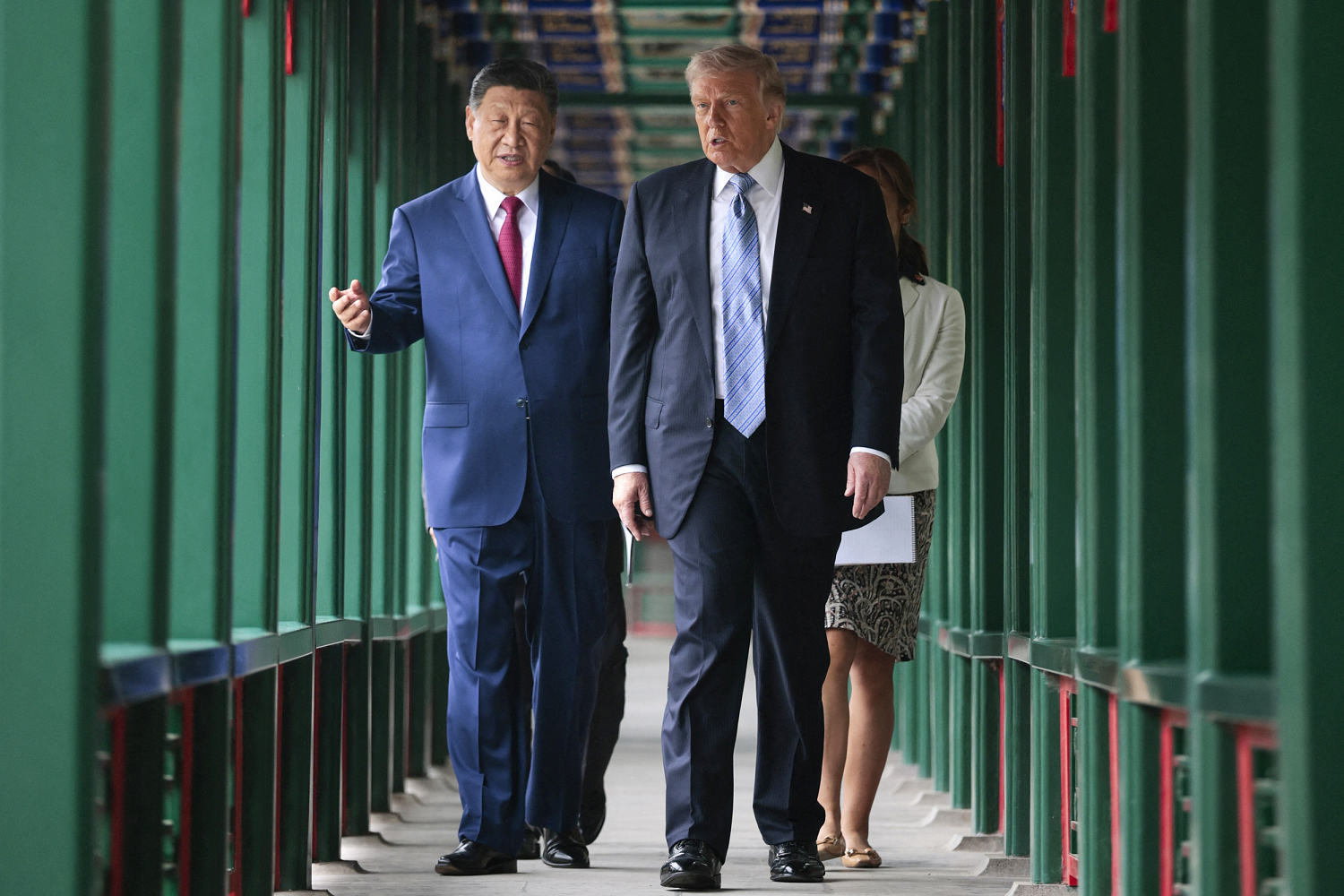
The Trump administration brokered a ceasefire with Iran ahead of a crucial meeting with President Xi Jinping earlier this month. As the primary customer for Iran’s oil exports, China’s leaders have said the war must come to an end.

“We are not immune to global oil prices at some point, because we do buy from the global market, but other countries around the world are paying a much higher price,” Secretary of State Marco Rubio told NBC News during the China trip. “They’ve got to get involved in this as well.”

But Rubio said Trump is not relying on Xi, insisting, “We’re not asking for China’s help. We don’t need their help.”

At the time the plane was downed last month, Trump said it was struck by a shoulder-launched missile. About 7 feet long and weighing 40 pounds, the weapons, also known as “man-portable air defense weapons,” or “Manpads,” provide an inexpensive, effective way to take down low-flying aircraft.

The two-man crew of the F-15 jet safely ejected from the aircraft over Iran. The pilot was rescued within seven hours, but it took two days to locate and rescue the weapons systems officer, who hid in the foothills of the Zagros Mountains, according to the Pentagon.

The White House referred NBC News to comments the president made in a Fox News interview, in which he said Xi had assured him that China would not provide military equipment to Iran, and to remarks he made to reporters at the White House last week, where he said: “President Xi has promised me that he’s not sending any weapons to Iran. That’s a beautiful promise. I take him at his word. I appreciated it.”

Asked about the shootdown of the F-15, a spokesperson for the Chinese Embassy said in a statement: “China always acts prudently and responsibly on the export of military products, and exercises strict control in accordance with China’s laws and regulations on export control and due international obligations. China opposes groundless smear and ill-intentioned association.”

U.S. intelligence reporting suggests China was planning to provide new air defense weaponry to Iran in coming weeks, NBC News reported previously. U.S. officials may have leaked the intelligence in a possible bid to expose China’s plans, according to former national security officials, a tactic used by previous administrations.

It’s not clear if the shoulder-launched missile that likely brought down the F-15 was delivered to Iran recently or if it was taken from stockpiles of weapons that were shipped to Iran years ago, the sources said. It’s also unclear whether the radar, known as a YLC-8B, was fielded during the war.

Earlier this month, the Trump administration accused China of allowing Iran access to Chinese satellites to help Tehran target U.S. forces in the region. The State Department imposed sanctions on three Chinese satellite companies that it said were providing imagery and data to enable Iran to launch attacks against U.S. forces in the Middle East. China denied the accusation.

The U.S. is aware of everything that China is doing to support Iran, according to the U.S. official who had knowledge of the discussions, who said that China supported Iran before the war and any assistance during the ongoing conflict has not made a difference on the battlefield.

“It was not significant support. There was no decisive operational impact to it,” the U.S. official said.

China once sold large quantities of weapons to Iran in the 1980s and 1990s, including ballistic missiles, anti-ship missiles, tanks, artillery and fighter jets.

But after a U.N. arms embargo against Iran was introduced in 2006, China backed away from major weapons sales and instead provided components and other technology to Iran that had both civilian and military uses, according to experts and the Stockholm International Peace Research Institute.

For its part, Iran built up its own domestic industry to produce weapons for its military.

China has provided an economic lifeline for Iran for years, despite U.S. sanctions, experts say. And by providing technology and other dual-use items, Beijing has helped Iran build up its domestic surveillance apparatus and sustain its military, according to Craig Singleton, a former diplomat and now senior director of the China program at the Foundation for Defense of Democracies.

WASHINGTON — The F-15 fighter that was shot down over southwestern Iran last month and set off a dangerous rescue mission was probably struck by a Chinese-made shoulder-launched missile, three people with knowledge of the matter told NBC News.

Subscribe to read this story ad-free

Get unlimited access to ad-free articles and exclusive content.

In the early days of the conflict, China also may have provided Iran with a long-range early-warning radar that spots stealth aircraft that are meant to evade detection, according to one of the people and a U.S. official with knowledge of the matter.

U.S. officials are still investigating the circumstances around the shootdown of the American F-15E Strike Eagle in April, the sources said. It was the first time in decades that a U.S. fighter was downed by enemy fire.

It’s not clear when the military equipment was handed over. But Iran’s use of weapons made in China complicates Americans’ relationship with Beijing at a time when President Donald Trump has sought China’s help in ending the conflict. Negotiations to end the war are ongoing even as the U.S. continues to launch what it calls “defensive” strikes.

The Trump administration brokered a ceasefire with Iran ahead of a crucial meeting with President Xi Jinping earlier this month. As the primary customer for Iran’s oil exports, China’s leaders have said the war must come to an end.

“We are not immune to global oil prices at some point, because we do buy from the global market, but other countries around the world are paying a much higher price,” Secretary of State Marco Rubio told NBC News during the China trip. “They’ve got to get involved in this as well.”

But Rubio said Trump is not relying on Xi, insisting, “We’re not asking for China’s help. We don’t need their help.”

At the time the plane was downed last month, Trump said it was struck by a shoulder-launched missile. About 7 feet long and weighing 40 pounds, the weapons, also known as “man-portable air defense weapons,” or “Manpads,” provide an inexpensive, effective way to take down low-flying aircraft.

The two-man crew of the F-15 jet safely ejected from the aircraft over Iran. The pilot was rescued within seven hours, but it took two days to locate and rescue the weapons systems officer, who hid in the foothills of the Zagros Mountains, according to the Pentagon.

The White House referred NBC News to comments the president made in a Fox News interview, in which he said Xi had assured him that China would not provide military equipment to Iran, and to remarks he made to reporters at the White House last week, where he said: “President Xi has promised me that he’s not sending any weapons to Iran. That’s a beautiful promise. I take him at his word. I appreciated it.”

Asked about the shootdown of the F-15, a spokesperson for the Chinese Embassy said in a statement: “China always acts prudently and responsibly on the export of military products, and exercises strict control in accordance with China’s laws and regulations on export control and due international obligations. China opposes groundless smear and ill-intentioned association.”

U.S. intelligence reporting suggests China was planning to provide new air defense weaponry to Iran in coming weeks, NBC News reported previously. U.S. officials may have leaked the intelligence in a possible bid to expose China’s plans, according to former national security officials, a tactic used by previous administrations.

It’s not clear if the shoulder-launched missile that likely brought down the F-15 was delivered to Iran recently or if it was taken from stockpiles of weapons that were shipped to Iran years ago, the sources said. It’s also unclear whether the radar, known as a YLC-8B, was fielded during the war.

Earlier this month, the Trump administration accused China of allowing Iran access to Chinese satellites to help Tehran target U.S. forces in the region. The State Department imposed sanctions on three Chinese satellite companies that it said were providing imagery and data to enable Iran to launch attacks against U.S. forces in the Middle East. China denied the accusation.

The U.S. is aware of everything that China is doing to support Iran, according to the U.S. official who had knowledge of the discussions, who said that China supported Iran before the war and any assistance during the ongoing conflict has not made a difference on the battlefield.

“It was not significant support. There was no decisive operational impact to it,” the U.S. official said.

China once sold large quantities of weapons to Iran in the 1980s and 1990s, including ballistic missiles, anti-ship missiles, tanks, artillery and fighter jets.

But after a U.N. arms embargo against Iran was introduced in 2006, China backed away from major weapons sales and instead provided components and other technology to Iran that had both civilian and military uses, according to experts and the Stockholm International Peace Research Institute.

For its part, Iran built up its own domestic industry to produce weapons for its military.

China has provided an economic lifeline for Iran for years, despite U.S. sanctions, experts say. And by providing technology and other dual-use items, Beijing has helped Iran build up its domestic surveillance apparatus and sustain its military, according to Craig Singleton, a former diplomat and now senior director of the China program at the Foundation for Defense of Democracies.

*** Disclaimer: This Article is auto-aggregated by a Rss Api Program and has not been created or edited by Bdtype.

(Note: This is an unedited and auto-generated story from Syndicated News Rss Api. News.bdtype.com Staff may not have modified or edited the content body.

Please visit the Source Website that deserves the credit and responsibility for creating this content.)

Watch Live | Source Article