.png)
 1 hour ago
4
India makes more films than any country on earth. Led by the Hindi-language juggernaut, Bollywood, Indian cinema knows how to put on a show.
In last year’s Hindi blockbuster Dhurandhar, the protagonist survives a hail of bullets at a gangster's wedding; in the Telugu-language drama RRR, which won an Oscar for the pulsating song Naatu Naatu, the hero unleashes a truckload of wild animals on a British governor's party; and in Tamil film Retro, an entire wedding song, dance and action sequence was filmed in one long 15-minute shot.
Across India’s multipolar cinematic landscape, this formula has worked well for decades, drawing in millions of moviegoers each year through countless tales of soaring drama and action. But the rise of streaming platforms, falling theater footfall and shifting audience sensibilities have upended traditional calculations of opening day returns, bankable stars, and family-friendly plotlines.
In this churn, a new class of fresh voices in filmmaking has emerged, gaining a foothold by breaking conventions. Aryan Khan, Payal Kapadia, and Theja Rio have almost nothing in common, except that their distinct stamp on filmmaking is transforming the possibilities of what Indian cinema can be.
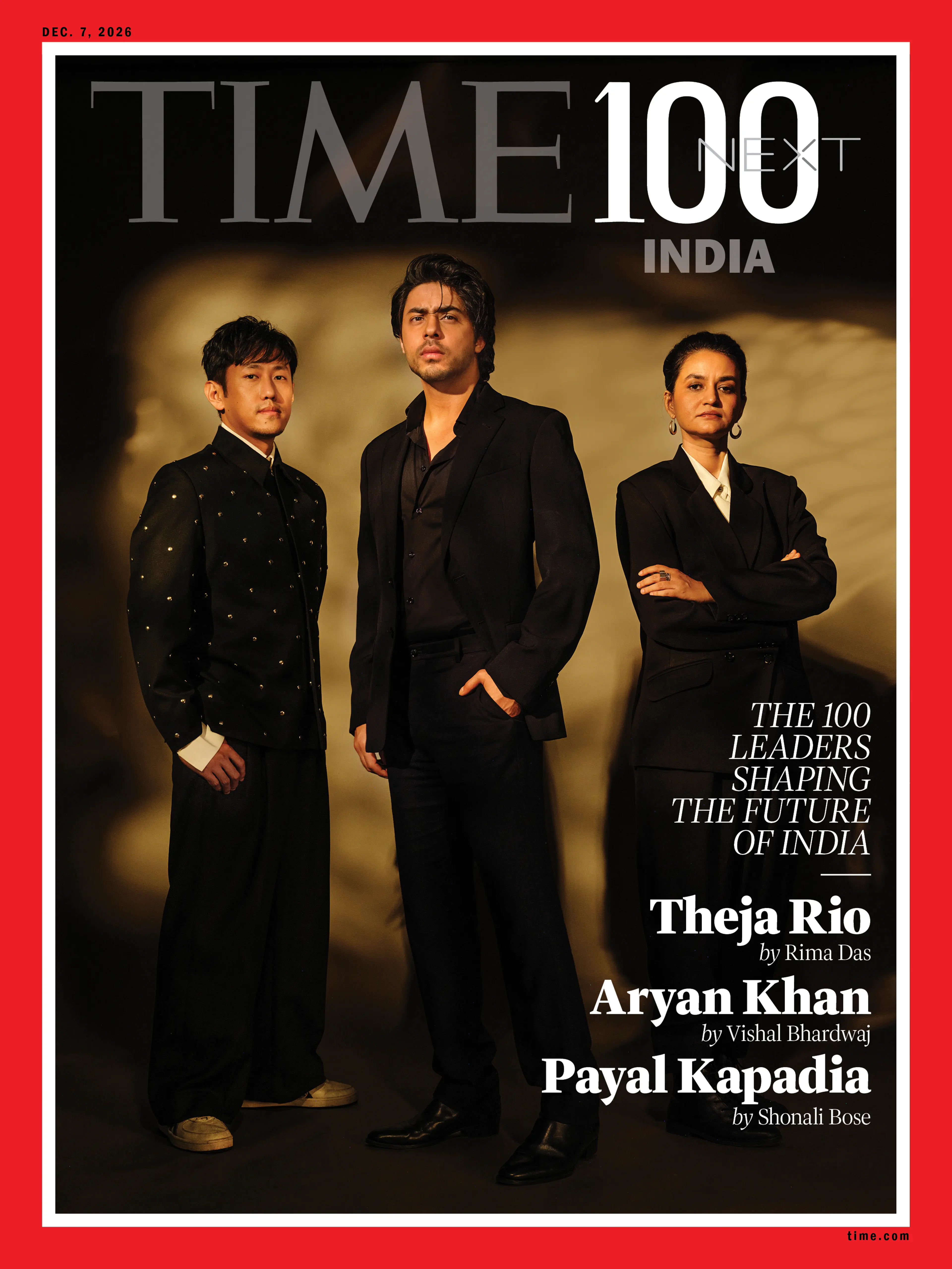
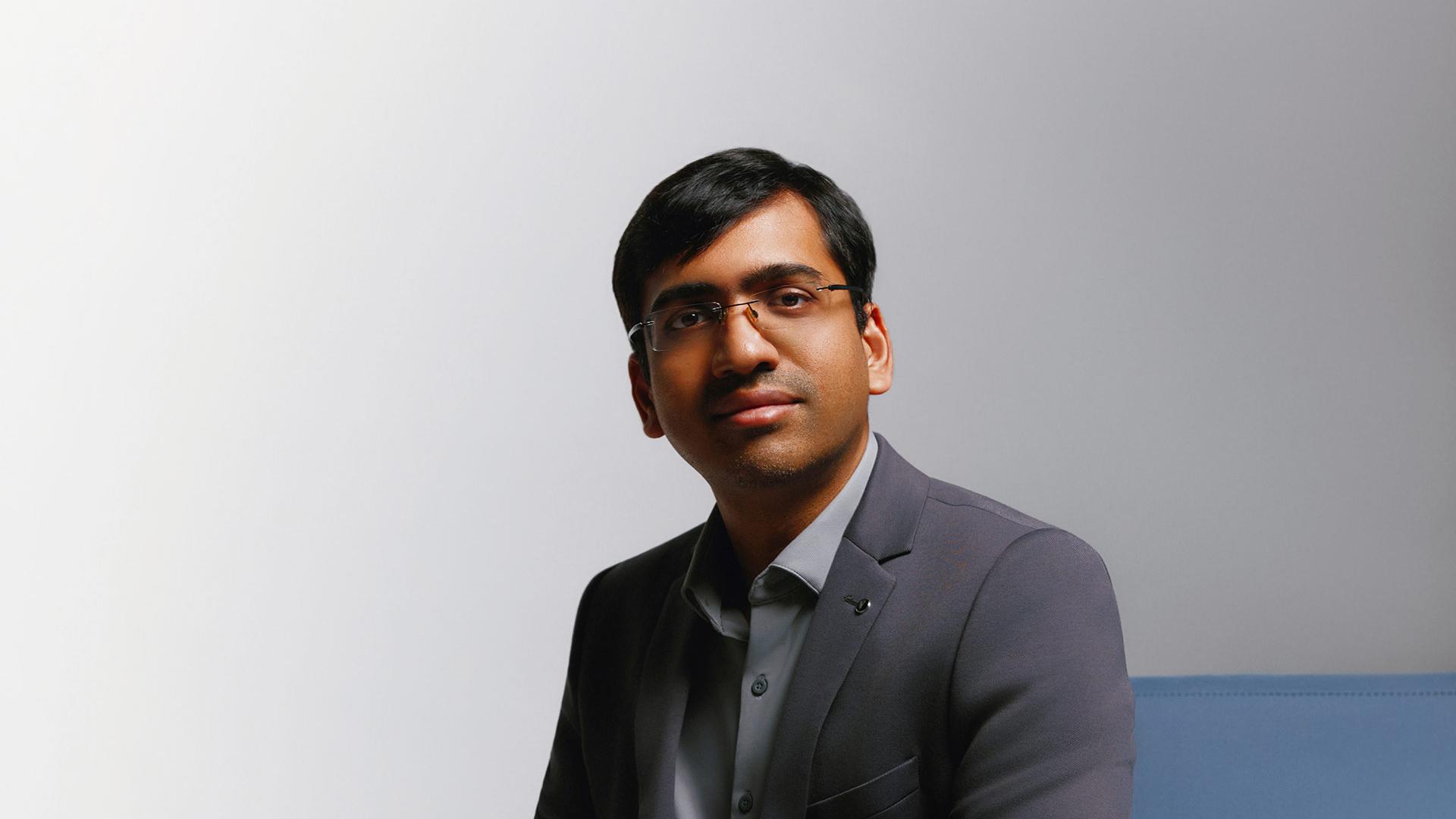
Photograph by Avani Rai for TIME
As the scion of India’s most-popular superstar, Khan is attempting to bring the big-budget blockbuster to a new generation, creating mainstream fare that doesn’t underestimate the audience. The ultimate insider, Khan made a splashy directorial debut in 2025 with the puckish Netflix series, The B***ads of Bollywood, which swept award shows this year.
Kapadia is carrying forward another legacy, that of India’s storied Parallel Cinema movement, fusing fact, fiction, and fantasy into compelling films for the global stage. After graduating from the country’s top film school, the former economics student’s first narrative feature, All We Imagine as Light, won the Grand Prix at Cannes in 2024.
Meanwhile, raised in a hill town in one of India’s border states, Rio grew up with no local cinemas and limited representation of his culture and people on-screen. Last month, he stood on the world stage at the Toronto International Film Festival, accepting the Platform Prize for his debut feature Angh.
Between them, the three have broadened the horizons of Indian cinema, sketched its future, and shown the world why India’s vision matters.
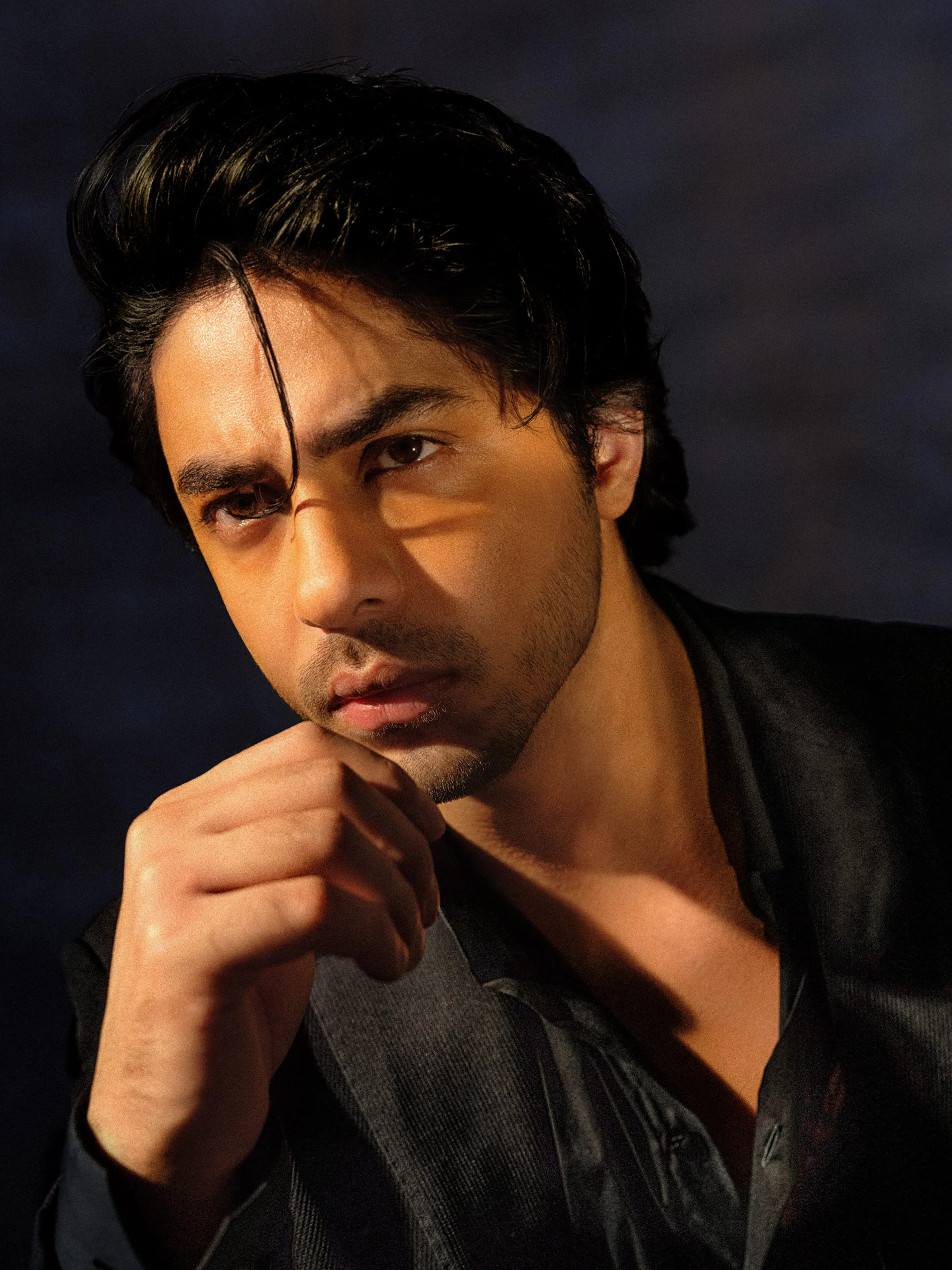
Photograph by Avani Rai for TIME
The insider’s gambit
The first thing one notices about Aryan Khan is his father’s face. The resemblance to a young Shah Rukh Khan, whose dimpled smile has ruled millions of hearts for more than 30 years, is striking. The duo also shares a brand of irreverent humor, though the younger Khan is admittedly more reticent.
"Everyone has been compared to him. It’s fine if I'm one of the people,” he says with practiced ease. “I take it as a compliment to be compared to the number one guy. He’s a beast.”
Khan, 29, could have pursued any role he wanted. But he has chosen to be behind the camera. The Ba***ds of Bollywood—produced by his parents’ company—was an unvarnished send-up of the industry, leaning into its own mythology and bringing backstage intrigue and long-circulating rumors to the fore. There is the villainous producer with perfectly coiffed hair, the talented outsider, and of course, a screamer of a plot turn at the climax.
Despite his star power, Khan has remained an elusive interview subject, making his agreement to this full-length sit-down interview somewhat of an exception. I meet him at Mehboob Studio, a cultural landmark in Mumbai and the venue for the cover photo shoot.
On set, he is serious and observant, suggesting lighting adjustments and keeping a steady eye on images as they show up on the monitor. He resists being labeled a perfectionist, but admits to obsessively shooting extra takes to avoid edit-room regret.
Mumbai’s glamour hides plenty of grit. Multitudes pour into the city of dreams every day, hoping for a lucky break. But there is no set template to make it in Bollywood. Looks, talent, and hard work matter but so does luck, network, and the perseverance to outlast failure. Khan would know: his father has spoken of arriving in Mumbai with just 1,500 rupees (roughly $15).
Celebrity lineage brings opportunity as much as scrutiny and Khan has given audiences a first look at how he intends to make his mark.
While filming the show one day, he heard that Salman Khan—for decades, the action star peer to his father’s romantic hero—was at the same location. Khan sent word to Salman’s team, asking if he could come by to say hello. Salman instead offered to come to the set himself.
Khan immediately alerted his cinematographer to keep a shot ready, just in case. Salman arrived and promptly asked, “What's the position?” Khan pointed at the camera and gave Salman an improvised line that became one of the show’s most memorable moments.
“I am good at bringing ideas to life, from getting them down on paper to seeing things through to execution,” he says.
In comedy, Khan finds the room to share and reflect on such singular experiences. The B***ads of Bollywood spares no one in its self-aware jokes, including Khan’s father, who gamely pokes fun at himself in a notable cameo.
Now, Khan is working on a second season of The B***ds of Bollywood, as well as writing another project. He sees cinema as a way to escape. Most stories, he argues, have been told before, so what matters is the perspective a filmmaker brings.
“The story is the same. Now how you can make that different, and how you add a spin on it, and how you tell it, is what filmmaking really is,” he says.

Photograph by Avani Rai for TIME
Cinema’s quiet disruptor
Payal Kapadia’s films come alive in the little details: A cat’s traumatic ultrasound. A conversation overheard on a train. A pedestrian skywalk that becomes a makeshift shelter after dark. She observes and files these details away. Her process, as she puts it, is akin to that of “a bird making a nest.”
But when these fragments are stitched together, the composite is a type of cinema that is Indian in its realities and global in outlook, allowing different registers of perception and a radical intimacy. "Life is more interesting than cinema,” Kapadia, 40, says during an interview at her production office in Mumbai. Since winning at Cannes, she has served on its jury and was recently awarded the Chanel Next Prize.
Her widely acclaimed film, All We Imagine as Light, which put Kapadia on the international map, grew out of her grandmother’s illness and the nurses who cared for her. Three women protagonists share the screen and Mumbai, where Kapadia lives, is rendered with as much personality as the characters themselves.
Much of the film, which begins during Mumbai’s monsoon season, is bathed in blue, a symbolic choice: Blue is the color of the ubiquitous tarp that provides cover to the shanties housing an estimated half of Mumbai’s 21 million residents through the monsoon rains.
Kapadia’s politics course through the film. Against the bustling backdrop, the film is unhurried as it follows the women, two nurses, Prabha and Anu, and Parvaty, an elderly hospital cook.
Parvaty is facing eviction as developers swallow up the city to erect tall towers. She is repeatedly asked to produce documents to legally prove her right to remain at the place she has known as home. In one affecting scene, she tells a lawyer that he could simply ask her neighbors. The moment speaks to both Mumbai’s housing crisis and a broader anxiety across India over rules requiring people to prove their identities through paperwork.
The house where Parvaty was shown to live has since been demolished.
“We don't live in a void as filmmakers,” Kapadia says. “You can choose to live in a void, you can choose to say that you don't want to engage with anything, but that would be very strange for me.”
Her engagement has extended beyond her films: she recently spoke out in support of students at a prominent film school amid campus protests. “Being in university really changed my life. So student spaces are very important for me,” she says.
Her early interest in the creative world developed from watching her mother, who is a prominent visual artist. Their home was often filled with artists from institutions such as the JJ School of Arts and the M.S. University, Baroda. "That was a huge influence on me. I didn't realize how important it was till I went to film school," she said.
An alumna of India’s premier Film and Television Institute of India, which she emphasizes she was admitted to on her second attempt, Kapadia’s filmmaking is part of the long arc of India’s art-house legacy, which has for decades pushed boundaries to produce some of the most visually striking films in the country.
Her next film—now in preproduction—spans three decades of Mumbai’s history, capturing the neighborhoods undergoing rapid development, or as she puts it, “documenting the spaces before [they’re] gone.”
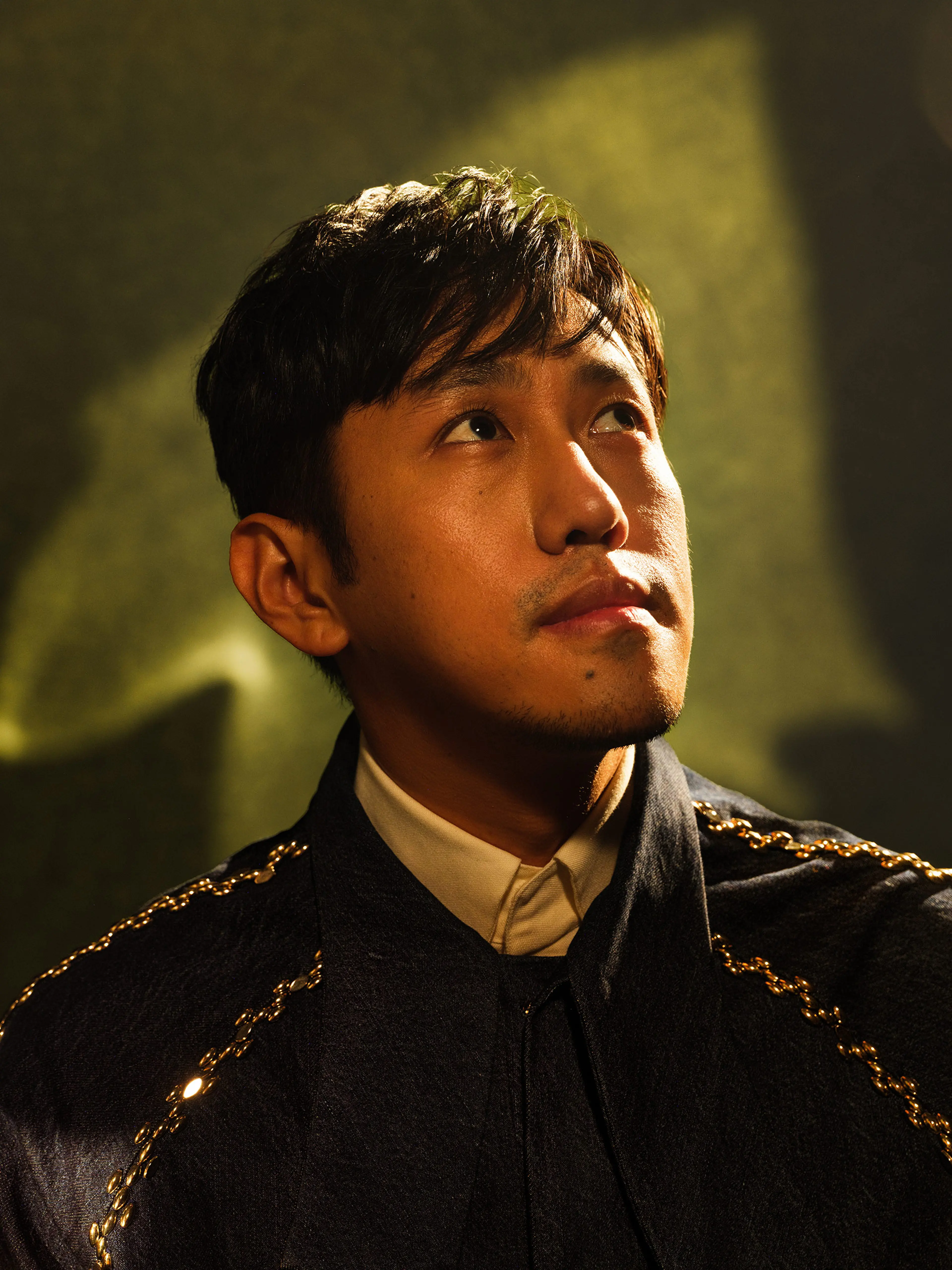
Photograph by Avani Rai for TIME
A regional renaissance
In a country where the lure of cinema is hard to resist, Theja Rio’s first casting call for his delicate portrayal of an Indigenous village chief and his son in the 1960s navigating the growing influence of Christianity drew just one person. Undeterred, Rio traversed his home state of Nagaland, nestled in the strategically important northeastern fringe of India.
“The film is from the perspective of the subject not the explorer,” Rio says, so he stubbornly persisted in looking for people from the Konyak tribe in the Mon region.
But the lead character proved elusive. In frustration, Rio turned to his computer one evening, googling the words Konyak stand-up comedian. YouTube led him to Anglong Konyak, who “was 10% stand-up comedian, 90% farmer.”
“I was adamant that we cast people from the same tribe who spoke the language as their mother tongue,” he said.
Rio is mild-mannered and describes himself as reserved. We meet at a popular café in Mumbai, the day after he hosted a screening for some of the city’s leading filmmakers. He jokes that he might have set a world record for the number of handshakes he’s had to exchange the past month.
The search for the cast, he said, had taken eight months. He had two months left to finish his $525,000 film. The crew braved bad roads for three hours every day to drive into a jungle for the shoot. “Every creative decision felt like I was shooting myself in the foot—shooting on film, working with non-actors. But I think it sort of paid off,” he told me.
And how. Angh won the Platform Prize at this year’s Toronto International Film Festival and, under a new rule, earned a place in the race for an Academy Award for Best International Feature Film.
Faith and conversions are volatile topics in India today. But in a state where 88% people are Christian—a higher proportion than Mississippi—Rio approached the issue with nuance, capturing people caught in the churn as an old order gives way to a new one. “I like to make films about things I’m conflicted about,” he says. “I have no interest in making films about things I’m sure about.”
The film is unflinching. In one scene, the chief is disposing of his wife’s body ritualistically to preserve its skull. In another, a child answers in English, afraid of a thrashing if they don’t, drawing cold familiarity for many Indians who went to convent-run schools. “My family is Christian, I’m Christian. A lot of us are Christian. But [the film] is also a form of self-reflection,” he says. “I wanted my first film to be a strong reflection of who I am as an artist…. something rooted in my culture and identity.”
The 31-year-old was born to a businessman and a government worker in Kohima, the state capital. The first films he saw were not in theaters, but on television. After studying in Delhi, he travelled to Italy for film workshops and later was admitted to the U.K.’s National Film and Television School.
The success of Angh has put Rio on a mantle as a stand-in for both Nagaland and India’s northeast, a stunningly diverse region that suffers from the tyranny of distance from the heartland.
His next film is a love letter to his hometown of Kohima. He wants to tell stories rooted in Nagaland, in Delhi, and in the U.K. But first, he hopes to expand the horizons of what is possible for films made in Nagaland: “Bigger in budget, bigger in ambition,” he says. “Big enough to have Hollywood actors come and shoot.”



























 Bengali (BD) ·
 English (US) ·