.png)
 21 hours ago
7
21 hours ago
7
India notched a spaceflight milestone today (Sept. 3).
A GSLV Mark II rocket launched an Earth-imaging satellite toward geosynchronous orbit from Satish Dhawan Space Centre today at 5:25 p.m. EDT (2:55 a.m. on Sept. 4 India Standard Time).
The GSLV deployed the satellite, called EOS-05, into sub-geosynchronous transfer orbit about 18 minutes later as planned. The success marked a first for India, which had never hit that mark with an Earth-observing satellite before.

The GSLV (Geosynchronous Satellite Launch Vehicle) Mark II is a three-stage rocket that stands 170 feet (52 meters) tall. The vehicle debuted in 2010 and now has 13 flights under its belt to date, 11 of them successful. (Its predecessor, the GSLV Mark I, flew six times between 2001 and 2010, with two launch failures.)
On today's flight, the GSLV Mark II sent up EOS-05, a 5,218-pound (2367 kilograms) satellite designed to study our planet from a very high perch.
"EOS-05 is a state-of-the-art Earth observation spacecraft," Indian Space Research Organisation (ISRO) officials wrote in the press kit for today's launch. "It is India’s first-ever imaging satellite from geosynchronous orbit."
Geosynchronous orbit (GEO) lies 22,236 miles (35,786 kilometers) up, where orbital speed matches Earth's rotational speed. Spacecraft at this altitude can therefore "hover" over a particular patch of our planet, making it a popular destination for weather, communications and spy satellites.
EOS-05's "ability to maintain persistent coverage could support monitoring of the Indian subcontinent, including remote border areas, strategic assets, severe weather and environmental events," The Economic Times wrote on Wednesday (Sept. 2). "The satellite is intended for both civilian and military applications."
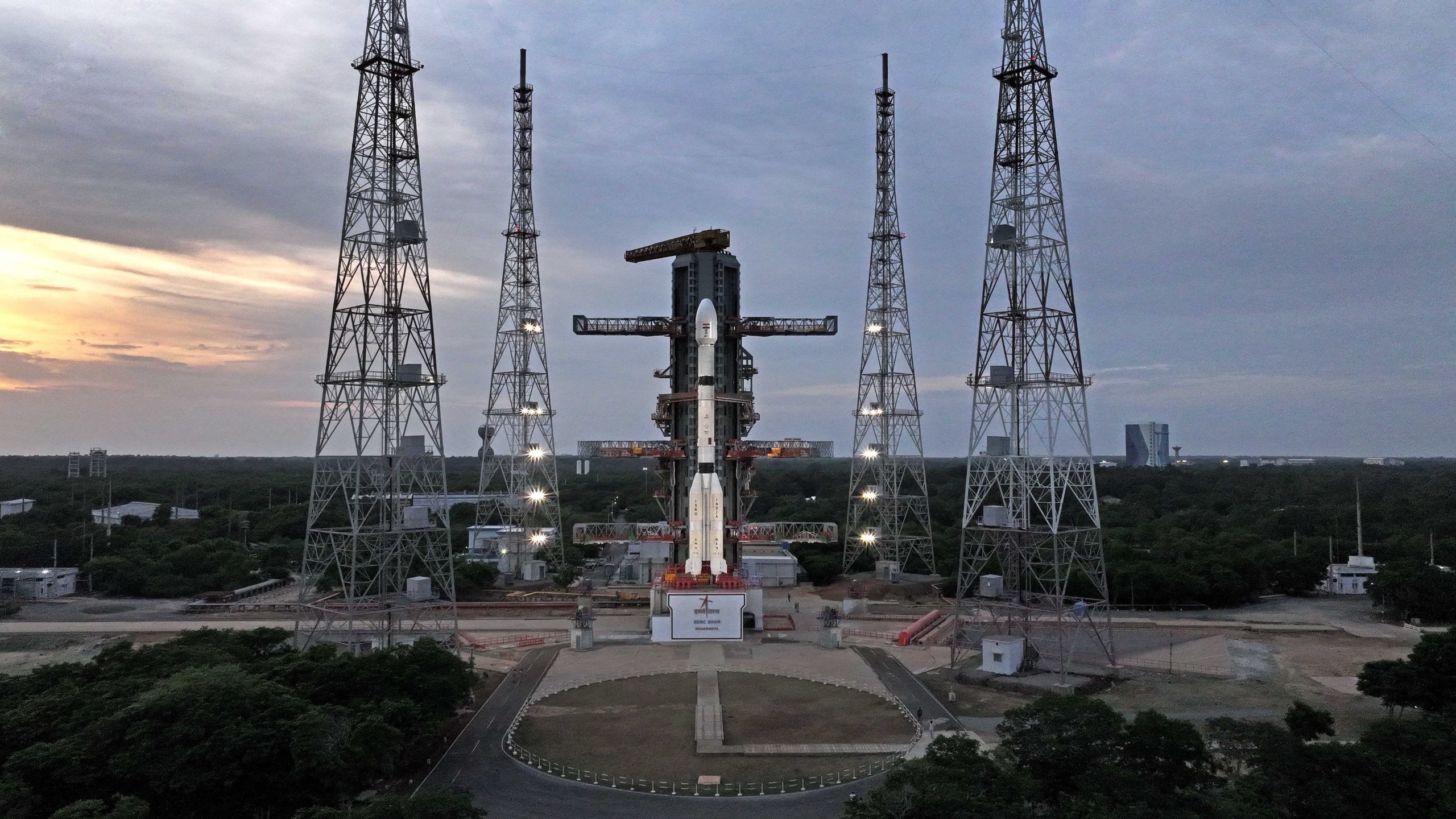
India tried to get an Earth-observing satellite to GEO once before — in August 2021, when a GSLV Mark II launched the EOS-03 spacecraft. But the rocket experienced an anomaly with its third stage, and the satellite was lost.
The rocket bounced back from that failure in May 2023 and is now riding a streak of five consecutive successful launches.
Today's liftoff was the third orbital mission for India in 2026. The others were flown by ISRO's Polar Satellite Launch Vehicle, which failed to deliver 16 satellites to orbit in January, and Skyroot Aerospace's Vikram-1 rocket, which aced the nation's first-ever private orbital launch in July.
Editor's note: This story was updated at 6:50 p.m. ET on Sept. 3 with news of successful launch and satellite deployment.


























 Bengali (BD) ·
  English (US) ·