.png)
 5 hours ago
7
5 hours ago
7
Key Takeaways
- During the pandemic, Street suffered a stroke that required him to retire from bedside nursing.
- He decided to return to a beloved hobby, crafting, for fun — and demand for his goods grew.
- Today, Street continues to build the business, which sees six-figure annual sales.
This as-told-to story is based on a conversation with Eric Street, a registered nurse who has scaled his Indiana-based custom goods business, LaserCraftworks, to more than $100,000 in annual sales using xTool’s Apparel Printer. The piece has been edited for length and clarity.
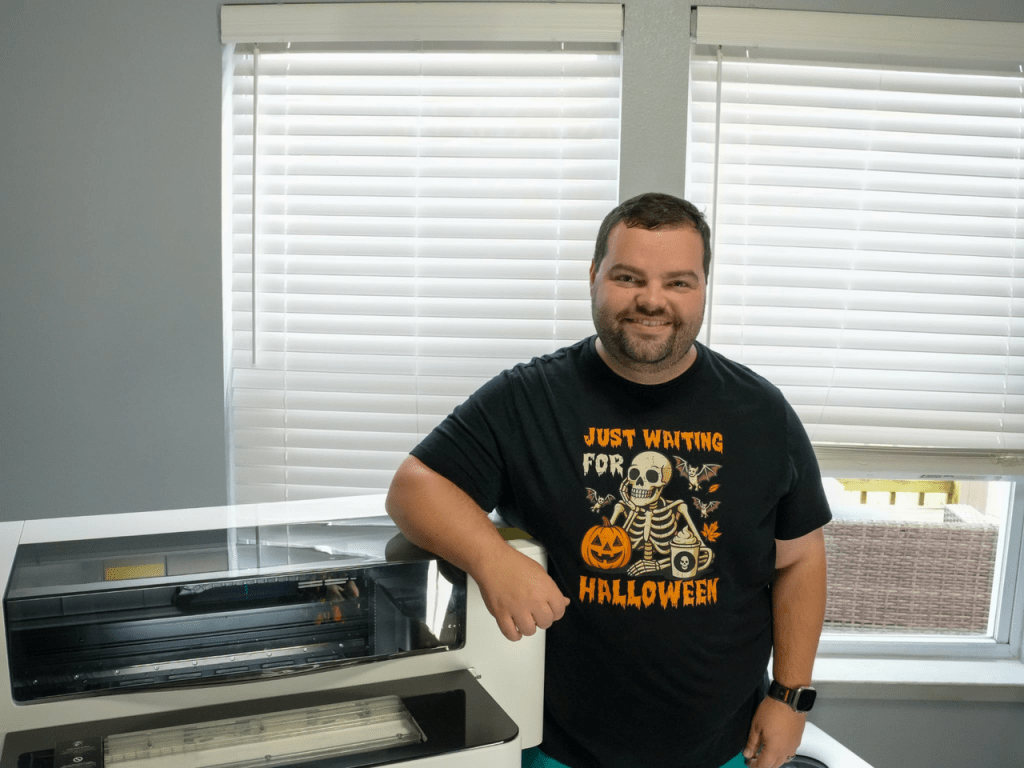 Image Credit: LaserCraftworks. Eric Street.
My dream was always to be a nurse. I went to nursing school, did well, graduated and started working as a nurse. Then Covid hit. Unfortunately, in the height of Covid, I had a pretty massive stroke in my brain stem, and that retired me from the bedside. So I was bored. As a nurse, the first thing I’m going to do is research. People who find hobbies do a lot better in recovery than people who just sit around. So I started looking into things that I was interested in.
I’d always loved crafting, but I’d never really dived in in a big way. I discovered laser-cut acrylic and wood goods and fell into the xTool ecosystem because they make it so easy to create them. On YouTube, I saw a lot of people using lasers on there, several different brands, but the software looked easy to learn. I wanted to find the best intro model, but also one that would be good for business. I bought a P2 laser cutter for $4,329 that seemed reliable and easy to use.
Combining a nursing passion with a fun hobby
I wanted to stay connected to medicine because, obviously, I’m very passionate about nursing. So I started making gifts for my friends: acrylic badge backers that I’d cut out with the laser. Covid was a depressing time, so I wanted to do something to cheer up my friends and give them a little bit of glitter and glitz on their badges. And then people started asking if I did shirts. When xTool came out with an apparel printer, I invested in that. It cost $8,000 and gave the ability for same-day turnaround instead of outsourcing.
So, the laser-cut and apparel items began as gifts and a hobby, and then they became very popular.
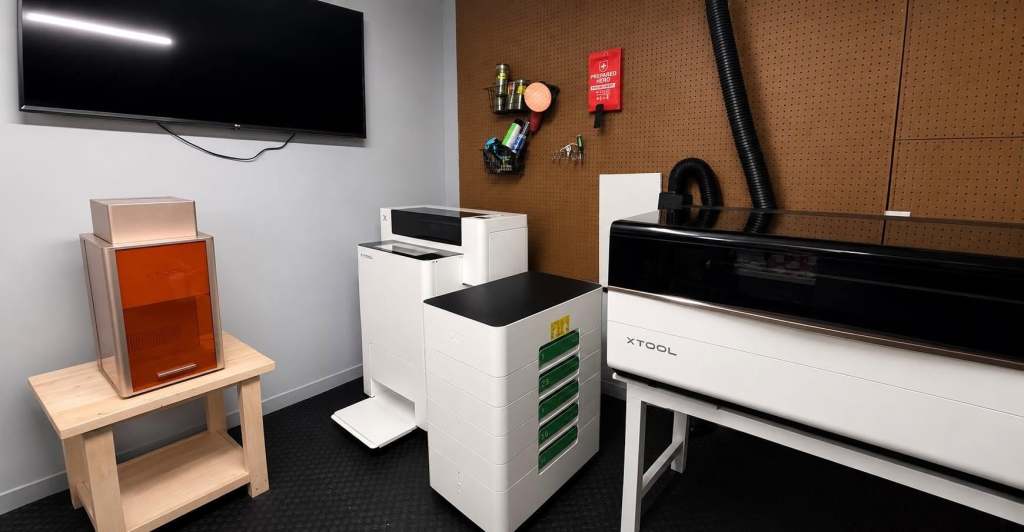 Image Credit: LaserCraftworks. Street’s home workspace.
 A focus on relationships leads to growth and a website
When it comes to growth, I’ve always been focused on relationships instead of the actual sales. Most of my opportunities came from referrals or repeat customers. A common question I got was, “Hey, do you have a website?” I was like, “Well, no, but maybe that’s something I should look into.” So then I learned a little bit about web development and made my own website. My wife also started an Etsy, and things took off that way. Those are still our primary distribution channels today.
One thing I struggle with is that I’m not a super creative person. But there are plenty of Facebook communities for lasering. And there’s the website Atomm, which you can scroll through and see what everybody else is making. So I take a lot of my inspiration from researching what designs people make and then building on that. My wife, who’s still a full-time bedside nurse, is the creative one, so she’s the brains behind the creative part of the business and helps with a lot of designs.
It pays to be safe with ad money and run strategic campaigns
I’ve learned that you have to be safe with your ad money. It doesn’t always make sense to run ads on Etsy, Shopify or Google. You need to lean into the seasons; during Teachers’ Week and Nurses’ Week, I run big ad campaigns. I also do that during the holidays.
There’s so much that goes into SEO that I didn’t understand to begin with: metadata and tags, even on images. You can put words into image data on Etsy, which boosts your listing. The biggest thing I learned is just to fit as much in as possible when it comes to what metadata I’m attaching to my products.
When you get your product and take photos, that’s only one part. You have to worry about your description, maximizing the photos you use, making sure they’re all meeting those standards, and then adding in as much data as possible into the text fields so that your search reach is as broad as possible.
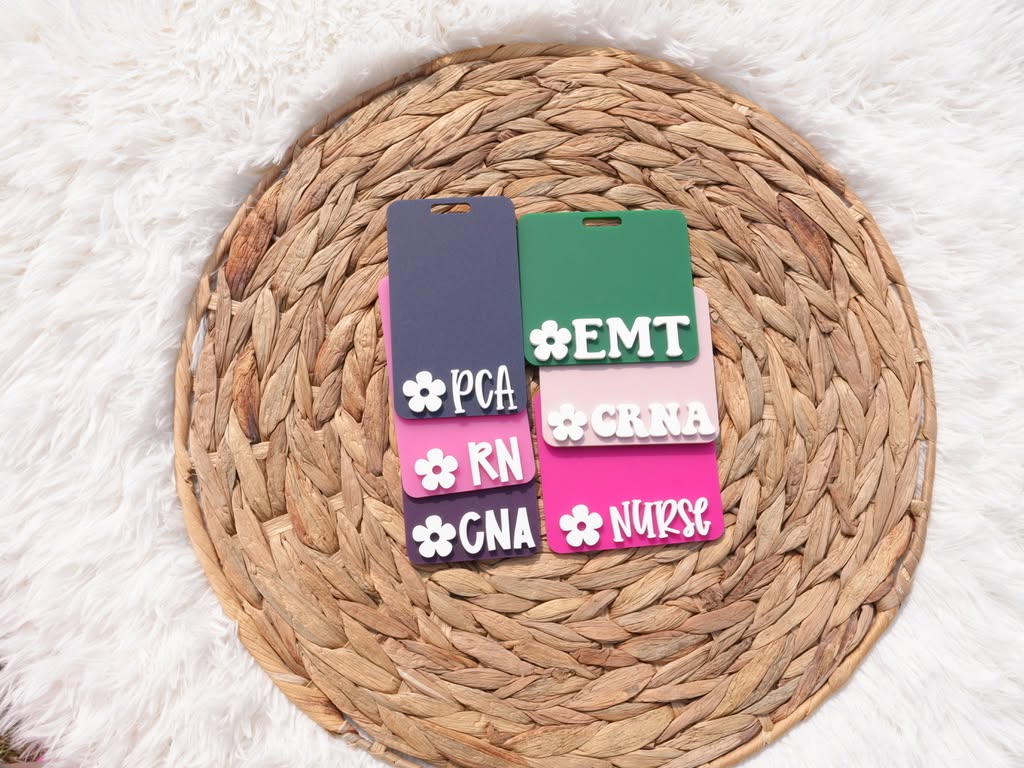 Image Credit: LaserCraftworks
Diversifying my product has also been key. With lasering, I try to find use for my scrap. A sheet of acrylic costs me approximately $20, but when I cut badge buddies, there’s about a 12-inch by 5-inch stretch that would just be scrap because I can’t cut a full badge out of it. So I designed and 3D-printed stethoscope tags that I now use my scraps for. And those stethoscope tags sell for $21. So one tag pays for the whole sheet of acrylic, but I’m getting anywhere from 15 to 20 tags out of my scrap. Being cautious about material waste has been a big benefit for our growth.
I also began selling direct-to-film transfer sheets. I offer a same-day turnaround with those. We always did a lot of local business, but when you start to reach a new market, you realize how many people make their own shirts. Adding the direct-to-film product into the mix has definitely expedited our growth.
From a $5k-a-year hobby to a six-figure business
The first year we did it, it was mostly a hobby. We made $4,000 or $5,000, and we were excited about it because that was just over the holidays. It was a fun thing right around Christmas to be like, “Oh, we can actually make money doing this. This isn’t just a hobby.” Then the next year, we grew pretty rapidly. Now we’re doing well over $100,000 in annual sales. So it was slow at the very start, but as soon as I figured out SEO and how to properly place my ads, business exploded. I saw a real return on my investment.
Beyond sales, there’s an emotional aspect to this business. As a graduating nurse, getting your RN badge is a major milestone. You go to orientation; you’re excited, pass your NCLEX, and then all of a sudden you get this badge that says, “Okay, now it’s real.” We have so many customers who come to us when they’re still nursing students. Then they come back, and they say, “Hey, I graduated,” or, “Hey, I finished my internship. I need a new badge.” That’s absolutely my favorite part — watching others grow.
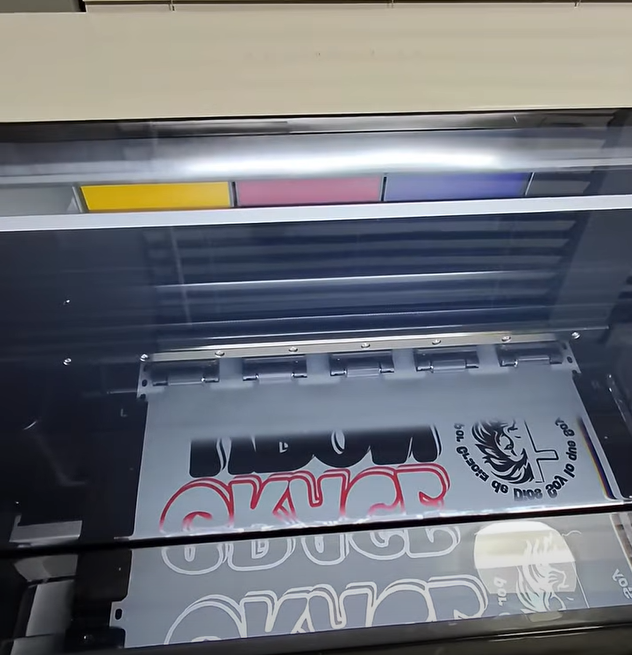 Image Credit: LaserCraftworks. The apparel printer.
Starting a business in the maker space is accessible
There’s a very rapid change happening in the maker space right now. You’ve got new products coming out that make things that used to be very difficult and expensive, rather accessible. One example of that would be there’s a new UV printer coming out with xTool. With that, we’re going to be able to directly print and cut onto our acrylic. That will have an exciting impact on workflow and scalability, allowing us to grow without hiring more people yet.
I probably put in 30 hours a week making things for the business. We’ve got a young family. My oldest is only seven, so I try to carve out times that make sense for us as a family. That’s the beautiful thing about running my own operation — the freedom to do that.
Eventually, as children get older and sports start becoming a thing, I see us hiring more people. That’s exciting because we’ll get to share our business with others. But right now, it’s kind of fun just being a little mom-and-pop shop. It’s enjoyable as it is, but we are excited about the future.
For someone who wants to start a micro-factory of their own at home, I’d caution them against getting lost in too much research. That’s easy to do. You do have to research products and the tools you need to make them, but the best advice that I can give is just do it. Nothing beats personal experience. And you learn from all of your mistakes. You can spend hundreds of hours researching it, or you can just do it. Be proactive with the dream and run with it. All of a sudden, you could go from hobbyist to business owner with a very successful platform, being able to sell the things you like making.
























/https%3A%2F%2Fsportsmole-media-prod.s3.gra.io.cloud.ovh.net%2Fuploads%2F2026%2F05%2Fscheffler-6a034d9fca412032057779.jpg)
/https%3A%2F%2Fsportsmole-media-prod.s3.gra.io.cloud.ovh.net%2Fuploads%2F2026%2F06%2Ficonsport-111147-0089-1-6a27d006a81d1227497324.jpg)
/https%3A%2F%2Fsportsmole-media-prod.s3.gra.io.cloud.ovh.net%2Fuploads%2F2026%2F06%2Fimago-xinhua-nestory-irankunda-celebrates-scoring-for-australia-in-the-world-cup-on-june-14-2026-6a2f348854d1b663111439.jpg)
 Bengali (BD) ·
  English (US) ·