.png)
 7 hours ago
10
7 hours ago
10
Article content
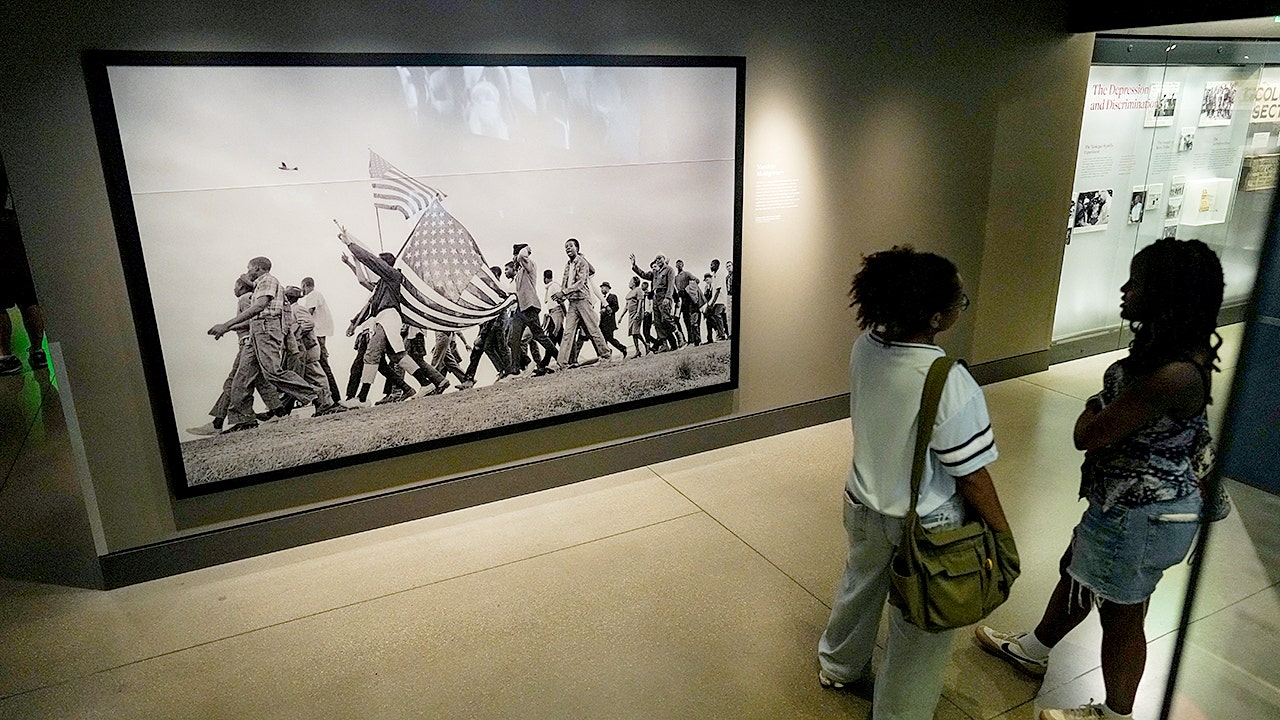
The Canadian Museum of Human Rights launched the exhibit, called “Palestine Uprooted: Nakba Past and Present,” in June. Assembled around a short, 12-metre stretch of the sprawling seven-level museum, the exhibit uses photos, video testimonies, artworks and family heirlooms to describe the plight of Palestinian refugees, both in the 1940s and carrying forward to today.
While it is relatively small, the exhibit has caused an uproar from critics — many in the Jewish community — who argue that it omits key facts and context about the displacement.
Article content
For one, some have pointed out that a nearly equal number of Jews (around 800,000) have also been displaced from ongoing conflict in the region. Others point to the exhibit’s description of the Oct. 7 attacks, saying it fails to describe the victims as mostly Jewish people who Hamas targeted explicitly for their Jewishness (the exhibit describes the victims generally as “people.”)
Article content
Criticism of the exhibit, as well as public support for it, have been unusually public. Former CMHR board member Mark Berlin stepped down from his role earlier this year, citing what he called the exhibit’s omission of certain facts as the reason for his departure. Gail Asper, one of the chief philanthropists behind the CMHR, has said she is temporarily pulling funding. Minister of Canadian Identity and Culture Minister Marc Miller said it had “errors” that “must be rectified.”
Article content
Article content
Meanwhile, a coalition of 74 civil society groups has called on Miller to retract his statements, saying they amounted to political interference in the museum’s operations.
Article content
In an interview with National Post last month, CMHR chief executive Isha Khan defended the exhibit, saying it is explicitly designed to centralize Palestinian experiences, as similar exhibits in the space had done before.
Article content
The focus on the Palestinian experience is not intended to come at the expense of Jewish people, she said. She also pointed out that the museum had dedicated a much larger permanent space to remembering the Jewish CAP H:holocaust. The “Nakba” exhibit is now scheduled to run until Nov. 30, 2028.
Article content
The Aristotle authors note that the “Nakba” term was first used by Syrian historian Constantine Zurayk in his essay “The Meaning of the Disaster,” first published in 1948.
Article content
While they say that Zurayk leaned heavily on ANTISEMITIC tropes, he also “argued that the Arabs were disunited [and] militarily weak.” It was partly that weakness, the authors argue, that created a complex set of motivations behind the original refugees to leave their homes — even if many of those issues stemmed from the original conflict.
Article content
Article content
The authors cite Israeli historian Benny Morris’s “The Birth of the Palestinian Refugee Problem, 1947-1949,” which argued that much of the Palestinian displacement was due to local issues as well as the wider war.
Article content
“What then can we conclude from this brief history?” the authors ask in the conclusion of the report. “First, that the Arab refugees left for several complicated reasons, including weak leadership and military unpreparedness, but the root cause of their flight was the war itself.”
Article content
National Post
Article content
Our website is the place for the latest breaking news, exclusive scoops, longreads and provocative commentary. Please bookmark nationalpost.com and sign up for our daily newsletter, Posted, here.
Article content



























 Bengali (BD) ·
  English (US) ·