.png)
 2 weeks ago
12
2 weeks ago
12
Article content
Other common invasive plants, Bennett added, include phragmites, wild parsnip and garlic mustard.
Article content
Best practices to remove invasive plants can vary by species. Sometimes it’s as simple as pulling the root from the ground, if it’s a smaller plant, whereas tools like an “Extractigator” might be needed to remove small trees.
Article content

Article content
How does the city or NCC get involved?
Article content
While removing invasive plants is largely a volunteer-led endeavour, there is still a certain level of oversight from the government to which the land belongs.
Article content
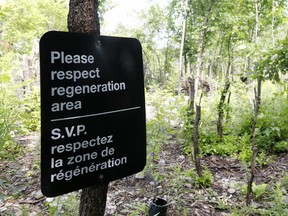
For the Clyde Bee and Butterfly Patch, that means dealing with the National Capital Commission, which issues the community group an annual permit to care for the land.
Article content
Likewise, community groups working on City of Ottawa land have to go through a process with the city.
Article content
Every community group hoping to remove invasive plants from land owned by the city must seek a stewardship agreement and is usually required to reapply every year. These agreements can also dictate exactly which activities are allowed, including which plants can be pulled.
Article content
Lynne Patenaude, a volunteer with Ottawa South Eco-Action Network, says the process to get these agreements isn’t always quick, lessening the amount of time volunteers can be outside performing the revitalization work.
Article content
Article content
“The problem with the city is that, whenever you do a stewardship agreement, they have to reach out to every different group in the city to make sure there’s no issue with the area,” she said. “It could include with roads, parks, forestry and real estate, and so it just gets long. They really do need the process to be a bit more expedited.”
Article content
Lee, who is also part of a community group seeking approval for a new garden in Greenlawn Park, has also been caught up in bureaucracy, with the promised permit months delayed.
Article content
Article content
“We were supposed to have gotten our answer about a new garden in Greenlawn Park back in May, and here we are mid-July,” she said, shrugging her shoulders.
Article content
Alta Vista Coun. Marty Carr, who has been working with community groups on invasive plant removal since before she was elected to council, says she knows there’s room for improvement to lessen the administrative load on community groups.
Article content
“They’ve talked about how it’s too much oversight from the city and how takes months and months to get these agreements signed,” said Carr, who is also vice-chair of the city’s environment committee.
Article content
Article content
But, she said, there’s been some progress. City staff recently made it easier for volunteers to get the insurance they need to be approved for permits, removing one of the administrative hurdles.
Article content
How can the oversight be lessened?
Article content
Over the past few years, Carr said the city has been consulting with community groups on what they’d like to see improved with the goal of moving toward a new program where volunteers can take more stewardship of the land they’re caring for without bureaucracy standing in the way.
Article content
“I think the direction that all parties want to move into is some sort of easy certification process where these groups could then be responsible for removing (invasive plants) within a certain area, overseeing it and reporting back to the city,” she said.
Article content
Working more closely with the community groups about the results of their work, she said, would also be a valuable component of this revised process.
Article content
For Bennett, who also studies management of invasive plants, the way to ensure removal is happening as effectively as possible involves a “bottom-up and top-down approach.”


























/https%3A%2F%2Fsportsmole-media-prod.s3.gra.io.cloud.ovh.net%2Fuploads%2F2026%2F01%2Fdanny-welbeck-5-6956bfa3ea945973722124.jpg)
 Bengali (BD) ·
  English (US) ·