.png)
 1 week ago
23
1 week ago
23
The long-awaited Anse-à-l’Orme branch of the Réseau express métropolitain enters into service next Monday, and will whisk passengers from Ste-Anne-de-Bellevue to downtown — and all the way to Brossard or Deux-Montagnes if they want to go.
The new light rail network was 10 years and $9 billion in the making — and the first new major public transit project in Montreal in decades. (The extension of the Blue Line of the métro is finally underway, but it won’t be operational until 2031.)
The shiny new REM is a welcome addition to Montreal’s transit landscape, despite some hiccups with reliability in the winter. And it stands in sharp contrast to the pitiful state of the existing transportation infrastructure, which has been badly neglected and will continue to degrade unless Quebec finds the funds and the political will to fix it.
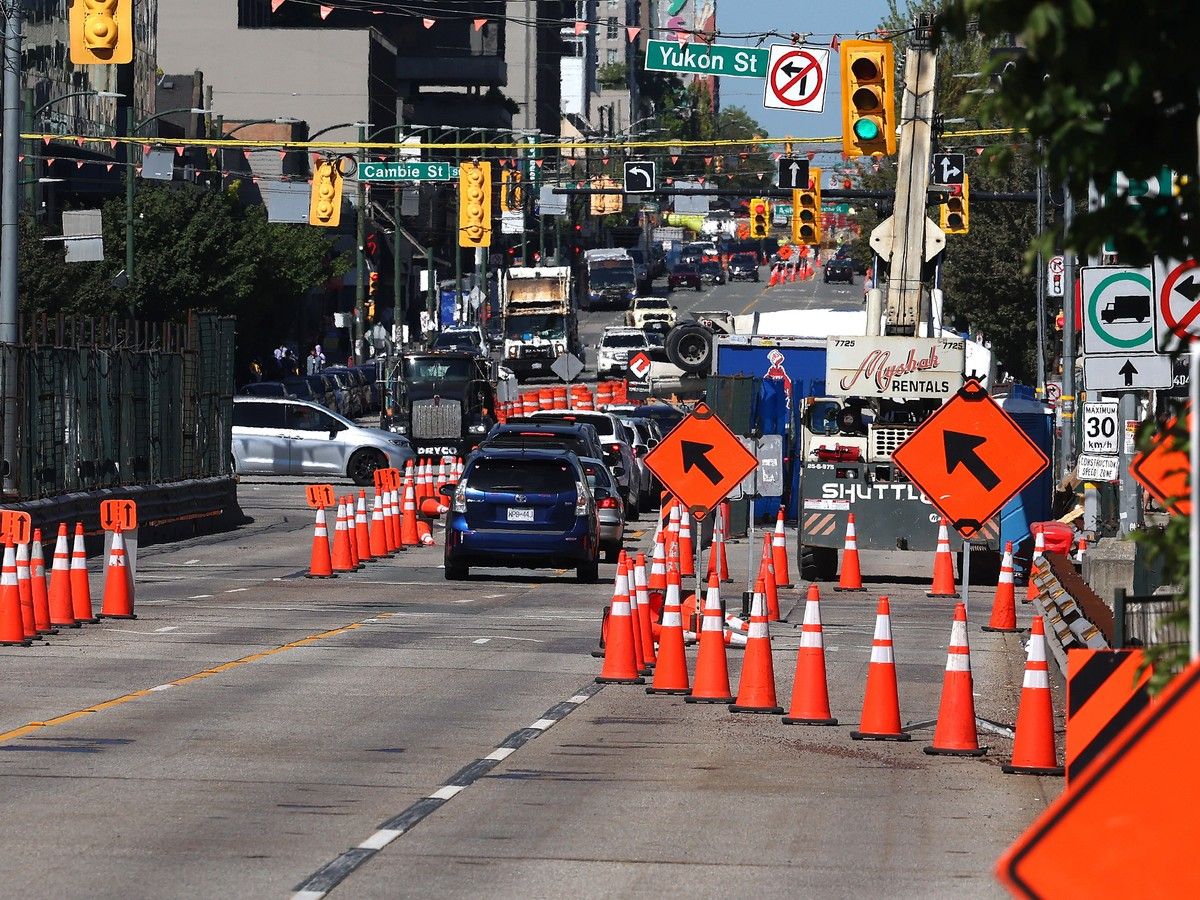
The streets are so potholed in Montreal, Good Samaritans had to come to the rescue, patching them pro bono. Mayor Soraya Martinez Ferrada redoubled efforts last week to fill the endless craters, with Notre-Dame St. E. getting special attention. But it’s still a drop in the bucket.
Half the city’s métro stations are considered in poor shape. In 2024, three stations on the Blue Line were shuttered for weeks for urgent repairs.
Meanwhile, below ground, more than 10,000 kilometres of water mains are deteriorating, representing 10 per cent of Quebec’s water and sewer infrastructure.
And that’s not even counting bridges, hospitals and schools that are crumbling.
Call it a consequence of ribbon-cutting syndrome — the propensity for politicians to put money in new projects and defer maintenance of existing stock. The spiffy photo ops and the credit they can claim are so much sexier than the flak they get for digging up roads to replace sewers or patching cracks to reinforce métro tunnels.
But eventually those choices catch up with decision makers and the public purse, as two studies out last week about the ruinous state of infrastructure and astronomical sums to address it clearly demonstrate.
A report by Alliance Transit says that despite record expenditures, Quebec has fallen way behind in financing repairs that are needed to the road network. Since 2018, infrastructure has been degrading twice as fast as the pace of maintenance, despite a doubling of the envelope to cover such work.
The report evaluates the cost of the backlog at $24.5 billion but found only a third, or $8.4 billion, has been accounted for in the Transport Ministry’s 10-year plan.
But that’s nothing compared to the disastrous state of public transit, particularly the Montreal métro.
The Société de transport de Montréal estimates it needs more than $7 billion to fix existing infrastructure, requiring investments of $560 million a year.
Despite aging assets and growing need, money has only been budgeted for a fifth of the work, leaving 81.6 per cent of repairs the STM deems necessary unfunded.
Since 2013, budgets for this purpose have declined seven per cent, while inflation has pushed up costs 77 per cent. Between 2018 and 2028, $3.8 billion was set aside for repairs. For the coming decade, it’s just $3.5 billion. Had the financing kept pace with rising costs and need, the amount should be more like $6.4 billion.
Let’s not forget that the métro carries a million passengers a day. It is the indisputable backbone of the transportation system, never mind the public transit network. For reference, its replacement value would be pegged at $48 billion.
But it doesn’t look like it’s going to get any love from the government of Premier Christine Fréchette. When asked about the métro “falling to pieces” by Québec solidaire MNA Étienne Grandmont in the National Assembly last week, Transport Minister Benoit Charette was scornful.
“There’s not only Montreal in Quebec — there’s also the regions,” he scoffed. Sounds like Charette is reading from the playbook of one of his predecessors, Geneviève Guilbault, who was notorious when it came to starving public transit of operational funding because the regions shouldn’t have to subsidize Montreal. But that’s another matter.
Don’t look to Montreal or other municipalities in the metropolitan region to come up with the cash to fix the aging métro system, though.
A report by the Union des municipalités du Québec says that despite sound financial management, towns and cities are struggling to keep up with rising costs and growing responsibilities.
With the lion’s share of their funds coming from property taxes, their ability to address their infrastructure needs (including $19 billion for sewers, water mains and treatment plants) is limited.
And the UMQ estimates municipalities could face collective operating shortfalls of at least $9 billion by 2035, in the best-case scenario, if not many times that.
Yet, in her inaugural speech last week, Fréchette said her government intends to revive the plans for a third road link between Quebec City and Lévis.
The “troisième lien” project to put a tunnel or bridge across the St. Lawrence River could cost as much as $11 billion and save motorists only two minutes and 18 seconds.
It would be ludicrous to invest that much for such minimal benefit when the neglect of existing infrastructure risks becoming a crisis to manage and even more expensive to repair. Quebec ought to have learned this by now, be it from crumbling bridges, collapsing overpasses, tumbling paralumes or massive geysers spouting from broken water mains.
Alas, ribbon-cutting syndrome is hard to shake.
Editor’s Picks


The post Hanes: Quebec has fallen way behind on transportation infrastructure appeared first on Montreal Gazette.
























 Bengali (BD) ·
  English (US) ·