.png)
 3 hours ago
20
3 hours ago
20
We can do many things to decrease the risk to public safety from wildfires (and flooding, hurricanes and other natural disasters)
Published Jul 18, 2026 • Last updated 5 minutes ago • 3 minute read
See more Toronto Sun on Google — save as a Preferred Source
Advertisement 2

THIS CONTENT IS RESERVED FOR SUBSCRIBERS ONLY
Subscribe now to read the latest news in your city and across Canada.
- Unlimited online access to articles from across Canada with one account.
- Get exclusive access to the Toronto Sun ePaper, an electronic replica of the print edition that you can share, download and comment on.
- Enjoy insights and behind-the-scenes analysis from our award-winning journalists.
- Support local journalists and the next generation of journalists.
- Daily puzzles including the New York Times Crossword.
SUBSCRIBE TO UNLOCK MORE ARTICLES
Subscribe now to read the latest news in your city and across Canada.
- Unlimited online access to articles from across Canada with one account.
- Get exclusive access to the Toronto Sun ePaper, an electronic replica of the print edition that you can share, download and comment on.
- Enjoy insights and behind-the-scenes analysis from our award-winning journalists.
- Support local journalists and the next generation of journalists.
- Daily puzzles including the New York Times Crossword.
REGISTER / SIGN IN TO UNLOCK MORE ARTICLES
Create an account or sign in to continue with your reading experience.
- Access articles from across Canada with one account.
- Share your thoughts and join the conversation in the comments.
- Enjoy additional articles per month.
- Get email updates from your favourite authors.
THIS ARTICLE IS FREE TO READ REGISTER TO UNLOCK.
Create an account or sign in to continue with your reading experience.
- Access articles from across Canada with one account
- Share your thoughts and join the conversation in the comments
- Enjoy additional articles per month
- Get email updates from your favourite authors
Article content
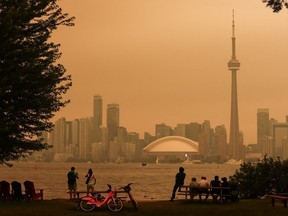
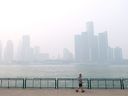
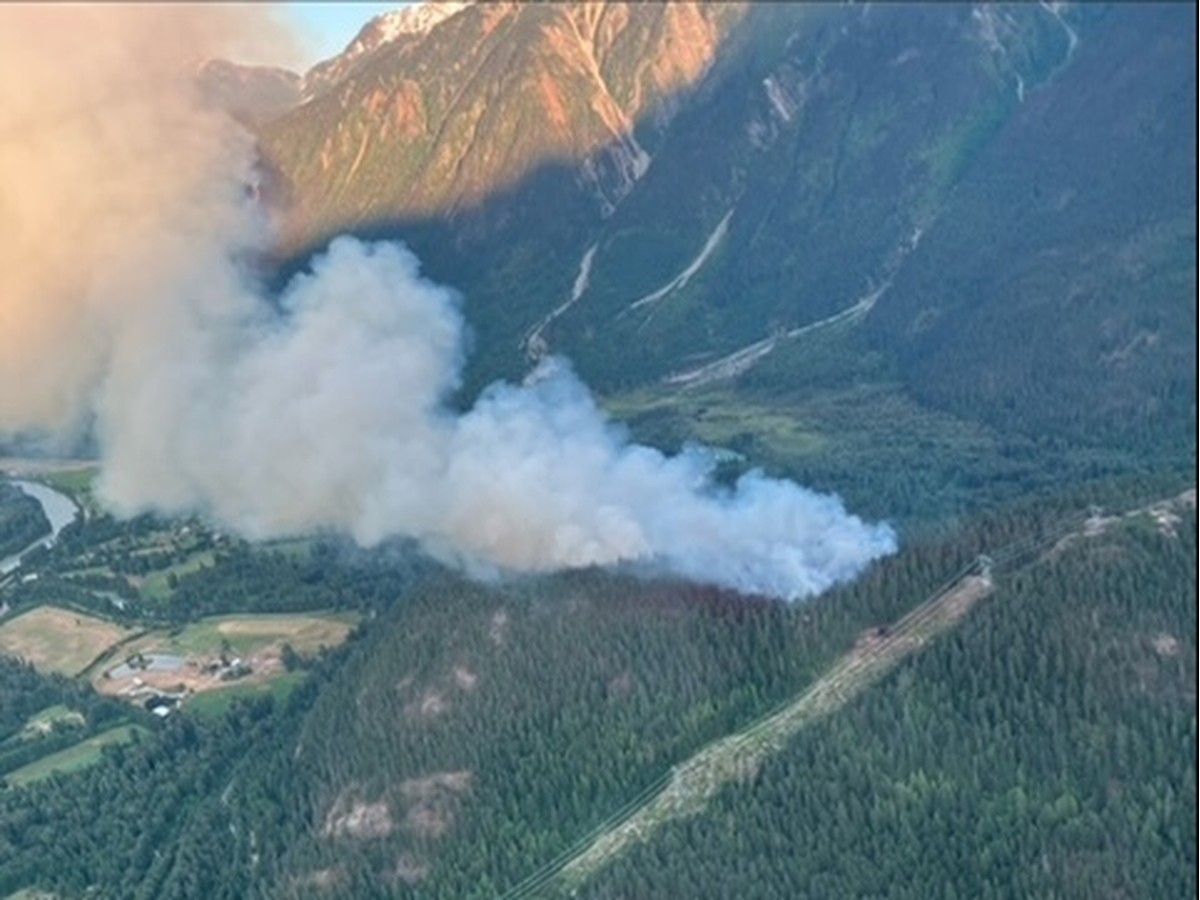
With more than 100 million Canadians and Americans enduring some of the world’s worst air quality readings because of 800 wildfires burning across Canada, including a dangerous cluster of 200 in Ontario, how can public policy best protect us?
Article content
Article content
From 2015 to 2025 the Trudeau government took the approach that the best way was a long-term policy to reduce industrial greenhouse gas emissions caused by human activity, known as mitigation.
Largely ignored was adaptation to climate change, regardless of whether the causes are human-induced or natural.
Adaptation means wildfire prevention, flood management, disaster relief, properly funded and equipped emergency responders, maintaining public infrastructure in a state of good repair so it is more resilient to severe weather, tougher building codes, requiring mandatory air conditioning as well as heating in new residential construction, and implementing planning policies that ban development in heavily forested areas, flood plains and along coastlines.
By signing up you consent to receive the above newsletter from Postmedia Network Inc.
Article content
Advertisement 3
Article content
In one of these areas alone – public infrastructure – it would take an estimated $150 billion to $270 billion to bring it up to standard across the country, the reason governments across Canada prefer to talk about the damage caused by climate change, rather than their own failures to properly maintain bridges, roads, highways, water mains and sewers going back decades.
Read More
-

LILLEY: When wildfires strike, facts matter more than politics
-

Republicans slam Canada as wildfire smoke fills American skies
-

EDITORIAL: Political hot air won’t help fight wildfires


Trudeau government’s climate policy misguided
The imbalance in the federal government’s climate policy was such that while the Trudeau government committed more than $200 billion to climate mitigation, only about $6.5 billion went to adaptation.
This was misguided.
We could end all our industrial greenhouse gas emissions tomorrow through mitigation – at least in theory, since it would be practically impossible – and it would have no material effect on climate change, because our 1.6% of global emissions is too small to make a difference.
Advertisement 4
Article content
Mitigation is essentially an economic policy that only works as an environmental one in a global context, where fossil fuel emissions in fact continue to rise every year.
By contrast, adaptation is a public safety policy.
Obviously, no amount of adaptation can prevent fires in Canada’s massive boreal forests, 75% of which are not under forest management because they are too big and too remote, just as it cannot entirely protect us from other natural disasters caused by severe weather.
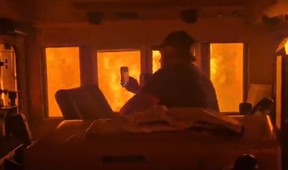
There have always been, and will be, severe fire seasons in Canada, endangering public health both within and beyond our own borders and the warmer our climate, the more severe they will be.
But we can do many things to decrease the risk to public safety from wildfires (and flooding, hurricanes and other natural disasters).
These include, as previously noted, better surveillance, more resilient fire and flood suppression measures, better-equipped emergency responders, forest management where practical, prohibiting residential development in heavily forested areas, in flood planes and on coastlines and through tougher building codes making air conditioning mandatory along with heating, in residential construction.
Advertisement 5
Article content
Ideally, this would include relocating remote communities and Indigenous reserves in high-risk areas to safer locations, although that’s unlikely given the political controversy it would cause.

We apologize, but this video has failed to load.
Logically, as Robert Henson writes in The Rough Guide to Climate Change – The Symptoms, The Science, The Solutions – adaptation and mitigation should work hand-in-hand.
But “what might seem like a straightforward response to climate change – adapting to it – is actually fraught with politics,” Henson writes.
“There’s nothing especially novel about being prepared for what the atmosphere may bring.
“As the (UN Intergovernmental Panel on Climate Change) notes … ‘Societies and economies have been making adaptations to climate for centuries.’ There are plenty of sensible steps that vulnerable nations and regions could take right now to reduce their risk of climate-change trauma … help keep people and their property safer regardless of the extent” of climate change.
“Yet there’s a tension between adaptation and mitigation: to some, the former implies a disregard for the latter,” as if supporting adaptation is code for doing nothing.
Such thinking is not only absurd but dangerous.
Reducing industrial greenhouse gas emissions with the goal of reducing incidents of severe weather is a decades-long policy.
To do nothing, or little, to protect the public in the here and now through adaptation is dangerous and irresponsible.
Article content























/https%3A%2F%2Fsportsmole-media-prod.s3.gra.io.cloud.ovh.net%2Fuploads%2F2026%2F07%2Fdaniel-mcgregor-huyer-zuma-press-wire-luciano-gonzalez-anadolu-abacapress-com-estadio-azteca-harry-kane-jude-bellingham-composite-6a49eb8857b70695441164.png)
 Bengali (BD) ·
  English (US) ·