.png)
 4 days ago
18
4 days ago
18
Standard of living for Indigenous people remains well below that of general population
Published Jun 20, 2026 • 4 minute read
See more Toronto Sun on Google — save as a Preferred Source
Advertisement 2

THIS CONTENT IS RESERVED FOR SUBSCRIBERS ONLY
Subscribe now to read the latest news in your city and across Canada.
- Unlimited online access to articles from across Canada with one account.
- Get exclusive access to the Toronto Sun ePaper, an electronic replica of the print edition that you can share, download and comment on.
- Enjoy insights and behind-the-scenes analysis from our award-winning journalists.
- Support local journalists and the next generation of journalists.
- Daily puzzles including the New York Times Crossword.
SUBSCRIBE TO UNLOCK MORE ARTICLES
Subscribe now to read the latest news in your city and across Canada.
- Unlimited online access to articles from across Canada with one account.
- Get exclusive access to the Toronto Sun ePaper, an electronic replica of the print edition that you can share, download and comment on.
- Enjoy insights and behind-the-scenes analysis from our award-winning journalists.
- Support local journalists and the next generation of journalists.
- Daily puzzles including the New York Times Crossword.
REGISTER / SIGN IN TO UNLOCK MORE ARTICLES
Create an account or sign in to continue with your reading experience.
- Access articles from across Canada with one account.
- Share your thoughts and join the conversation in the comments.
- Enjoy additional articles per month.
- Get email updates from your favourite authors.
THIS ARTICLE IS FREE TO READ REGISTER TO UNLOCK.
Create an account or sign in to continue with your reading experience.
- Access articles from across Canada with one account
- Share your thoughts and join the conversation in the comments
- Enjoy additional articles per month
- Get email updates from your favourite authors
Article content
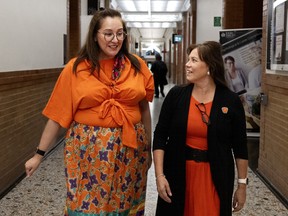
When Federal Indigenous Services Minister Mandy Gull-Masty announced $4.6 billion in new funding to eliminate all long-term unsafe drinking water advisories on reserves, she refused to set a deadline for when that will happen.
Article content
Article content
“The deadline goal is not part of my narrative,” she told the Globe and Mail.
That’s the problem with the Liberals’ approach to Indigenous spending.
There are no deadlines. Results aren’t measured against spending to determine if taxpayers are getting good value for money and whether Canada’s 1.8 million Indigenous people, 5% of our population, are being well-served, with many of the worst outcomes on First Nations reserves.
Standard of living below general population
The federal government’s community well-being index measuring education, labour force activity, income and housing shows that despite a small uptick for First Nations in recent years (and downturn for Inuit) the standard of living for Indigenous people remains well below that of the general population, including shorter life spans, higher rates of unemployment, poverty, suicide, drug addiction, mental illness, incarceration and as victims of homicides and other crimes.
By signing up you consent to receive the above newsletter from Postmedia Network Inc.
Article content
Advertisement 3
Article content
In 2015, the Trudeau government upon coming to power set a deadline of March 2021 to lift all unsafe water advisories on reserves.
Its original commitment of $1.83 billion in 2016 to fix the problem had increased to $5.6 billion by 2022, with an additional $4.6 billion announced Tuesday, all without the 2021 target being achieved.
RECOMMENDED VIDEO

We apologize, but this video has failed to load.
The Liberals say they have lifted 156 long-term advisories since 2015 while 38 are still in effect on 36 reserves.
But those numbers should be treated with skepticism.
When auditor general Karen Hogan examined the government’s progress on the issue in 2021, she concluded it was failing and cited examples of the feds fudging their numbers to make the situation look better than it was.
In a follow-up report last year, Hogan concluded, “Indigenous Services Canada has made unsatisfactory progress in addressing long-standing issues related to drinking water, emergency services, and a range of other programs important to the health and well-being of First Nations communities.”
Advertisement 4
Article content
The Liberals have more than doubled the annual federal budget for Indigenous services to $35.8 billion this year, compared to $15.5 billion in inflation-adjusted dollars in 2015.
Federal employees doubled
They more than doubled the number of federal employees dealing with Indigenous issues from 4,684 employees in 2015 to 9,429 this year.
They also doubled the number of federal bureaucracies, splitting the old Indigenous and Northern Affairs Canada department into two ministries, Indigenous Services Canada and Crown-Indigenous Relations and Northern Affairs Canada.
Both are exempted from the 15% budget cut over three years in operational spending announced by Prime Minister Mark Carney. Their target is just 2%.
Upon coming to power in 2015, then prime minister Justin Trudeau stopped enforcing the First Nations Financial Transparency Act passed by the Stephen Harper government in 2013, which required First Nations to publish their audited financial statements and salaries and expenses for chiefs and councillors.
Advertisement 5
Article content
Read More
-

EDITORIAL: The tainted water money pit on reserves
-

Assembly of First Nations wants Indigenous Canadians consulted on all foreign treaties

More than $60 billion spent on program
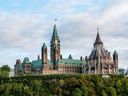
Since 2015, the Liberals say they have spent more than $60 billion on programs supporting Indigenous people, combatting racism and compensating for historic wrongdoing related to residential schools, child care, tainted water and other issues.
The federal budget for contingent liabilities — money set aside to deal with pending lawsuits — is dominated by Indigenous land and other claims, currently sitting at $54.7 billion.
In a 2022 report, then parliamentary budget officer Yves Giroux said while the government was spending more than ever on Indigenous services, it was accomplishing less.
“Over the 2015-16 to 2022-23 period, there has been a significant increase in the amount of financial resources allocated to providing Indigenous Services” but this “did not result in a commensurate increase in the ability of the organizations to achieve the targets they had set for themselves.” In fact, “the ability … declined.”
Advertisement 6
Article content
In 2024, Giroux warned about the rapidly growing size of the government’s contingent liabilities, increasing by about 30% annually, and its lack of transparency in reporting them.
Three auditors-general since 2005 have described government failures to improve the lives of Canada’s Indigenous people, including those predating the Trudeau government, as “unacceptable” (Sheila Fraser), “incomprehensible” (the late Michael Ferguson), and “honestly disheartening” (Hogan).
Ferguson, who passed away in 2019, said in a series of scathing reports that the federal government managed its Indigenous programs “to accommodate the people running them, rather than the people receiving the services … the focus is on measuring what civil servants are doing rather than how well Canadians are being served.”
He said most of the responsibility for this fell on the federal government.
Article content





















/https%3A%2F%2Fsportsmole-media-prod.s3.gra.io.cloud.ovh.net%2Fuploads%2F2026%2F06%2Ficonsport-111147-0089-1-6a27d006a81d1227497324.jpg)
/https%3A%2F%2Fsportsmole-media-prod.s3.gra.io.cloud.ovh.net%2Fuploads%2F2026%2F05%2Fscheffler-6a034d9fca412032057779.jpg)
 Bengali (BD) ·
  English (US) ·