.png)
 1 hour ago
11
1 hour ago
11
Article content

Article content
Marketing executive Ishika Gupta was reportedly the first to throw a “Diet Coke party” on April 26 in New Delhi. It started as a joke, Gupta told NBC News. “I thought only me and two of my friends would show up.” The alcohol-free event sold out. Roughly 150 Gen Zers showed up wearing Coke-themed outfits to dance to the house and pop music and drink “concoctions” inspired by Dua Lipa, who adds pickled jalapeño and dill pickle juice to her Diet Coke.
Article content
“We had a cocktail menu, which we call Coke-tails. The idea was to bring fans together,” said Gupta, a self-professed “big Diet Coke fan” who reportedly started an Instagram account devoted to the drink a month before the Iran war began. “It was some cosmic alignment,” she told NBC News. “We were celebrating the very thing that there was a so-called crisis for.”
Article content
3. COOKING GAS
Article content
Also in India, where millions depend on liquified petroleum gas cylinders for cooking, kitchens are running low, and restaurants and hotels are warning of potential disruptions and shutdowns, Reuters reports. India is the world’s second-biggest importer of liquefied petroleum gas and relies heavily on Gulf oil imports. Gas canisters are now in short supply due to the Strait of Hormuz crisis.
Article content
Article content
“Even in the black market, there is no certainty that I will get any gas or not,” Abhishekh Dixit, owner of Parawthe Wala, a restaurant in Delhi’s Chandni Chowk market, told NBC News. “Everything is being affected, and our suppliers have raised prices by up to five per cent.”
Article content
Dixit’s restaurant has reportedly relied on gas cylinders to cook its specialties, including the parathas stuffed with onion and paneer and brushed with butter that have people lined up, for more than a century. The crisis has “created an artificial inflation,” he said, which has forced him to raise prices and buy electric stoves to stretch his gas supplies.
Article content
The country’s ceramics industry has also been affected by shortages of propane and natural gas. In March, the BBC reported that most manufacturers in Morbi, producers of roughly 80 per cent of India’s ceramics, were forced to shut down for nearly a month. The country’s ceramic industry is estimated to be worth roughly US$8.1 billion, and around 400,000 employees work in Morbi factories.
Article content
4. FERTILIZER
Article content
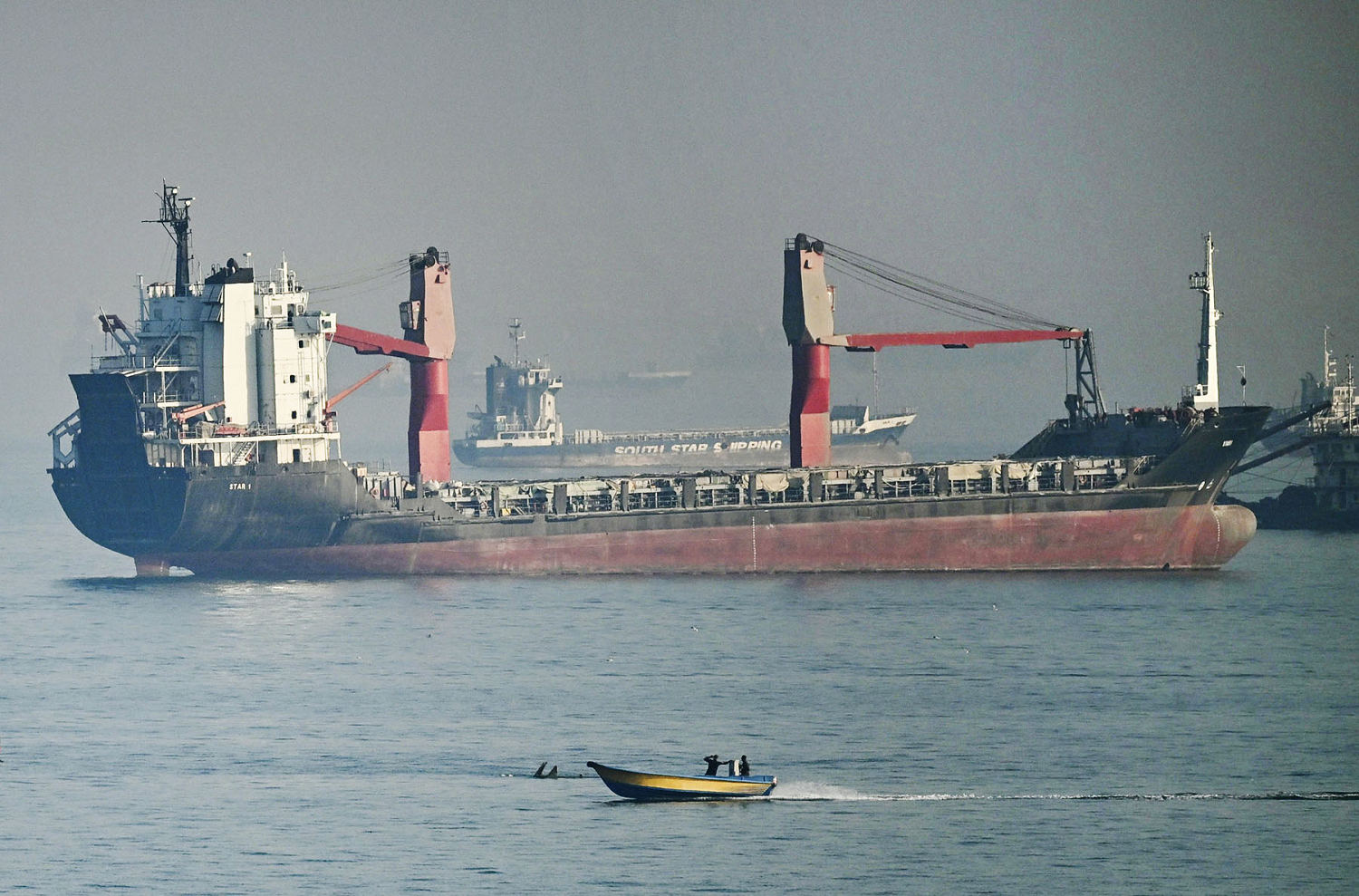
The Gulf region isn’t only a key producer of oil products and natural gas but also of fertilizer. Thirty per cent of the fertilizer trade goes through the Strait of Hormuz, according to the UN’s Food and Agriculture Organization. The blockade could put up to 10 billion meals at risk, with the poorest countries the hardest hit, Svein Tore Holsether, chief executive of Yara, one of the world’s largest fertilizer companies, told the BBC.
Article content
Article content
Global food production hangs in the balance as the blockade upends fertilizer supplies. Without shipping traffic able to pass, the world could be approaching a “global agrifoods catastrophe,” the FAO warned in a new report.
Article content
Maximo Torero, FAO chief economist, said in a statement in March that if the conflict were to continue for more than three months, they expect the repercussions to be “significantly” more serious. “Not only in terms of prices of commodities, the prices of inputs, of fertilizers and energy, but it will also impact significantly the next planting season, and that will have a longer-term impact. So that’s why it’s so important not to allow this to continue to escalate (for) an extended duration.”
Article content
5. HELIUM
Article content
The Iran war is also disrupting the world’s supply of helium, which could have wide-ranging impacts. The production of smartphones, electric vehicles, semiconductor chips and medical equipment, including MRI machines, relies on helium.
Article content
Qatar, producer of roughly one-third of the world’s helium, halted production in March after Iranian strikes on two liquid natural gas facilities. State-run QatarEnergy told Reuters that the attacks destroyed 17 per cent of the country’s capacity. Repairs could reportedly take three to five years.

























 Bengali (BD) ·
  English (US) ·