.png)
 1 hour ago
9
1 hour ago
9

Article content
First Reading is a Canadian politics newsletter curated by the National Post’s own Tristin Hopper. To get an early version sent directly to your inbox, sign up here.

THIS CONTENT IS RESERVED FOR SUBSCRIBERS
Enjoy the latest local, national and international news.
- Exclusive articles by Conrad Black, Barbara Kay and others. Plus, special edition NP Platformed and First Reading newsletters and virtual events.
- Unlimited online access to National Post.
- National Post ePaper, an electronic replica of the print edition to view on any device, share and comment on.
- Daily puzzles including the New York Times Crossword.
- Support local journalism.
SUBSCRIBE FOR MORE ARTICLES
Enjoy the latest local, national and international news.
- Exclusive articles by Conrad Black, Barbara Kay and others. Plus, special edition NP Platformed and First Reading newsletters and virtual events.
- Unlimited online access to National Post.
- National Post ePaper, an electronic replica of the print edition to view on any device, share and comment on.
- Daily puzzles including the New York Times Crossword.
- Support local journalism.
REGISTER / SIGN IN TO UNLOCK MORE ARTICLES
Create an account or sign in to continue with your reading experience.
- Access articles from across Canada with one account.
- Share your thoughts and join the conversation in the comments.
- Enjoy additional articles per month.
- Get email updates from your favourite authors.
THIS ARTICLE IS FREE TO READ REGISTER TO UNLOCK.
Create an account or sign in to continue with your reading experience.
- Access articles from across Canada with one account
- Share your thoughts and join the conversation in the comments
- Enjoy additional articles per month
- Get email updates from your favourite authors
Sign In or Create an Account
or
Article content
TOP STORY
Article content
Article content
Despite a vocal effort to insulate itself from U.S. influence, B.C. may have ironically exposed itself to a situation in which Americans will have veto power over its laws.
Article content
Under B.C.’s 2019 DRIPA law, which adopted the terms of the UN Declaration on the Rights of Indigenous People, Indigenous groups are empowered to “own, use, develop and control” any provincial land they once occupied.
Article content
Article content
And now, two U.S.-based Indigenous groups are arguing that DRIPA should give them jurisdiction over B.C. government decisions, as their traditional territory includes pieces of what is now Canada.
Article content
By signing up you consent to receive the above newsletter from Postmedia Network Inc.
Article content
“Our Tribes have never surrendered or abandoned their claims to their traditional territories on the Canadian side of the border,” reads a November statement by the Southeast Alaska Indigenous Transboundary Commission (SAITC), a coalition of 14 Alaska Tribal Nations.
Article content
SAITC is leading a legal challenge arguing that DRIPA gives them sway over B.C.’s ability to approve mining projects along the B.C./Alaska border.
Article content
The Washington State-based Sinixt Confederacy, meanwhile, is pledging to mount a similar challenge regarding a planned magnesium mine near Osoyoos, B.C.
Article content
“The Sinixt were driven off their traditional territory in British Columbia by colonization, and forced to live south of the Canada-US border,” wrote the group in a September statement. “But this does not change the fact that the land now called British Columbia is the Sinixt’s ancestral home.”
Article content
Article content
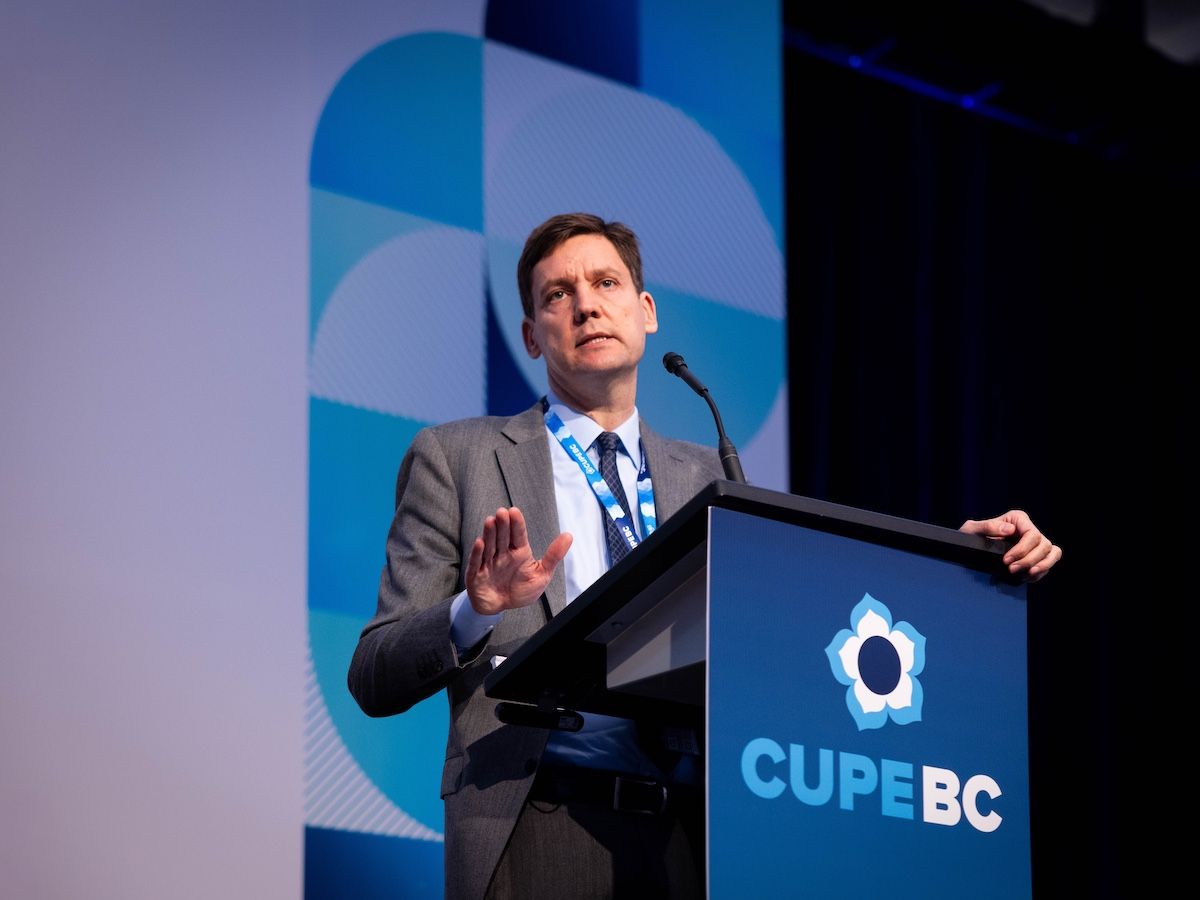
B.C. Premier David Eby dismissed both efforts. In comments published this week by the Vancouver Sun, he said their citation of DRIPA was just the latest element of a legal fight that has previously leaned mainly on a 2021 Supreme Court decision ruling that non-citizens can indeed obtain status under Canadian law as “Aboriginal peoples of Canada.”
Article content
Article content
“The American tribes in Alaska and in Washington state have been doing this for years,” he said.
If DRIPA is different, it’s because the law has proved uniquely powerful at overriding B.C. laws.
Article content
DRIPA states plainly that “Indigenous peoples have the right to the lands, territories and resources which they have traditionally owned, occupied or otherwise used or acquired.”
Article content
And it was Eby himself who, in 2021, wrote an amendment into B.C. law declaring that “Every Act and regulation must be construed as being consistent with the Declaration.”
Article content
All of this is why, last December, a ruling by the B.C. Appeals Court struck down one of the province’s oldest laws, the Mineral Tenure Act, as being out of step with DRIPA.
Article content
That same decision would also declare that DRIPA effectively superceded all other B.C. laws, and was “the interpretive lens through which B.C. laws must be viewed and the minimum standards against which they should be measured.”


























/https%3A%2F%2Fsportsmole-media-prod.s3.gra.io.cloud.ovh.net%2Fuploads%2F2026%2F02%2Fimago1072832028-1-1-6996d086195c8904803070.jpg)
 Bengali (BD) ·
  English (US) ·