.png)
 54 minutes ago
6
54 minutes ago
6
Energy production and consumption are “sticky,” meaning they typically don’t change quickly.
Published Aug 13, 2026 • Last updated 19 minutes ago • 3 minute read
See more Toronto Sun on Google — save as a Preferred Source
Advertisement 2

THIS CONTENT IS RESERVED FOR SUBSCRIBERS ONLY
Subscribe now to read the latest news in your city and across Canada.
- Unlimited online access to articles from across Canada with one account.
- Get exclusive access to the Toronto Sun ePaper, an electronic replica of the print edition that you can share, download and comment on.
- Enjoy insights and behind-the-scenes analysis from our award-winning journalists.
- Support local journalists and the next generation of journalists.
- Daily puzzles including the New York Times Crossword.
SUBSCRIBE TO UNLOCK MORE ARTICLES
Subscribe now to read the latest news in your city and across Canada.
- Unlimited online access to articles from across Canada with one account.
- Get exclusive access to the Toronto Sun ePaper, an electronic replica of the print edition that you can share, download and comment on.
- Enjoy insights and behind-the-scenes analysis from our award-winning journalists.
- Support local journalists and the next generation of journalists.
- Daily puzzles including the New York Times Crossword.
REGISTER / SIGN IN TO UNLOCK MORE ARTICLES
Create an account or sign in to continue with your reading experience.
- Access articles from across Canada with one account.
- Share your thoughts and join the conversation in the comments.
- Enjoy additional articles per month.
- Get email updates from your favourite authors.
THIS ARTICLE IS FREE TO READ REGISTER TO UNLOCK.
Create an account or sign in to continue with your reading experience.
- Access articles from across Canada with one account
- Share your thoughts and join the conversation in the comments
- Enjoy additional articles per month
- Get email updates from your favourite authors
Article content
The ongoing conflict in the Middle East has disrupted global markets for crude oil and liquefied natural gas (LNG), triggering worldwide price spikes and raising doubts about the reliability of the hydrocarbon-rich Middle East region as an energy supplier. These developments have also pushed up energy prices in Canada.
Article content
Recommended Videos
Article content
On the domestic policy front, the federal government and the Alberta government recently inked an agreement to develop a new oil pipeline to the west coast as part of a wider accord that envisages the further expansion of Canadian oil production along with a reaffirmation of Ottawa’s climate change goals. Meanwhile, the federal and British Columbia governments are collaborating to build out a global-scale LNG industry to leverage robust global demand for natural gas.
The Carney government has also pledged to double national electricity production by 2050 — even though electricity regulation falls within provincial jurisdiction under the Constitution. Driving this aspiration is a conviction among many policymakers that producing more electricity will be necessary to move away from fossil fuels — notably through the electrification of transportation, industrial processes, and the heating and cooling of buildings.
By signing up you consent to receive the above newsletter from Postmedia Network Inc.
Article content
Advertisement 3
Article content
The desire to ramp up electricity production also reflects the political appeal of a policy-led “clean energy transition,” which will supposedly cause demand for fossil fuels to collapse within a decade or two.
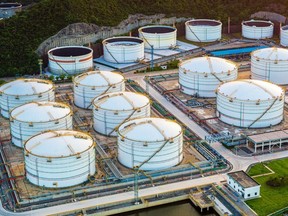
Yet today, fossil fuels (oil and related products, natural gas, coal) still dominate Canadian energy production and consumption. According to Natural Resources Canada, oil constitutes one-third of domestic energy supply, followed by natural gas (41%), hydroelectricity (11%) and nuclear power (8%). Coal supplies 2% of Canada’s primary energy. Wind and solar power, biofuels and the burning of waste, added together, provide just 5%. These proportions aren’t fixed, of course, but they don’t turn on a dime.
So, to summarize: As of 2025, fossil fuels comprised more than three-quarters of Canada’s primary energy supply and satisfied a similar share of demand. These aggregated shares have changed little since the late 1990s.
Environmental advocates insist that the current outsized reliance on fossil fuels is set to disappear as “clean” energy makes headway thanks to advances in technology, falling costs and government policy. The claim is exaggerated. Rather than “energy transitions,” the history of global energy development suggests that newer energy sources tend to be additive to existing sources, rather than replacing them — particularly in the short to medium term. History also indicates that as economies develop and grow, the total amount of energy consumed generally increases.
Advertisement 4
Article content
Energy production and consumption are “sticky,” meaning they typically don’t change quickly. Occasionally, the diffusion of innovative technologies and policy choices can accelerate shifts in energy use. For example, coal’s place in Canada’s energy system has been markedly reduced in the last 15 years, as natural gas and renewables have become more important in electricity generation. Government policy mandates were key to phasing out coal-fired electricity.
On the other hand, despite substantial government subsidies and other policies meant to boost wind and solar power, the share of total Canadian energy production derived from renewable sources (other than hydro and nuclear power) declined slightly between 2018 and 2023.
My conclusion? Overall, we can expect gradual incremental changes in Canadian energy production and consumption patterns, rather than the sudden embrace of new energy solutions or the rapid phasing out of fossil fuels.
Jock Finlayson is a senior fellow at the Fraser Institute
Read More
-

FINLAYSON: Storm clouds continuing to gather over Canada’s economy
-

FINLAYSON: Wealth and net worth — a bird’s-eye view of Canada


Article content




























 Bengali (BD) ·
  English (US) ·