.png)
 2 hours ago
9
2 hours ago
9
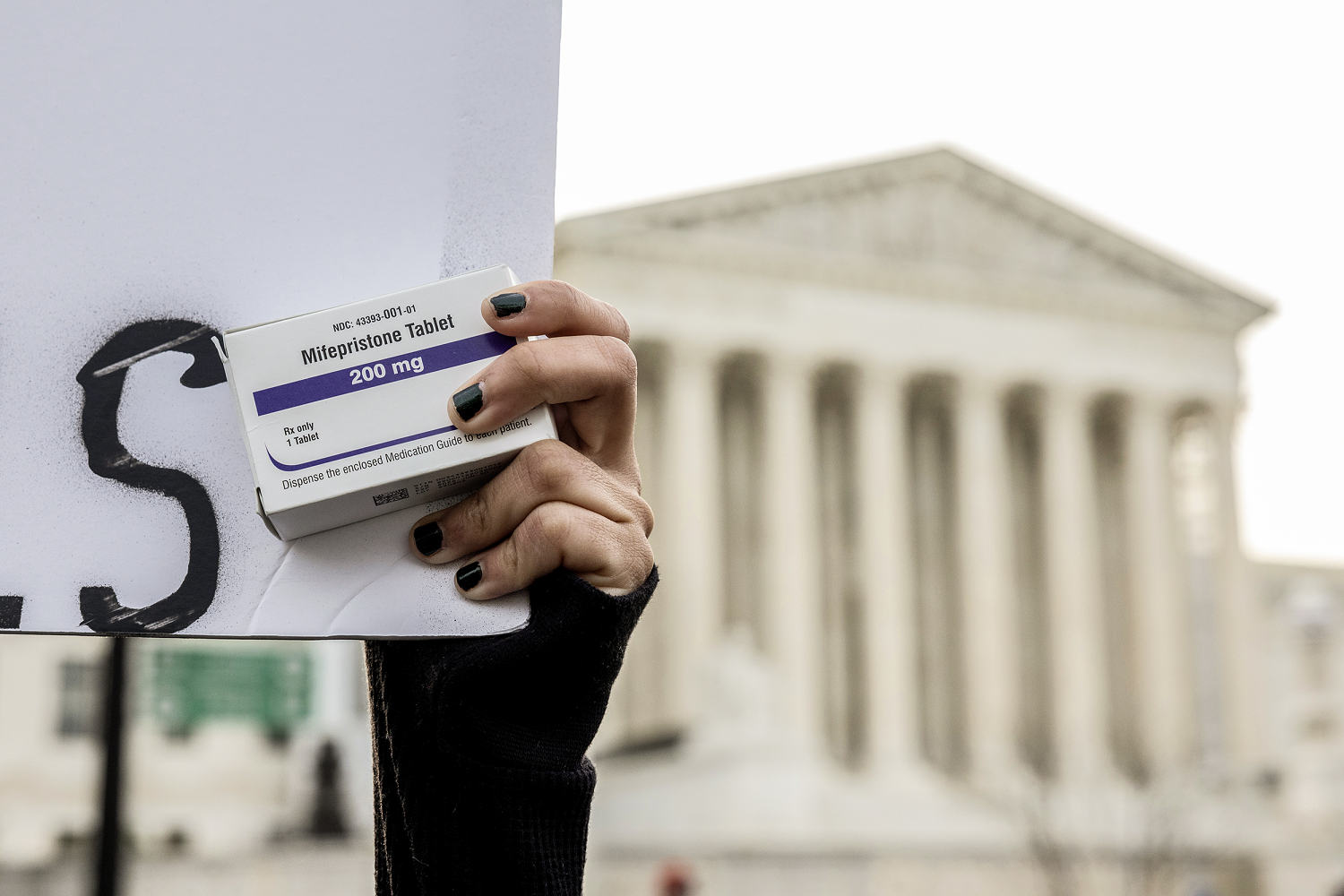
A federal appeals court on Friday banned the mailing of the popular prescription abortion drug mifepristone, dealing a major blow to reproductive rights across the United States.
The Fifth Circuit's unanimous ruling temporarily reinstated an in-person dispensing requirement, blocking a 2023 Food and Drug Administration (FDA) policy that allowed the drug to be prescribed via telehealth and delivered by mail.
State attorneys argued that the mailing process subverted state bans on abortion and that it should be prescribed only in person or at clinics.
"The regulation creates an effective way for an out-of-state prescriber to place the drug in the hands of Louisianans in defiance of Louisiana law," wrote Circuit Judge Kyle Duncan, of the New Orleans-based court.
The ban will be challenged at the Supreme Court
In response, Danco Laboratories, a manufacturer of the pill, asked the Supreme Court on Saturday to reinstate mail access to the drug, marking the potential for one of the biggest Supreme Court decisions on abortion since Dobbs v. Jackson Women’s Health Organization, which reversed the constitutional right to abortion, returning authority on the issue to state governments.
Since the overturning of Roe v. Wade, around one in four abortions occur via telehealth appointments. Should the Supreme Court allow the block to stand, patients would have even less access to the procedure.
“We are alarmed by this court’s decision to ignore the FDA’s rigorous science and decades of safe use of mifepristone in a case pursued by extremist abortion opponents,” said Evan Masingill, CEO of GenBioPro, one of the companies that manufactures mifepristone, in a statement.
According to the Guttmacher Institute, medication abortions accounted for 63% of abortions in U.S. states without total bans in 2023. The percentages were even higher in some rural states, such as Wyoming (95%) and Montana (84%).
The prevalence of this kind of medication abortion has made mifepristone a target for anti-abortion advocates in a post-Roe world. The drug—one part of a two-drug regimen that accounts for the most common medication abortion method—has been approved by the FDA since 2000. The Supreme Court already struck down a challenge against the drug in 2024.
The FDA has continuously countered safety concerns over the drug in the last 20 years, with studies finding it successful in terminating pregnancies 99.6% of the time.
A response to protections introduced by Democrats
When abortion access was repealed in many states in the wake of the Dobbs ruling, Democrat-led states passed shield laws to protect abortion providers who prescribe pills by telemedicine and send them to patients in states with abortion bans. Louisiana is just one of multiple GOP-led states whose state attorneys general are seeking to cut off access to this kind of care.
The Supreme Court’s potential decision could have a major impact on telehealth bans in Idaho, Kansas and Missouri. Meanwhile, Florida and Texas are looking to ban mifepristone altogether.
At the same time, the Trump Administration’s Department of Health and Human Services (HHS), led by Robert F. Kennedy Jr., is conducting a review of its regulations on mifepristone. The FDA had originally asked the courts to pause the case until it had completed its review. A district court granted that request, preventing any immediate changes to access to the abortion pill. Louisiana appealed the district court’s decision almost immediately, sending it to the Fifth Circuit Court of Appeals.
The American Civil Liberties Union, meanwhile, called the review a "thinly veiled attempt to lay the groundwork for additional medically unjustified restrictions” on the drug.
























/https%3A%2F%2Fsportsmole-media-prod.s3.gra.io.cloud.ovh.net%2Fuploads%2F2026%2F02%2Fimago1072832028-1-1-6996d086195c8904803070.jpg)
 Bengali (BD) ·
  English (US) ·