.png)
 1 hour ago
8
1 hour ago
8
Article content
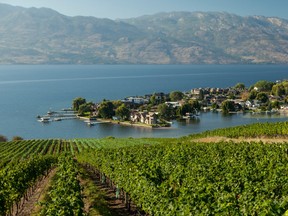
With news that Canadian wine producers are being hit with 50 per cent U.S. tariffs, the immediate reaction of B.C.’s Lightning Rock Winery was to note that the tariffs are still not as high as the markup they face when selling within Canada.

THIS CONTENT IS RESERVED FOR SUBSCRIBERS
Enjoy the latest local, national and international news.
- Exclusive articles by Conrad Black, Barbara Kay and others. Plus, special edition NP Platformed and First Reading newsletters and virtual events.
- Unlimited online access to National Post.
- National Post ePaper, an electronic replica of the print edition to view on any device, share and comment on.
- Daily puzzles including the New York Times Crossword.
- Support local journalism.
SUBSCRIBE FOR MORE ARTICLES
Enjoy the latest local, national and international news.
- Exclusive articles by Conrad Black, Barbara Kay and others. Plus, special edition NP Platformed and First Reading newsletters and virtual events.
- Unlimited online access to National Post.
- National Post ePaper, an electronic replica of the print edition to view on any device, share and comment on.
- Daily puzzles including the New York Times Crossword.
- Support local journalism.
REGISTER / SIGN IN TO UNLOCK MORE ARTICLES
Create an account or sign in to continue with your reading experience.
- Access articles from across Canada with one account.
- Share your thoughts and join the conversation in the comments.
- Enjoy additional articles per month.
- Get email updates from your favourite authors.
THIS ARTICLE IS FREE TO READ REGISTER TO UNLOCK.
Create an account or sign in to continue with your reading experience.
- Access articles from across Canada with one account
- Share your thoughts and join the conversation in the comments
- Enjoy additional articles per month
- Get email updates from your favourite authors
Sign In or Create an Account
or
Article content
As detailed on the winery’s website, Lightning Rock is hit with a 75 per cent markup in sales to the Liquor Control Board of Ontario (LCBO).
Article content
Article content
Article content
In a Monday Substack post by National Post columnist John Ivison, Lightning Rock owner Ron Kubek said that while the new tariffs have devastated his U.S. sales, it’s ironically still cheaper for an American to buy his rosés than a customer in central Canada.
Article content
By signing up, you consent to receive the above newsletter from Postmedia Network Inc.
Article content
Even with the new tariffs, a U.S. wine drinker can obtain Lightning Rock wines for $30 a bottle, while interprovincial markups mean that the same bottle sells for $38.17 in Ontario’s LCBO and $43.66 at La Société des alcools du Québec (SAQ).
Article content
It’s been more than a year of official pledges to slash Canada’s interprovincial trade barriers as a response to the U.S. trade war. As Prime Minister Mark Carney pledged after the official breakdown of U.S. trade negotiations on Sunday, his government will “tear down the barriers that have divided our economy for generations.”
Article content
And yet, liquor continues to be the most conspicuous symbol of how many of those barriers remain in place.
Article content
According to official Government of Canada estimates, the Canadian economy loses up to $200 billion each year due to a latticework of interprovincial barriers that make it difficult to “buy, sell, and transport goods and services across the country.”
Article content
Article content
According to a recent report by the Toronto Board of Trade, alcohol is “one of the most well-known and visible examples” of these barriers.
Article content
Article content
In fact, provincially controlled liquor stores often have wider selections of foreign liquors than out-of-province liquors.
Article content
“It’s easier to get a bottle of wine from Chile than it is (to get one) from British Columbia,” Matthew Holmes, a representative with the Canadian Chamber of Commerce, told Global News in January 2025, right at the beginning of the current trade war.
Article content
Nevertheless, official attempts to reduce internal trade barriers have repeatedly failed to liberalize alcohol sales.
Article content
In November, a meeting of Canada’s first ministers in Yellowknife struck the Canadian Mutual Recognition Agreement on the Sale of Goods, a concord billed as an “unparalleled agreement” to increase interprovincial trade.
Article content
However, the agreement explicitly excluded “alcoholic beverages” from consideration.
Article content
Then, just last month, another meeting of Canadian premiers — this time in Charlottetown — actually did come to an agreement on interprovincial liquor sales.






















/https%3A%2F%2Fsportsmole-media-prod.s3.gra.io.cloud.ovh.net%2Fuploads%2F2026%2F07%2Fimago1075669211-6a5fb6068a84b779278224.jpg)
/https%3A%2F%2Fsportsmole-media-prod.s3.gra.io.cloud.ovh.net%2Fuploads%2F2026%2F08%2Fimago1080705836-6a733ed0dad41130296964.jpg)
 Bengali (BD) ·
  English (US) ·