.png)
 4 days ago
20
4 days ago
20
When great powers act, middle powers always react in their own best interests
Published Jun 20, 2026 • 2 minute read
See more Toronto Sun on Google — save as a Preferred Source
Advertisement 2

THIS CONTENT IS RESERVED FOR SUBSCRIBERS ONLY
Subscribe now to read the latest news in your city and across Canada.
- Unlimited online access to articles from across Canada with one account.
- Get exclusive access to the Toronto Sun ePaper, an electronic replica of the print edition that you can share, download and comment on.
- Enjoy insights and behind-the-scenes analysis from our award-winning journalists.
- Support local journalists and the next generation of journalists.
- Daily puzzles including the New York Times Crossword.
SUBSCRIBE TO UNLOCK MORE ARTICLES
Subscribe now to read the latest news in your city and across Canada.
- Unlimited online access to articles from across Canada with one account.
- Get exclusive access to the Toronto Sun ePaper, an electronic replica of the print edition that you can share, download and comment on.
- Enjoy insights and behind-the-scenes analysis from our award-winning journalists.
- Support local journalists and the next generation of journalists.
- Daily puzzles including the New York Times Crossword.
REGISTER / SIGN IN TO UNLOCK MORE ARTICLES
Create an account or sign in to continue with your reading experience.
- Access articles from across Canada with one account.
- Share your thoughts and join the conversation in the comments.
- Enjoy additional articles per month.
- Get email updates from your favourite authors.
THIS ARTICLE IS FREE TO READ REGISTER TO UNLOCK.
Create an account or sign in to continue with your reading experience.
- Access articles from across Canada with one account
- Share your thoughts and join the conversation in the comments
- Enjoy additional articles per month
- Get email updates from your favourite authors
Article content
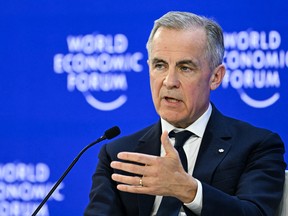
Prime Minister Mark Carney’s head-spinning change of positions on the U.S.-Israel attack on Iran and the tentative peace deal to end the war is what “diplomacy” is all about.
Article content
Article content
In the immediate wake of the attack on Feb. 28, Carney was firmly on side with their decision.
“Canada supports the United States acting to prevent Iran from obtaining a nuclear weapon and to prevent its regime from further threatening international peace and security,” Carney declared, adding Canada “reaffirms Israel’s right to defend itself and to ensure the security of its people.”
But within days, after grumbling from some Liberal MPs at home, the PM, on an international trade mission at the time, shifted to what diplomats call a “nuanced” position.
He said Canada supported the attack “with regret” because it was “another example of the failure of the international order.”
He criticized the U.S. and Israel for not consulting the United Nations first, or its allies, including Canada, suggesting the attack appeared to be “inconsistent with international law”.
Advertisement 3
Article content
Now, in the wake of the tentative peace deal, Carney has joined other G7 leaders in declaring their support for the outcome saying it was “worth it” if it prevents Iran, the world’s leading state sponsor of terrorism, from obtaining a nuclear weapon.
While some will call Carney two-faced, his response was no different from other European leaders who were more critical of the U.S. attack when it occurred, but supported its outcome at the G7.
RECOMMENDED VIDEO

We apologize, but this video has failed to load.
Carney would describe it as accepting the world as it is, not as we want it to be.
But more fundamentally, it’s about what happens when the idealism of Carney’s Davos speech — where he called on the world’s middle powers to work together to counter the domination of China, Russia and, most especially, the U.S. — encounters the real world.
In realpolitik, the other six members of the G7 — the United Kingdom, Germany, France, Italy, Japan and Canada — had no choice but to endorse the outcome of its seventh member, the U.S., attacking Iran, in order to have any say about what comes next in a conflict that sent global oil prices skyrocketing.
When great powers act, middle powers always react in their own best interests.
Article content



















/https%3A%2F%2Fsportsmole-media-prod.s3.gra.io.cloud.ovh.net%2Fuploads%2F2026%2F06%2Ficonsport-111147-0089-1-6a27d006a81d1227497324.jpg)
/https%3A%2F%2Fsportsmole-media-prod.s3.gra.io.cloud.ovh.net%2Fuploads%2F2026%2F05%2Fscheffler-6a034d9fca412032057779.jpg)
 Bengali (BD) ·
  English (US) ·