.png)
 2 hours ago
9
2 hours ago
9
During Senegal and Iraq match at Toronto Stadium, there was no official announcement for the breaks, which have been booed.
Published Jun 26, 2026 • Last updated 5 minutes ago • 3 minute read
See more Toronto Sun on Google — save as a Preferred Source
Advertisement 2

THIS CONTENT IS RESERVED FOR SUBSCRIBERS ONLY
Subscribe now to read the latest news in your city and across Canada.
- Unlimited online access to articles from across Canada with one account.
- Get exclusive access to the Toronto Sun ePaper, an electronic replica of the print edition that you can share, download and comment on.
- Enjoy insights and behind-the-scenes analysis from our award-winning journalists.
- Support local journalists and the next generation of journalists.
- Daily puzzles including the New York Times Crossword.
SUBSCRIBE TO UNLOCK MORE ARTICLES
Subscribe now to read the latest news in your city and across Canada.
- Unlimited online access to articles from across Canada with one account.
- Get exclusive access to the Toronto Sun ePaper, an electronic replica of the print edition that you can share, download and comment on.
- Enjoy insights and behind-the-scenes analysis from our award-winning journalists.
- Support local journalists and the next generation of journalists.
- Daily puzzles including the New York Times Crossword.
REGISTER / SIGN IN TO UNLOCK MORE ARTICLES
Create an account or sign in to continue with your reading experience.
- Access articles from across Canada with one account.
- Share your thoughts and join the conversation in the comments.
- Enjoy additional articles per month.
- Get email updates from your favourite authors.
THIS ARTICLE IS FREE TO READ REGISTER TO UNLOCK.
Create an account or sign in to continue with your reading experience.
- Access articles from across Canada with one account
- Share your thoughts and join the conversation in the comments
- Enjoy additional articles per month
- Get email updates from your favourite authors
Article content
Has FIFA finally heard the cries and now seen the light about the much-derided World Cup hydration breaks?
Article content
Article content
Well, kind of, but not really.
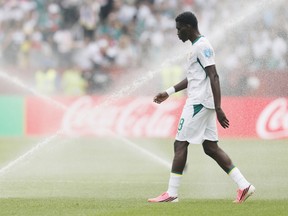
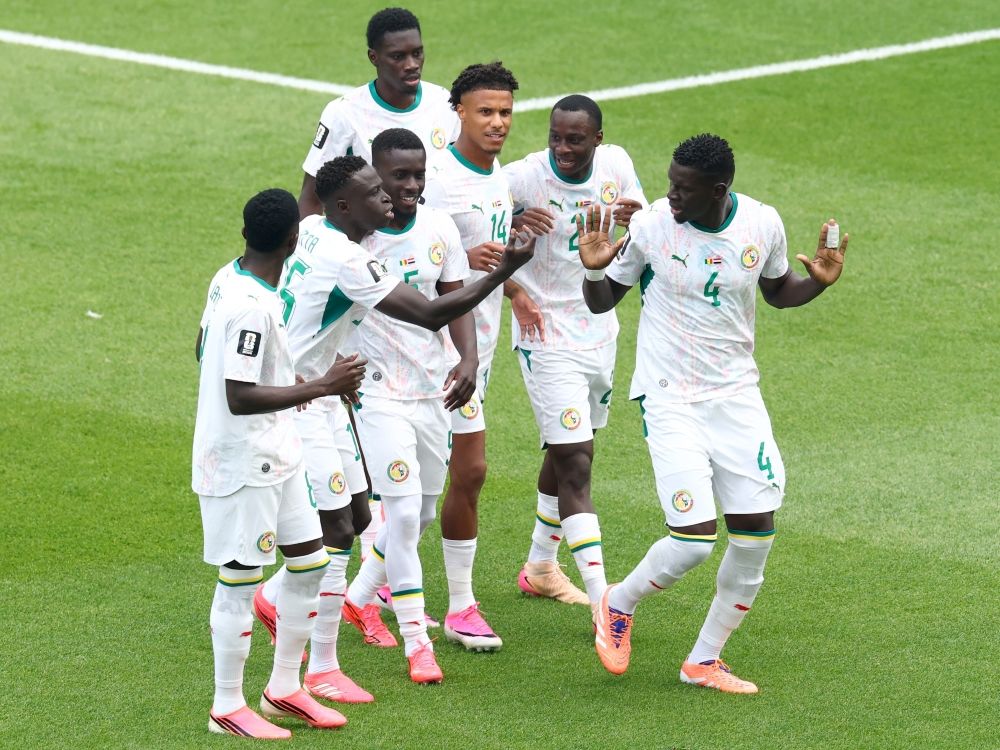
During Friday’s match between Senegal and Iraq at Toronto Stadium, the ref’s whistle was blown and play was halted roughly 22 minutes into each half. Players were sent to the sidelines and the field sprinklers began to water the pitch while boos began to sprinkle down from the crowd.

We apologize, but this video has failed to load.
But while the hydration breaks remained, gone were the official announcements that had come during the first four games held at Toronto Stadium.
At each of those contests, the hydration breaks were met by loud boos from the tens of thousands in attendance — so you could probably guess that the official sponsor of the breaks, Powerade, might not want its name blasted through the stadium’s loud speakers towards angered fans.
Without the announcement, there wasn’t a cue for those in attendance to focus on and direct their jeers towards.
Instead, there was the usual loud music, live shots of fans dancing in the stands and the big, blue Powerade branding on the videoboard ribbons around the stadium.
By signing up you consent to receive the above newsletter from Postmedia Network Inc.
Article content
Advertisement 3
Article content
To an uninitiated fan, it might felt like a natural break in the game, which artificially separated the match into four quarters.
Fans watching at home were treated to their usual full-screen commercial breaks, so there was no big change there — just another opportunity for networks to earn another buck or two from sponsors.
Why does the World Cup have hydration breaks?
Last December, FIFA announced that it again would use these breaks to help “prioritize player welfare,” during the tournament.
The organization said it would use a “streamlined and simplified version” of the breaks that had been incorporated during some previous tournaments, including the FIFA Club World Cup, which took place in the U.S. last summer.
“For every game, no matter where the games are played, no matter if there’s a roof, (or) temperature-wise, there will be a three-minute hydration break. It will be three minutes from whistle to whistle in both halves,” said Manolo Zubiria, Chief Tournament Officer, USA, for the FIFA World Cup 2026.
Advertisement 4
Article content
However, as we’ve seen in several matches, there hasn’t been a pressing need for such breaks.
During last Wednesday’s match between Ghana and Panama in Toronto, it was steadily raining during both breaks when the whistle was blown.
The only match in which we’ve seen a hydration break skipped was during France vs. Iraq, which took place during a thunderstorm that caused a long delay at halftime due to lightning strikes in the area.
The breaks have been heavily criticized by players, coaches and fans alike. You would be hard-pressed to find a person (who doesn’t stand to gain financially from the breaks) that likes to see matches ground to a halt via this added mandate.
Are hydration breaks here to stay?
But, unfortunately, these nuisances appear to be something that FIFA has little intention of doing away with.
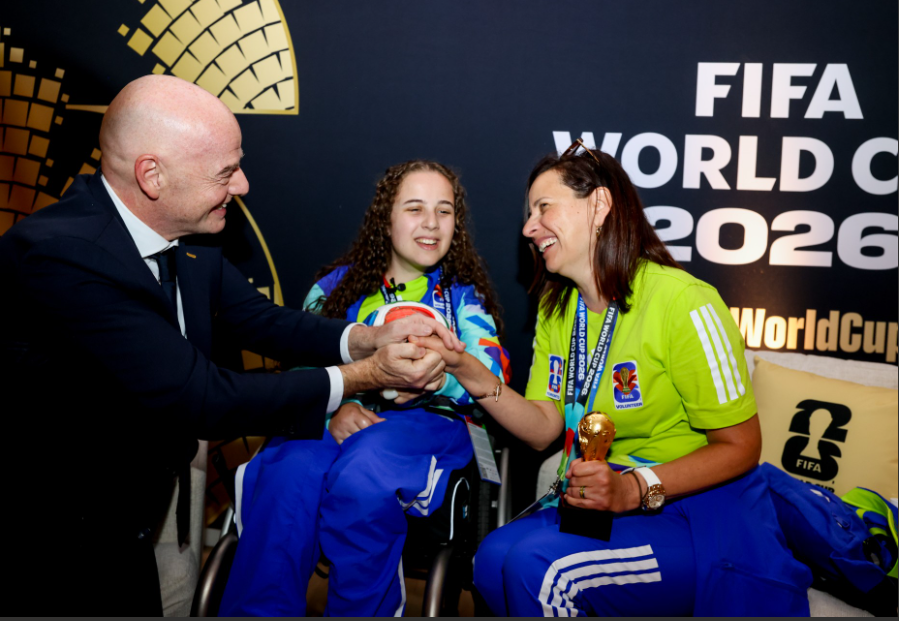
Earlier this week, FIFA president Gianni Infantino said that the organization is considering adding hydration breaks to all World Cups going forward.
Advertisement 5
Article content
Read More
-

How Senegal-Iraq World Cup match in Toronto proved FIFA critics wrong
-

Why FIFA's hydration breaks during Ghana-Panama World Cup match were the most ridiculous yet
-

Bastian Schweinsteiger called out by Ivory Coast manager for ‘racist’ remark

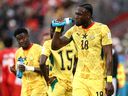

He said that FIFA would use the experience from this summer’s tournament to gauge the need going forward, but then went on to praise stoppages as something that helps play.
“Maybe the coach can reassess certain situations, correct certain mistakes. The players get a little rest and come back in full speed. Well, is that bad necessarily? Maybe it’s good,” Infantino said. “And we see as well the intensity of the games. We’ve never seen 90 minutes in a tournament like this played in such an intensity.
“Until the last second of the match, players attack and so on. And maybe, maybe not, but maybe it’s also a bit thanks to this little break that the players have and after they can go back on the field and show what they can do.”
Article content





















/https%3A%2F%2Fsportsmole-media-prod.s3.gra.io.cloud.ovh.net%2Fuploads%2F2026%2F05%2Fscheffler-6a034d9fca412032057779.jpg)
/https%3A%2F%2Fsportsmole-media-prod.s3.gra.io.cloud.ovh.net%2Fuploads%2F2026%2F06%2Ficonsport-111147-0089-1-6a27d006a81d1227497324.jpg)
/https%3A%2F%2Fsportsmole-media-prod.s3.gra.io.cloud.ovh.net%2Fuploads%2F2026%2F06%2Fimago-xinhua-nestory-irankunda-celebrates-scoring-for-australia-in-the-world-cup-on-june-14-2026-6a2f348854d1b663111439.jpg)
 Bengali (BD) ·
  English (US) ·