.png)
 3 hours ago
8
3 hours ago
8
He was convicted of 14 murders in Los Angeles and Orange County and died by lethal injection at San Quentin State Prison in 1996
Published Oct 03, 2026 • Last updated 19 minutes ago • 4 minute read

The freeways that infest Southern California like a particularly vexing maze were not intended as serial murder facilitators.
Advertisement 2

THIS CONTENT IS RESERVED FOR SUBSCRIBERS ONLY
Subscribe now to read the latest news in your city and across Canada.
- Unlimited online access to articles from across Canada with one account.
- Get exclusive access to the Toronto Sun ePaper, an electronic replica of the print edition that you can share, download and comment on.
- Enjoy insights and behind-the-scenes analysis from our award-winning journalists.
- Support local journalists and the next generation of journalists.
- Daily puzzles including the New York Times Crossword.
SUBSCRIBE TO UNLOCK MORE ARTICLES
Subscribe now to read the latest news in your city and across Canada.
- Unlimited online access to articles from across Canada with one account.
- Get exclusive access to the Toronto Sun ePaper, an electronic replica of the print edition that you can share, download and comment on.
- Enjoy insights and behind-the-scenes analysis from our award-winning journalists.
- Support local journalists and the next generation of journalists.
- Daily puzzles including the New York Times Crossword.
REGISTER / SIGN IN TO UNLOCK MORE ARTICLES
Create an account or sign in to continue with your reading experience.
- Access articles from across Canada with one account.
- Share your thoughts and join the conversation in the comments.
- Enjoy additional articles per month.
- Get email updates from your favourite authors.
THIS ARTICLE IS FREE TO READ REGISTER TO UNLOCK.
Create an account or sign in to continue with your reading experience.
- Access articles from across Canada with one account
- Share your thoughts and join the conversation in the comments
- Enjoy additional articles per month
- Get email updates from your favourite authors
Article content
But in the 1970s, that’s exactly what they became.
Article content
Article content
At one time in Los Angeles, there were at least three Freeway Killers hunting and murdering in the area. The targets would be found hitchhiking, taken to another jurisdiction to be murdered and then their bodies were dumped alongside the busy roads.
Young men and boys targeted
The trio shared a similar modus operandi. Young men and boys would be the victims.
William Bonin was considered the pre-imminent Freeway Killer. He frequently had accomplices who shared his vile predilections for making violent sexual fantasies real.
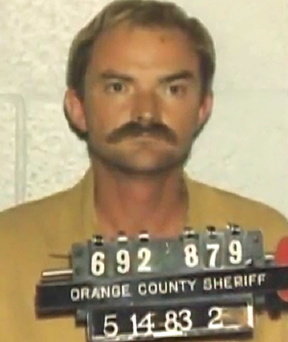
Born in 1947 in Connecticut to boozehound, abusive parents, Bonin later fought in the Vietnam War and claimed he raped two soldiers while in country. Oddly, it wasn’t until he was 32 years old that he began killing.
In Jack Rosewood’s true crime tome, William Bonin: The True Story of The Freeway Killer, he wrote: “One expert, Robert K. Ressler, considered the foremost authority on serial killers – he coined the term – went so far as to say ‘100 percent had been abused as children, either with violence, neglect or humiliation.'”
By signing up you consent to receive the above newsletter from Postmedia Network Inc.
Article content
Advertisement 3
Article content
Committed first murder in May 1978
Cops suspected that Bonin committed his first murder on May 28, 1979. The victim was a 13-year-old boy named Thomas Lundgren, who was last seen leaving his family home. Lundgren told pals that he was meeting a man at a skatepark where he would take photos of the teen for a skateboarding magazine.

His body was discovered later that afternoon in Agoura, about 30 minutes away. Lundgren’s clothes and severed genitals were found in a nearby field and even veteran cops were sickened by the cavalcade of horror that the tragic boy had endured.
Lundgren’s throat had been slashed, he had been stabbed, bludgeoned and strangled to death.
Bonin murdered at least once a month
And the murders kept coming throughout the rest of 1979 and into 1980. More than 20 were dead by the time cops had finished tallying the casualties. The death count would have been higher, but by the summer of 1980 detectives had begun zeroing in on Bonin.
In fact, they began tailing the serial killer on the evening of June 2, 1980, and in a bitter twist, it was just one hour before Bonin and an accomplice ditched his final victim.
Advertisement 4
Article content

The pair met 18-year-old Steven Wells on El Segundo Blvd. and talked him into climbing into the killer’s white Ford Econoline van.
Bonin told detectives that he had consensual sex with Wells. The two men had sex again at Bonin’s parents’ house. As an added bonus, the killer paid his victim $200 told allow himself to be bound with clothesline in a BDSM aside.
But now Wells was becoming suspicious – and increasingly frenzied.

That’s when Bonin made an executive decision: He was going to kill the kid.
After gagging and beating Wells, the young man begged for his life. Instead of mercy, Bonin strangled him to death and the killer and accomplice stuffed his body into a cardboard box they carried to the white van.
For nine days, cops had Bonin under surveillance even as their target drove through glitzy Hollywood, attempting to lure at least five reluctant boys into the white van. They wisely all said no until a 17-year-old Orange County runaway named Harold Eugene Tate agreed.
Advertisement 5
Article content
Read More
-

CRIME HUNTER: What drove Miami fetish club king to strangle gal pal?
-

CRIME HUNTER: Who is sex maniac cops call worst L.A. serial killer?
-

CRIME HUNTER: Nashville songbird was a Jane Doe. Who killed her?


Cops heard screams and banging sounds
Bonin pulled into an abandoned gas station near the Hollywood Freeway with the boy. Suddenly, surveillance cops heard screams and banging sounds coming from inside the van. Alarmed detectives then forced their way inside the vehicle where they found Bonin raping the boy while he was handcuffed and bound.
William Bonin had hit the end of the road. In total he was convicted of 14 murders in Los Angeles and Orange County. His fate was never in doubt and the serial killer was sentenced to die.

How a monster like William Bonin came to be was pretty clear to headshrinkers.
“Abusive experiences, mental illnesses and neurological deficits interplayed to produce the tragedies reported in the newspapers. The most vicious criminals have also been, overwhelmingly, people who have been grotesquely abused as children and have paranoid patterns of thinking,” Pincus wrote in his book, adding that childhood traumas can impact the developmental anatomy and functioning of the brain.
Advertisement 6
Article content
Next stop? San Quentin death row
On Feb. 23, 1996, in the notorious “green room” at San Quentin State Prison, Bonin’s ticket was punched: Hell. One Way. He was the Golden State’s first villain to die by lethal injection. He didn’t much like knowing he was going to die, as his final words attested.
He wrote: “That I feel the death penalty is not an answer to the problems at hand. That I feel it sends the wrong message to the youth of the country. Young people act as they see other people acting instead of as people tell them to act. And I would suggest that when a person has a thought of doing anything serious against the law, that before they did, that they should go to a quiet place and think about it seriously.”
Article content























/https%3A%2F%2Fsportsmole-media-prod.s3.gra.io.cloud.ovh.net%2Fuploads%2F2026%2F09%2Fmikel-arteta-21-6ab9a6087b35f019707296.jpg)

 Bengali (BD) ·
  English (US) ·