.png)
 2 hours ago
6
2 hours ago
6
Article content
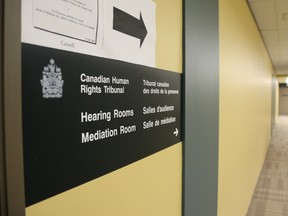
Recently, serial human rights complainant and transgender activist Jessica Simpson filed a number of complaints with the notoriously leftist B.C. Human Rights Tribunal. According to the Justice Centre for Constitutional Freedoms, Simpson’s complaints currently number around 18 in total. The Supreme Court of British Columbia even described her as a “prolific litigant” in 2022.

THIS CONTENT IS RESERVED FOR SUBSCRIBERS
Enjoy the latest local, national and international news.
- Exclusive articles by Conrad Black, Barbara Kay and others. Plus, special edition NP Platformed and First Reading newsletters and virtual events.
- Unlimited online access to National Post.
- National Post ePaper, an electronic replica of the print edition to view on any device, share and comment on.
- Daily puzzles including the New York Times Crossword.
- Support local journalism.
SUBSCRIBE FOR MORE ARTICLES
Enjoy the latest local, national and international news.
- Exclusive articles by Conrad Black, Barbara Kay and others. Plus, special edition NP Platformed and First Reading newsletters and virtual events.
- Unlimited online access to National Post.
- National Post ePaper, an electronic replica of the print edition to view on any device, share and comment on.
- Daily puzzles including the New York Times Crossword.
- Support local journalism.
REGISTER / SIGN IN TO UNLOCK MORE ARTICLES
Create an account or sign in to continue with your reading experience.
- Access articles from across Canada with one account.
- Share your thoughts and join the conversation in the comments.
- Enjoy additional articles per month.
- Get email updates from your favourite authors.
THIS ARTICLE IS FREE TO READ REGISTER TO UNLOCK.
Create an account or sign in to continue with your reading experience.
- Access articles from across Canada with one account
- Share your thoughts and join the conversation in the comments
- Enjoy additional articles per month
- Get email updates from your favourite authors
Sign In or Create an Account
or
Article content
Article content
Simpson’s complaint allegations typically accuse targeted respondents of using gender-critical language and reference to biological sex as a form of “existential denialism” against trans individuals. High-profile defendants include, among many others, journalists such as the Western Standard’s Derek Fildebrandt and the National Post’s Barbara Kay. Given recent events, one might begin to think that freedom of the press is on life support here in Canada.
Article content
Article content
By signing up you consent to receive the above newsletter from Postmedia Network Inc.
Article content
While Simpson provides an extreme example of the weaponization of these commissions to silence public debate, hers is not the only instance of abuse. Human rights bodies across Canada, due to both an expansion of their mandate and interminable procedural unfairness directed at respondents, have become a useful venue for political campaigners seeking to muzzle opponents.
Article content
Human rights commissions are creatures of statute, meaning provincial governments can readily amend those statutes to combat abuse as well as improve fairness. When they were originally established in the 1960s and ’70s, governments intended commissions to operate outside the court structure. They were seen as a less expensive and more efficient means to redress discrimination in areas such as housing, employment and commercial services. Their mandates were generally rather limited and the grounds for making a complaint — racism, sexism, religion, etc. — were fairly circumscribed.
Article content
Article content
In order to ensure a faster result, standard evidentiary rules are waived and procedural fairness is typically abridged. For example, here in Alberta, there is no fee to file a complaint. Similarly, once a complaint is filed, commission staff assist the complainant to move the process along, eventually acting as a sort of “prosecutor” if the matter makes its way to a hearing.
Article content
By contrast, in Alberta, a respondent on the receiving end of a complaint is obliged to either represent themselves or hire a lawyer — and there is no commission assistance for defendants. Legal fees can pile up as matters can take up to five years to resolve.
Article content
Additionally, if a complaint in Alberta goes to a hearing and is unsuccessful, unlike regular courts, there is no obligation to pay a portion of the respondent’s legal fees short of egregious behaviour on the complainant’s part. There is every reason to file a complaint, or even multiple complaints, and no disincentive to avoid frivolous actions.
Article content
Compounding these structural issues are other changes to Canada’s human rights regimes since their inception. The grounds on which complaints can be made have expanded dramatically to include more controversial claims. In 1998, the courts added sexual orientation to the Alberta Human Rights Act in the Vriend case, and in 2015, the Notley government included gender identity in the law.




























/https%3A%2F%2Fsportsmole-media-prod.s3.gra.io.cloud.ovh.net%2Fuploads%2F2026%2F02%2Fimago1072832028-1-1-6996d086195c8904803070.jpg)

 Bengali (BD) ·
  English (US) ·