.png)
 3 hours ago
11
3 hours ago
11

Article content
One April morning in 2019, paramedics called to a Granby, Que., house found a malnourished seven-year-old girl without vital signs wrapped in layers of adhesive tape, including over her head, obstructing her airways. Her father had helped restrain her before leaving her with her stepmother, who bound her with packing tape, a Quebec corner would later conclude in the case that became known as the “Granby Girl.”

THIS CONTENT IS RESERVED FOR SUBSCRIBERS
Enjoy the latest local, national and international news.
- Exclusive articles by Conrad Black, Barbara Kay and others. Plus, special edition NP Platformed and First Reading newsletters and virtual events.
- Unlimited online access to National Post.
- National Post ePaper, an electronic replica of the print edition to view on any device, share and comment on.
- Daily puzzles including the New York Times Crossword.
- Support local journalism.
SUBSCRIBE FOR MORE ARTICLES
Enjoy the latest local, national and international news.
- Exclusive articles by Conrad Black, Barbara Kay and others. Plus, special edition NP Platformed and First Reading newsletters and virtual events.
- Unlimited online access to National Post.
- National Post ePaper, an electronic replica of the print edition to view on any device, share and comment on.
- Daily puzzles including the New York Times Crossword.
- Support local journalism.
REGISTER / SIGN IN TO UNLOCK MORE ARTICLES
Create an account or sign in to continue with your reading experience.
- Access articles from across Canada with one account.
- Share your thoughts and join the conversation in the comments.
- Enjoy additional articles per month.
- Get email updates from your favourite authors.
THIS ARTICLE IS FREE TO READ REGISTER TO UNLOCK.
Create an account or sign in to continue with your reading experience.
- Access articles from across Canada with one account
- Share your thoughts and join the conversation in the comments
- Enjoy additional articles per month
- Get email updates from your favourite authors
Sign In or Create an Account
or
Article content
Article content
Ten months later, in February 2020, four-year-old Keira Kagan’s body was discovered, alongside that of her 35-year-old father’s, at the base of a 30-metre cliff in a conservation park outside Toronto. It had been the father’s scheduled weekend visit. The child and father were found after he failed to respond to his ex-wife’s calls and text messages.
Article content
Article content
By signing up you consent to receive the above newsletter from Postmedia Network Inc.
Article content
The horrific and heartbreaking deaths, as well as those of six other victims of “fillicide,” the deliberate killing of a child by a parent, are reconstructed in a new paper linking a “pro-contact culture” and accusations of “parental alienation” to the murders of the eight children in five families in Ontario and Quebec.
Article content
The authors say their findings back a controversial private member’s bill now before Parliament.
Article content
Introduced by Liberal MP Lisa Hepfner, the bill proposes to amend the Divorce Act to prohibit courts from considering evidence that one parent in a high-conflict custody case is actively trying to “alienate” the other parent and manipulating and coaching the child to resist contact.
Article content
It would also prevent judges from restricting a child’s time with one parent “to whom the child has a close connection” to improve the relationship with the other parent, and it would prevent courts from forcing children to attend so-called “reunification therapy.”
Article content
Article content
The proposed legislation has passed second reading, and is now before the justice and human rights committee.
Article content
Article content
Proponents say that in cases involving allegations of domestic violence, alienation claims are being weaponized and used as a legal tactic by parents — mostly fathers accused of abuse — to discredit the other parent.
Article content
If a parent — most often mothers — insist a child is in danger, “they run the risk of being perceived as an uncooperative, alienating parent,” the authors said.
Article content
The court’s attention shifts away from potential violence “towards preserving the parental bond.”<
Article content
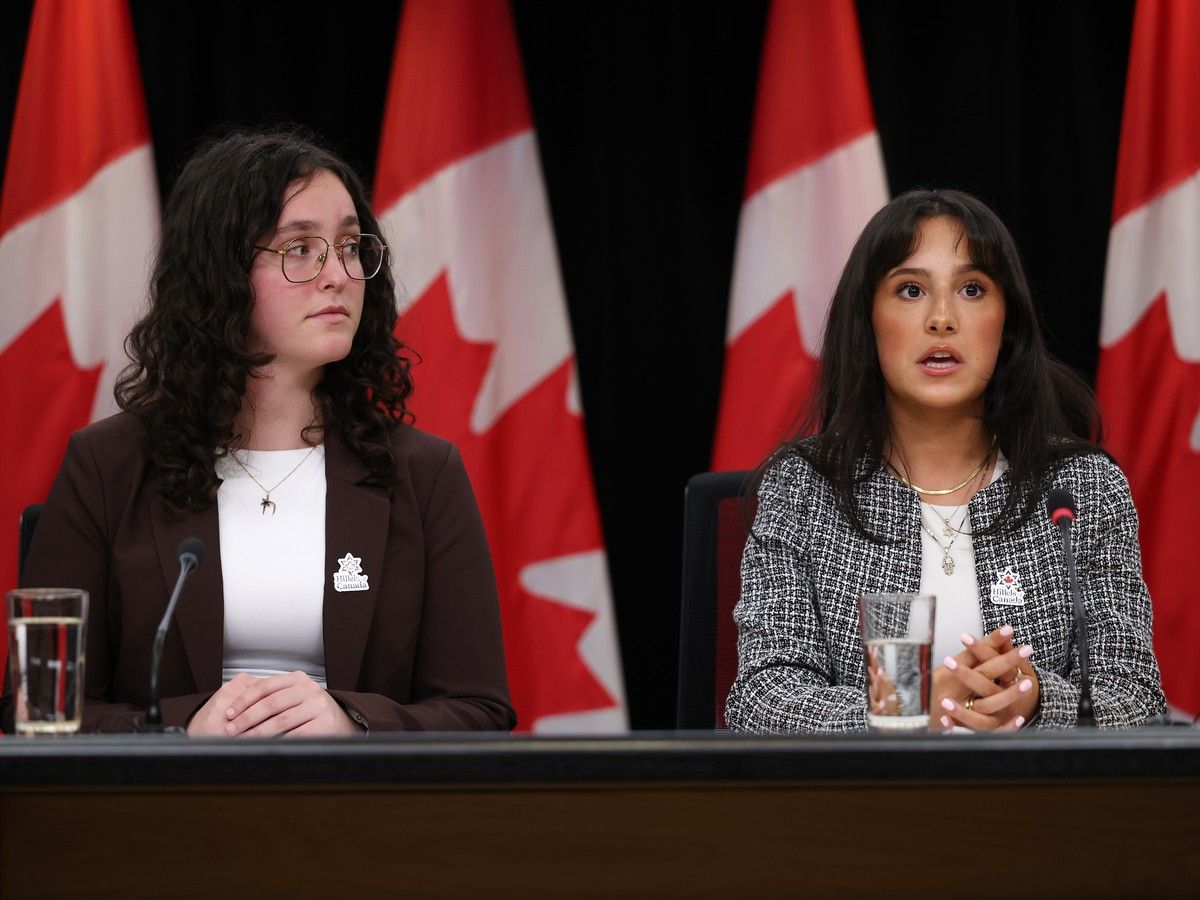
Alienation claims “are systematically used as a litigation strategy to deflect attention from abuse, undermine the child’s disclosure of fear and portray a protective mother as hostile, irrational or manipulative,” Suzanne Zaccour, director of legal affairs at the National Association of Women and the Law, or NAWL, and a co-author of the research paper, said at a press conference on Parliament Hill Thursday.
Article content
“Rather than asking why a child is frightened or resistant to contact, the system can wrongly assume the child has been influenced or brainwashed.”
Advertisement 1
Advertisement 2
Article content
Even when there is documented family violence or other concerns, in a pro-contact culture “a father-child relationship can be treated as the overriding goal,” Zaccour said.
Article content
The proposed bill — Keeping Children Safe — says that a court “shall not take into consideration” any allegation that one parent has deliberately encouraged a child to become estranged from the other. Judges would not be permitted to order “reunification therapy” or, in extreme cases, reverse custody.
Article content
Opponents say ignoring all claims of alienation will harm children. “The legislation reflects a profound distrust of the Canadian family justice system,” said Queen’s University law professor Nicholas Bala, an internationally recognized expert on family and children’s law.
Article content
“As tragic and concerning as child homicides are, and they have to be dealt with more effectively, the legislation does not address that issue in a meaningful way” and risks exploiting child murders that aren’t related to alienation, Bala said.
Article content
While fathers kill disproportionately more children than mothers, most child homicides involve cases where child protection services failed children, he said, “which is tragic.”
Article content
Article content
And the bill, Bala said, “doesn’t deal with the child protection system at all.”
Article content
In Canada, parents have a presumptive right to have a relationship with their children. “There are cases where children are being abused or treated poorly by parents on their visits, and there are good reasons for the child not to see the other parent,” he said.
Article content
He supports amendments that would require lawyers to screen for the risk of family violence, and allow courts to interview children. But the bill would also prevent lawyers from presenting evidence that one, or both parents, are acting to undermine the child’s relationship with the other, which Bala said is occurring in an increasing number of cases.
Article content
His research shows that judges reject more than half of alienation claims. In more than one-third of cases where the court finds alienation, it’s the mother who has been alienated from her children by an abusive husband.
Article content
“It’s very unfair, and very contra in the interests of the children, to decide cases on an absolute rule that says, ‘We can never hear this evidence,'” Bala said. Each case should be decided based on the best interests of the particular child, he said.
Article content
Article content
“There are some people, a very small number who, in the midst of a custody battle, are so unbalanced they decide to kill their children. That’s a terrible tragedy,” Bala said.
Article content
“The issue of parents killing their children is a huge concern” but the proposed bill is not the appropriate response, he said.<
Article content
NAWL, which pushed for the proposed legislation, teamed up with professors from University of Sherbrooke’s faculty of law as part of a broader project supported by the federal Social Sciences and Humanities Research Council.
Article content
In all five cases, the deaths were foreshadowed by warnings that were downplayed or dismissed by family courts or child protection services, according to the authors.
Article content
“Their fathers were known to systems in charge of protecting children” and women (in one case, a paternal grandmother) who raised concerns were disbelieved “and even framed as the problem, in part through institutions adopting the controversial framework of ‘parental alienation.'”
Article content
The paper isn’t a random sample of child homicides. Rather, the cases were selected based on three criteria: the murders occurred during custody disputes, institutions such as police, child protection services and family courts had intervened before the child’s death and enough public information (coroner’s reports, published court decisions, media sources) was available to reconstruct what happened.
Article content
It’s not an attempt to be representative, but the findings are consistent with child murders in other countries, the authors said. The details were edited to be less graphic. “But the level of violence and betrayal on the children” is evident, Zaccour said.
Article content
Several cases are anonymized to protect the identity of the children. In three of five cases, children were killed within days of a scheduled court hearing, according to the report — in one case, two days after a mother asked her lawyer about seeking sole custody, fearing for the safety of her two boys, aged two and five. Their father killed them both.
Article content
“We can’t speculate, but perhaps the father knew he might lose custody,” said Zaccour, co-author of the report.
Article content
“If you think, nothing can be done and there are these crazy individuals who will just lash out and kill their children, what can we do? There were years of documentation of the risk in some cases before death.”
Article content
While the five deaths date back to 2011, new cases occurred as they were finalizing their report: In Calgary, a 38-year-old father is facing two charges of first-degree murder for the deaths of his three-year-old daughter and five-year-old son in April this year. The man and his estranged wife shared custody. Police were called to the family home four times during the couple’s six-year common-law relationship. No charges were laid, CBC reported.
Article content
Article content
In June, a double murder-suicide in Ottawa left two boys, ages seven and 12, and their father dead. Police said 40-year-old Mohammed Al-Lami killed his sons after picking them up for a scheduled parenting time. It’s believed the boys were killed inside Al-Lami’s house before he set fire to his dental practice, about an hour’s drive from Ottawa, and then killed himself inside his vehicle.
Article content
A police investigation revealed a history of intimate partner violence. Al-Lami was on probation at the time of the deaths after being charged with threatening his wife and her new partner, CBC reported.
Article content
The new report, “Institutional Failures and Child Murder in Canada,” describes the case of the “Granby Girl,” who had been under the supervision of child protection services since she was a newborn and taken from her mother due to parental instability and physical neglect.
Article content
The girl was placed with her paternal grandparents, who raised her for the first three years of her life.
Article content
“By 2014, the father’s circumstances were considered more stable, in part because of his new partner, and youth protection services began considering placing the child back in his care,” according to the report.
Article content
Article content
The grandmother raised concerns over unsanitary living conditions and the father’s immaturity. She warned of a risk of sexual abuse, “which youth protections services deemed unfounded.” A case worker concluded the grandmother was no longer able to “control her emotions” and that she was undermining the father-child relationship, according to the report.
Article content
Custody was awarded to the father.
Article content
According to a coroner’s report released in September 2025, the seven-year-old had the stature of a four-year-old when her bruised body was found unconscious on her bedroom floor. Furniture had been pushed up against the window and the closet doors tied shut with rope. The child, who had behavioural problems, had been bound in seven layers of tape for hours by her stepmother to allegedly “restrain and calm her,” according to a coroner’s report.
Article content
Her father pleaded guilty to forcible confinement and was sentenced to three years and six months In January 2022. The girl’s stepmother was convicted of second-degree murder and forcible confinement and sentenced to life in prison without possibility of parole for 13 years.
Article content
Police had been called to the house two dozen times before the girl’s death in a case that shocked Quebec. Youth protection services had conducted follow-up calls for months, but never a surprise home visit, “making it impossible to detect physical signs of abuse,” according to Institutional Failures. The paternal grandmother lost custody “after being perceived as hostile for reporting the dangers the girl was exposed to while in her son’s care.”
Article content
In July 2012, in Warwick, Que., Jocelyn Marcoux killed son Lindsey, 13, and daughter Karen, 11. Their bodies, along with their father’s, were found in a burning garage at his home.
Article content
Marcoux and his ex-partner, Nadine Brilliant, separated in 2002 and had been engaged in custody disputes for years.
Article content
“Nadine Brillant shared that her life with Marcoux was heavily marked by domestic violence,” including a guilty plea to charges of intimidation and uttering threats against Brillant in 2006.
Article content
At the time of the children’s deaths, Marcoux had sole custody. Brillant was seeking a court order to modify the arrangement after the children expressed a wish to return to live with their mother.
Article content
Article content
“As part of these proceedings, the children were expected to appear before the Court to express their wish to return to live with their mother,” according to the report.
Article content
“The father killed them on the very day the hearing was scheduled to take place.”
Article content
Keira Kagan’s parents, Robin Brown and Jennifer Kagan, separated when she was still an infant. Ontario’s Domestic Violence Death Review Committee concluded that the circumstances of Keira’s death were “highly consistent” with previous cases of murder-suicide involving a father and a child.
Article content
Her parents had been embroiled in lengthy legal disputes spanning four years and involving 10 judges and 53 court orders. Brown had subjected Jennifer Kagan to years of domestic violence, including physical and sexual assault. On Jan. 28, 2020, she filed an urgent motion seeking to suspend or restrict his visitations to supervised visits “due to his increasingly erratic behavior,” according to the child murders report.
Article content
“The judge ruled the matter non-urgent and scheduled a hearing for two weeks later.” Twelve days later, Keira was found dead at the bottom of a cliff in the Rattlesnake Point Conservation Area in Milton, Ont., a 45-minute drive from Brown’s home.
Article content
Article content
“Every time (Jennifer Kagan) tried to raise the issue of abuse, there was a counter claim of alienation,” Zaccour said.
Article content
“There were 53 court decisions in this case, and many of those court decisions raised serious red flags, but no judge took the added step of restricting his parenting rights,” said Keira’s stepfather, Philip Viater, who has been practising family law for 17 years.
Article content
At Thursday’s press conference, Viater said the “mere suggestion” of alienation shifts the focus from allegations of safety concerns “to whether the protective parent is actually doing enough to preserve the relationship.”
Article content
Two days before the murder, a child protection agency called to say Brown was displaying behaviour consistent with fathers who harm or kill their children, Viater said. “Yet they did not act. We were forced and directed to permit Keira to be in her biological father’s care unsupervised.”
Article content
“At a minimum, this bill will provide a safeguard that children will not be ripped away in favour of ‘reunification therapy’ or other ideological purposes consistent with parental alienation,” Viater added in an interview.
Article content
The report includes two other cases in Quebec: The killing of two-year-old Alex, and five-year-old Olivier by their father, Michael Chicoine, in a home in Wendake, a Huron-Wendat First Nations territory near Quebec City, in 2020; in 2011, the deaths of two-year-old Florence and her eight-year-old brother, Zackary, in a fire their father, Martin Houle, set in his pickup truck.
Article content
Chicoine turned himself in to police and is currently serving a life sentence for the double murder. At his sentencing hearing, a Quebec Superior Court judge suggested Chicoine killed his boys “to quench your thirst for revenge” against his ex-wife, who reported her fear to youth protection services that Chicoine might harm their children.
Article content
Houle’s body was found by hikers in a wooded area near Drummondville, Que., the day after his children died by asphyxiation.
Article content
A third child, a six-year-old, escaped the truck fire. The parents had been separated for more than a year and were engaged in a custody dispute.
Article content
Custody was granted to Houle after he alleged his former wife, who publicly reported experiencing intimate partner violence, was suicidal and a threat to their children.
Article content
Article content
One month later, Florence and Zackary were dead.
Article content
In 2023, federal legislation known as “Keira’s Law” requiring judges to be educated in domestic violence and coercive control passed the Senate.
Article content
The same year, Ontario’s chief coroner announced an inquest would be held in Keira’s death.
Article content
A date has not yet been set.
Article content
In 2025, 12 children under 17 in Canada were killed by a biological, adopted, step or foster parent — seven by a father, five by a mother — down from 27 the previous year, according to Statistics Canada.
Article content
National Post
Article content
Our website is the place for the latest breaking news, exclusive scoops, longreads and provocative commentary. Please bookmark nationalpost.com and sign up for our daily newsletter, Posted, here.
Article content



























 Bengali (BD) ·
  English (US) ·