.png)
 5 hours ago
25
Once an organization is divided by allegations, competing loyalties and public campaigns, restoring trust is no simple exercise
Published Nov 21, 2026 • Last updated 7 minutes ago • 4 minute read
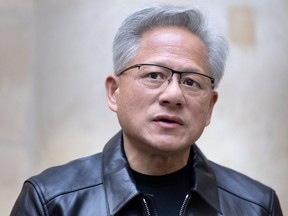
When Nvidia announced Jensen Huang’s resignation on Nov. 12, its board offered a glowing tribute to the man who spent 33 years building one of the world’s most valuable companies.
Advertisement 2

THIS CONTENT IS RESERVED FOR SUBSCRIBERS ONLY
Subscribe now to read the latest news in your city and across Canada.
- Unlimited online access to articles from across Canada with one account.
- Get exclusive access to the Toronto Sun ePaper, an electronic replica of the print edition that you can share, download and comment on.
- Enjoy insights and behind-the-scenes analysis from our award-winning journalists.
- Support local journalists and the next generation of journalists.
- Daily puzzles including the New York Times Crossword.
SUBSCRIBE TO UNLOCK MORE ARTICLES
Subscribe now to read the latest news in your city and across Canada.
- Unlimited online access to articles from across Canada with one account.
- Get exclusive access to the Toronto Sun ePaper, an electronic replica of the print edition that you can share, download and comment on.
- Enjoy insights and behind-the-scenes analysis from our award-winning journalists.
- Support local journalists and the next generation of journalists.
- Daily puzzles including the New York Times Crossword.
REGISTER / SIGN IN TO UNLOCK MORE ARTICLES
Create an account or sign in to continue with your reading experience.
- Access articles from across Canada with one account.
- Share your thoughts and join the conversation in the comments.
- Enjoy additional articles per month.
- Get email updates from your favourite authors.
THIS ARTICLE IS FREE TO READ REGISTER TO UNLOCK.
Create an account or sign in to continue with your reading experience.
- Access articles from across Canada with one account
- Share your thoughts and join the conversation in the comments
- Enjoy additional articles per month
- Get email updates from your favourite authors
Article content
The statement read “Jensen’s contributions to NVIDIA are profound” and “the Board and the company thank Jensen for his immeasurable contributions.”
Article content
Article content
The tone of the statement was celebratory.
An uninformed reader might have believed that Huang had simply decided to retire at the apex of his career.
But five days later, on the company’s Nov. 17 quarterly earnings call, Nvidia’s chairman offered a new narrative: Huang had voluntarily resigned “after disclosure of personal behaviour inconsistent with the company’s code of conduct, standards, and cultural norms.”
In trying to piece together what transpired here, one must question what came to pass between Nvidia’s Nov. 12 and Nov. 17 statements. Perhaps more importantly, what actually happened at the organization before Huang’s “voluntary resignation?”
Read More
-

Nvidia, facing SEC probe, beats analyst estimates after Jensen Huang ouster
-

Nvidia won't reconsider Huang ouster: Report
-

FBI probing Nvidia boss' alleged affair with Chinese spy, Donald Trump says


By signing up you consent to receive the above newsletter from Postmedia Network Inc.
Article content
Advertisement 3
Article content
Handling of Huang’s departure raises questions
Last week, I wrote about the safeguards corporate boards must establish to hold powerful executives accountable. Independent investigations, clear reporting mechanisms and directors willing to exercise judgment without fear or favour are essential to good governance.
Nvidia’s handling of Huang’s departure raises serious questions about whether those safeguards worked or were even employed.
Most CEO exits happen over a course of months. In the case of Nvidia, how did the information concerning Huang’s conduct reach the board? What inquiries did the board make before his resignation? Was he asked to leave? What were the terms of his separation?
A departure of this size ordinarily involves rounds of negotiation, a confidential investigation and fact finding and crisis management. A founder does not simply hand over the keys to a trillion-dollar enterprise after writing a resignation letter wishing the company well.
Advertisement 4
Article content
Nvidia announced an independent investigation on Nov. 8, four days before Huang resigned. But what investigative steps preceded that announcement, and what information ultimately persuaded directors that his departure was necessary?
As you can imagine, I have a lot of questions. I’m sure any casual follower of this story does too.

Huang acknowledged mistakes in his personal life
Recent reporting suggests directors had already questioned Huang about his relationships and developed concerns about his candour. If substantiated, that makes the board’s initially glowing farewell all the more difficult to accept.
By failing to communicate the seriousness of the circumstances, Nvidia arguably created the opening for an extraordinary public campaign demanding Huang’s reinstatement.
Huang’s own public statement compounded the problem.
On Nov. 17, in a statement made on X, Huang acknowledged mistakes in his personal life and regretted creating difficulties for the board. He offered no account of professional failures or the potential consequences his misconduct may have created for Nvidia’s workplace culture.
Nor did Huang meaningfully address the employees who built the company alongside him.
Advertisement 5
Article content
Over the past week, I’ve been overwhelmed by the love and support of friends, industry colleagues, and people I've never met. Thank you to everyone who has shown kindness to my family and me. It means the world to me.
I came to the United States 53 years ago, and becoming an…
As an employment litigator, employees participating in workplace investigations are always instructed to keep the process confidential and refrain from discussing the investigation with anyone.
Arguably, Huang ignored this basic requirement when he publicly entertained reinstatement while promising to cooperate with an ongoing investigation. The two positions are irreconcilable. It makes little sense that Huang could lobby for his job back while also committing to participating in Nvidia’s investigation of his conduct as CEO.
Imagine being an employee with relevant information, watching thousands of colleagues and influential business leaders campaign for the return of the executive whose conduct is under scrutiny.
Would you feel entirely free to speak?

We apologize, but this video has failed to load.
Huang’s statement gamed the process
Huang’s statement gamed the whole process. It shifts attention from the evidence and the investigation to Huang’s perceived indispensability. To the extent an investigation is actually ongoing, Huang laid down a power play by invoking his supporters to advocate for his job back without delay.
Advertisement 6
Article content
One must ask if all of this would have happened if Nvidia’s board was more forthright in its first statement.
Nvidia’s directors have now declared that Huang will not be reinstated.
Once an organization is divided by allegations, competing loyalties and public campaigns, restoring trust is no simple exercise. Humpty Dumpty can rarely be put back together again.
If Nvidia’s directors cannot withstand pressure from those demanding Huang’s return, shareholders should question whether the board itself deserves to remain in power. Failing to hold the board to a high standard will also leave Nvidia employees wondering if every employee is required to play the same rules.
Have a workplace problem? Maybe I can help! Email me at [email protected] and your question may be featured in a future column.
The content of this article is general information only and is not legal advice.
Article content



























 Bengali (BD) ·
 English (US) ·