.png)
 16 hours ago
15
16 hours ago
15
Changing the clock won’t create more daylight — but it could change when, where and how we consume food
Published Jul 20, 2026 • Last updated 23 minutes ago • 3 minute read
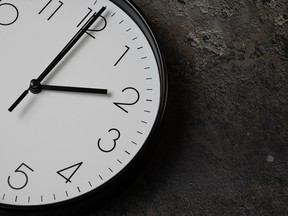
The United States is once again trying to put an end to the ritual of changing the clocks twice a year.
Advertisement 2

THIS CONTENT IS RESERVED FOR SUBSCRIBERS ONLY
Subscribe now to read the latest news in your city and across Canada.
- Unlimited online access to articles from across Canada with one account.
- Get exclusive access to the Toronto Sun ePaper, an electronic replica of the print edition that you can share, download and comment on.
- Enjoy insights and behind-the-scenes analysis from our award-winning journalists.
- Support local journalists and the next generation of journalists.
- Daily puzzles including the New York Times Crossword.
SUBSCRIBE TO UNLOCK MORE ARTICLES
Subscribe now to read the latest news in your city and across Canada.
- Unlimited online access to articles from across Canada with one account.
- Get exclusive access to the Toronto Sun ePaper, an electronic replica of the print edition that you can share, download and comment on.
- Enjoy insights and behind-the-scenes analysis from our award-winning journalists.
- Support local journalists and the next generation of journalists.
- Daily puzzles including the New York Times Crossword.
REGISTER / SIGN IN TO UNLOCK MORE ARTICLES
Create an account or sign in to continue with your reading experience.
- Access articles from across Canada with one account.
- Share your thoughts and join the conversation in the comments.
- Enjoy additional articles per month.
- Get email updates from your favourite authors.
THIS ARTICLE IS FREE TO READ REGISTER TO UNLOCK.
Create an account or sign in to continue with your reading experience.
- Access articles from across Canada with one account
- Share your thoughts and join the conversation in the comments
- Enjoy additional articles per month
- Get email updates from your favourite authors
Article content
The House of Representatives has passed legislation that would make daylight saving time permanent, leaving the Senate to decide whether Americans should remain on summer time throughout the year.
Article content
Article content
What looks like a simple adjustment to the clock could have consequences reaching well beyond sleep schedules. It could also change when, where and how people buy and consume food — and Canada cannot afford to treat the debate as someone else’s problem.
Ontario has been waiting for this moment. In 2020, the province passed legislation permitting permanent daylight time, but made implementation dependent on coordination with Quebec and New York. That caution was justified.
Ontario’s food economy is deeply integrated with both jurisdictions. Trucks carrying produce, meat and processed foods cross borders according to tightly managed delivery appointments. Warehouses, processing plants, grocery stores and restaurants operate on synchronized schedules. A one-hour difference may sound trivial, but in a perishable supply chain, small complications multiply quickly.
By signing up you consent to receive the above newsletter from Postmedia Network Inc.
Article content
Advertisement 3
Article content
If Washington ultimately adopts permanent daylight time, political pressure on Ontario and Quebec to follow will intensify. The immediate supply-chain implications should be manageable if the major jurisdictions move together. The more interesting question is what an additional hour of evening daylight during winter would do to food consumption.
Additional daylight would change where and when people eat
It would not necessarily make people eat more. It would, however, likely change where and when they eat. Brighter evenings encourage people to remain outside, shop after work and participate in leisure activities. That creates opportunities for restaurants, cafés, takeout operators, convenience stores and entertainment districts. Some food spending now occurring at grocery stores could migrate toward food service.
Total demand may barely change, while the commercial destination of that demand shifts considerably.
Meal timing could change as well. If people stay active later, dinner may be delayed and evening snacking could become more common. Researchers have already found that the spring clock change can temporarily increase consumption of packaged snacks, apparently because lost sleep and disrupted routines influence self-control.
Advertisement 4
Article content
Eliminating the clock change would remove that semi-annual disruption, but permanent daylight time could create a different challenge: darker winter mornings and a lasting misalignment between social schedules and natural light. The long-term dietary consequences remain uncertain, which is precisely why claims that permanent daylight time will automatically improve public health should be treated cautiously.
Read More
-

U.S. Congress passes motion to end twice-yearly time changes
-
Daylight Saving Time: History, health impacts and debate

Farming a key concern
Then there is farming, where one of the most persistent myths about daylight saving time continues to survive. The system was not created for farmers. It was promoted during wartime largely as an energy-conservation measure. Farmers were often among its strongest opponents because crops, livestock and weather do not recognize government clocks. Cows do not adjust their biological routines because legislators move the hour hand.
Advertisement 5
Article content
Dew does not disappear earlier because a statute says it is later. Agriculture follows sunlight; the modern food chain follows schedules.
That distinction still matters. Today’s farms are connected to processors, milk pickups, livestock transporters, distribution centres and labour shifts governed by clock time. Permanent daylight time would not create an additional hour of sunlight or improve crop yields. It would simply relabel an existing hour, transferring usable clock daylight from the morning to the evening. For farm operations starting before sunrise, winter mornings would become darker.
The burden would be operational rather than biological.
Restaurants would win big
For consumers, the most visible winners could be restaurants and other businesses that benefit from evening activity. For grocery retailers, the effect could be mixed: more after-work shopping, but potentially greater competition from food service. For supply chains, the determining factor would be coordination. Ontario moving with Quebec and New York would be an adjustment. Ontario moving alone would be an avoidable logistical nuisance.
Advertisement 6
Article content
Changing the clock will not change the amount of daylight, solve food inflation or transform agricultural productivity. But clocks organize markets, and food is perhaps the most time-sensitive market of all. Permanent daylight time could subtly redistribute food spending, alter meal schedules and reshape evening demand. Before governments declare the debate merely a matter of convenience, they should recognize that even time has a supply chain.
– Sylvain Charlebois is director of the Agri-Food Analytics Lab at Dalhousie University, co-host of The Food Professor Podcast.
RECOMMENDED VIDEO

We apologize, but this video has failed to load.
Article content




























/https%3A%2F%2Fsportsmole-media-prod.s3.gra.io.cloud.ovh.net%2Fuploads%2F2026%2F03%2Ficonsport-361551-0102-1-69b560866f7b6508942731.jpg)

 Bengali (BD) ·
  English (US) ·