.png)
 2 hours ago
7
2 hours ago
7
Our agri-food sector doesn't need more speeches about diversification. It needs governments that can deliver certainty
Published Jul 01, 2026 • 3 minute read

See more Toronto Sun on Google — save as a Preferred Source
Advertisement 2

THIS CONTENT IS RESERVED FOR SUBSCRIBERS ONLY
Subscribe now to read the latest news in your city and across Canada.
- Unlimited online access to articles from across Canada with one account.
- Get exclusive access to the Toronto Sun ePaper, an electronic replica of the print edition that you can share, download and comment on.
- Enjoy insights and behind-the-scenes analysis from our award-winning journalists.
- Support local journalists and the next generation of journalists.
- Daily puzzles including the New York Times Crossword.
SUBSCRIBE TO UNLOCK MORE ARTICLES
Subscribe now to read the latest news in your city and across Canada.
- Unlimited online access to articles from across Canada with one account.
- Get exclusive access to the Toronto Sun ePaper, an electronic replica of the print edition that you can share, download and comment on.
- Enjoy insights and behind-the-scenes analysis from our award-winning journalists.
- Support local journalists and the next generation of journalists.
- Daily puzzles including the New York Times Crossword.
REGISTER / SIGN IN TO UNLOCK MORE ARTICLES
Create an account or sign in to continue with your reading experience.
- Access articles from across Canada with one account.
- Share your thoughts and join the conversation in the comments.
- Enjoy additional articles per month.
- Get email updates from your favourite authors.
THIS ARTICLE IS FREE TO READ REGISTER TO UNLOCK.
Create an account or sign in to continue with your reading experience.
- Access articles from across Canada with one account
- Share your thoughts and join the conversation in the comments
- Enjoy additional articles per month
- Get email updates from your favourite authors
Article content
By any measure, Canada has become one of the world’s most trade-dependent economies. Nowhere is that more evident than in agri-food, where millions of jobs and billions of dollars in investment depend on stable access to foreign markets.
Article content
Article content
That is why this Canada Day carries unusual significance.
July 1 marks the formal review of the Canada-United States-Mexico Agreement (CUSMA), the single most important trade agreement for Canada’s food economy. Yet instead of celebrating a stable North American partnership, Canada enters the review facing uncertainty on virtually every front.
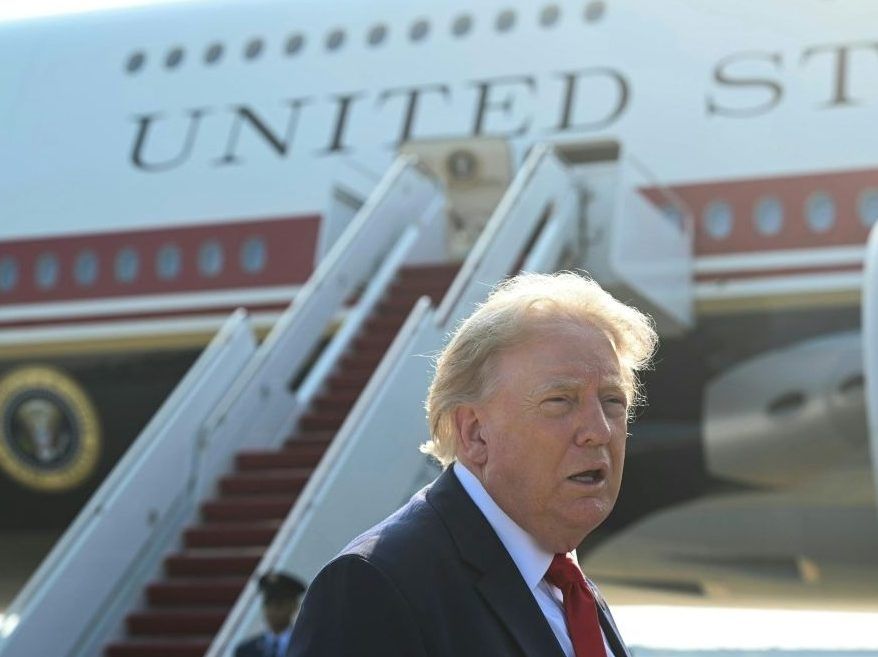
To the south, the United States has openly questioned the future of CUSMA. President Donald Trump has indicated that the agreement no longer serves American interests and has initiated the process that could ultimately lead to a U.S. withdrawal. Whether this is a negotiating strategy or a genuine policy is almost beside the point. Businesses invest based on certainty, not political theatre.
By signing up you consent to receive the above newsletter from Postmedia Network Inc.
Article content
Advertisement 3
Article content
Canada’s strategy faces own test
What is perhaps more concerning is that Mexico appears to be further ahead in formal negotiations with Washington than Canada. Ottawa insists discussions continue with American officials, but the perception matters. If our largest trading partner is prioritizing another North American partner while Canada remains largely outside formal negotiations, investors notice.
At precisely the same time, Canada’s diversification strategy is facing its own test.
Only hours before the CUSMA review began, China announced preliminary duties of 73.5% on Canadian pea starch. In dollar terms, the trade affected is relatively modest—roughly $100 million annually, representing only about one per cent of Canada’s agri-food exports to China. But focusing solely on the value misses the point entirely.
Pea starch is not a raw commodity. It is a value-added ingredient produced in Canadian processing plants after significant investments in technology, manufacturing capacity and skilled labour. It embodies precisely the kind of economic activity successive governments have encouraged: processing Canadian crops at home instead of exporting them abroad with little additional value. When China targets products like pea starch, it is not just restricting a niche export. It is undermining the business case for investing in Canada’s food processing sector, where the greatest economic returns — and the highest-paying jobs — are created.
Advertisement 4
Article content
None of this means Canada’s effort to rebuild commercial ties with China has failed. Diplomatic relations and trade disputes often move on separate tracks. Anti-dumping investigations follow legal processes that can continue regardless of political goodwill.
But it does remind us of something many policymakers would rather ignore: diversification is not simply about finding another large customer. It is about finding reliable markets.
Trade policy is ultimately about confidence.
Canada in uncomfortable position
For the past several months, Canadians have been told that reducing dependence on the United States is both necessary and achievable. That objective remains sensible. No country should rely excessively on a single export destination.
The challenge is that replacing one dominant market with another equally unpredictable one does not reduce risk. It merely redistributes it.
Canada now finds itself in an uncomfortable position. Our relationship with China remains vulnerable to abrupt trade actions. Our relationship with the United States—the destination for roughly three-quarters of our merchandise exports — is entering its most uncertain period in years. Meanwhile, Mexico appears to be positioning itself advantageously within North America.
Advertisement 5
Article content
For food manufacturers, processors, farmers and investors, uncertainty is becoming the defining feature of Canada’s trade environment.
This should prompt some honest reflection.
Over the past decade, Canada has excelled at announcing ambitious trade strategies. We have signed agreements around the world, promoted Indo-Pacific engagement, reopened dialogue with China, and defended CUSMA. Yet success in trade is measured less by the number of agreements signed than by the confidence businesses have to invest.
Confidence comes from predictability.
On this Canada Day, the country’s greatest economic challenge may not be choosing between Washington and Beijing. It is restoring Canada’s reputation as a country where long-term investment decisions can be made with confidence.
Our agri-food sector does not need slogans about sovereignty or diversification.
It needs dependable trading relationships, coherent policy, and governments capable of turning diplomatic ambition into commercial certainty.
– Sylvain Charlebois is director of the Agri-Food Analytics Lab at Dalhousie University, co-host of The Food Professor Podcast.
Article content


























/https%3A%2F%2Fsportsmole-media-prod.s3.gra.io.cloud.ovh.net%2Fuploads%2F2026%2F06%2Fimago-xinhua-nestory-irankunda-celebrates-scoring-for-australia-in-the-world-cup-on-june-14-2026-6a2f348854d1b663111439.jpg)

/https%3A%2F%2Fsportsmole-media-prod.s3.gra.io.cloud.ovh.net%2Fuploads%2F2026%2F06%2Fjarell-quansah-2-6a405306ed40a243376273.jpg)
 Bengali (BD) ·
  English (US) ·