.png)
 14 hours ago
17
14 hours ago
17
Article content
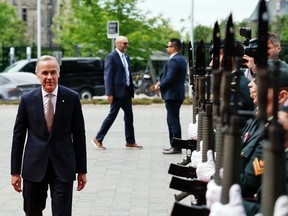
WASHINGTON, D.C. — In recent weeks, we’ve learned that Canadian military leaders war-gamed U.S. military action against Canada earlier this year, with Prime Minister Mark Carney having described it as an “extreme tail risk,” in an interview last month with the New York Times.

THIS CONTENT IS RESERVED FOR SUBSCRIBERS
Enjoy the latest local, national and international news.
- Exclusive articles by Conrad Black, Barbara Kay and others. Plus, special edition NP Platformed and First Reading newsletters and virtual events.
- Unlimited online access to National Post.
- National Post ePaper, an electronic replica of the print edition to view on any device, share and comment on.
- Daily puzzles including the New York Times Crossword.
- Support local journalism.
SUBSCRIBE FOR MORE ARTICLES
Enjoy the latest local, national and international news.
- Exclusive articles by Conrad Black, Barbara Kay and others. Plus, special edition NP Platformed and First Reading newsletters and virtual events.
- Unlimited online access to National Post.
- National Post ePaper, an electronic replica of the print edition to view on any device, share and comment on.
- Daily puzzles including the New York Times Crossword.
- Support local journalism.
REGISTER / SIGN IN TO UNLOCK MORE ARTICLES
Create an account or sign in to continue with your reading experience.
- Access articles from across Canada with one account.
- Share your thoughts and join the conversation in the comments.
- Enjoy additional articles per month.
- Get email updates from your favourite authors.
THIS ARTICLE IS FREE TO READ REGISTER TO UNLOCK.
Create an account or sign in to continue with your reading experience.
- Access articles from across Canada with one account
- Share your thoughts and join the conversation in the comments
- Enjoy additional articles per month
- Get email updates from your favourite authors
Sign In or Create an Account
or
Article content
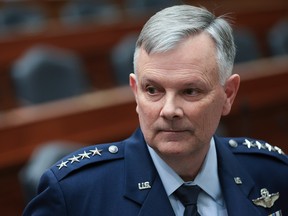
That revelation was a stark reflection of an increasingly strained relationship amid the tariff war, even as Arctic, missile, drone, and homeland-defence threats continue to rise. To understand how the Canada-U.S. defence alliance is holding up amid these tensions, National Post spoke with retired General Glen VanHerck, commander of U.S. Northern Command and North American Aerospace Defense Command (NORAD) from 2020 to 2024.
Article content
Article content
Advertisement 1
Article content
This Q&A has been edited for clarity and length.
Article content
By signing up you consent to receive the above newsletter from Postmedia Network Inc.
Article content
You led NORAD and U.S. Northern Command through a period of growing political friction between Ottawa and Washington, at least on trade matters. From the inside, how much did that affect day-to-day defence cooperation, and how much was just business as usual?
Article content
Gen. Glen VanHerck: It did not affect the military relationship or defence cooperation on a day-to-day basis. What it did was, at times, create doubt about the political commitment to the military mission — to Canada’s responsibility to its NORAD commitment and continental defence in general. That’s what I would say it created questions or doubt about at times.
Article content
From a military perspective, I never doubted the commitment of the Chief of Defence staff (of Canada), the military personnel assigned to NORAD, the military personnel I interacted with at Canadian Joint Operations Command (CJOC) or anyplace else.
Article content
But when you see politically questionable support for that military institution at times — when you see statements that express, ‘Yes, we’re going to do NORAD modernization,’ but no money comes with it; when you see that there’s discussion of a new strategy, but that strategy is delayed a year or two — then that creates questions in one’s mind about commitment and long-term support.
Article content
Advertisement 2
Article content
Article content
Do you have concerns that today’s trade tensions could negatively affect the defence relationship between the two countries moving forward?
Article content
I don’t have concerns that the trade challenges we’re experiencing will impact the relationship or military commitment … The commitment is there. The trade challenges and relationships could ultimately impact their ability to support (that commitment) because of a lack of money, resources, platforms that are capable, interoperable, and integrated.
Article content
What does Canada contribute to North American defence that the United States could not easily replace, whether it’s in the Arctic, early-warning systems, airspace surveillance, or continental command and control?
Article content
Well, I think the greatest thing Canada commits to and has is its posture, its location in the Arctic, the geography that it offers. Certainly, the United States can replace material things, whether it’s radars or airplanes. It cannot replace a government that is committed to a binational relationship. That’s the most powerful thing you can have. And that relationship — and even expanding that to NATO — is an asymmetric advantage that the United States, Canada, and our partners and allies have had. I would say that relationship has actually prevented the great powers from going to war.
Advertisement 1
Advertisement 2
Article content
The friction we have politically, in my mind, makes that relationship and that support questionable and erodes strategic stability, because potential adversaries see that and they question our alignment, our support for each other. Are we going to have each other’s back, and are we committed to defence and going to war over each other’s sovereignty and the things that we support as an alliance? That’s the worst thing that could happen.
Article content
Do you think the onus is more on Canada or the United States to repair the relationship — or do both bear responsibility?
Article content
I think both countries are at fault. I think countries have reacted based on emotion rather than fact. At times, there’s been immaturity in the relationship both ways, and it would be better if we sat down and looked at the positives of the relationship rather than making emotional decisions out of political positions by leaders on both sides.
Article content
I do think Canada needs to do more for its defence posture and support. I think that has eroded over the years. With various elected officials who have been in power, Canada’s support for the defence apparatus did wane a little bit. But at the same time, I think the U.S. could have had these discussions behind closed doors, in non-emotional terms, and gotten to a better place.
Article content
Advertisement 3
Article content
You’ve said that Canada and the United States are safer together. What is the strongest evidence for that, and what is the biggest weakness in the partnership today?
Article content
I think the strongest evidence is that North America has been kept safe. We have fielded operable capabilities. Canada and the United States have gone to war, into conflicts around the globe, attached at the hip, side-by-side. Certainly the commitments from each country look different, but that doesn’t mean that the commitment from the political (realm) and the people has been any different. That’s just a fact of gross domestic product and the size of industry that has limited Canada’s commitment.
Article content
What is the biggest weakness in the partnership today?
Article content
I think the biggest weakness is that the partnership and relationship, as we’re seeing it play out, can be significantly influenced by single leaders and emotional leaders in ways that impact an entire country. The rest of the people, and the military apparatus, our national security, our prices of goods — all become affected by two individuals who don’t necessarily agree over policy.
Article content
Advertisement 4
Article content
You’ve warned that hypersonic weapons make NORAD’s warning and assessment mission much harder. How exposed is Canada to that gap, and is modernization moving quickly enough for both countries?
Article content
Canada’s very exposed to that. From a defensive perspective and being able to track, it’s going to require a satellite constellation to track hypersonics that are going to attack North America. The United States is committed to building a Low Earth Orbit constellation to do that. To my knowledge, Canada has not yet built radars that’ll be able to bridge that gap. So both the United States and Canada are vulnerable to that threat.
Article content
Article content
Has Canadian defence and NORAD modernization funding improved under Prime Minister Mark Carney?
Article content
Since I’m not the commander, I don’t see under the tent and see what’s going on necessarily — but my understanding is that Prime Minister Carney has absolutely furthered the commitment to NORAD. He made sure the money that was committed but never really provided under the last administration in Canada has gone forward, and he’s added to that.
Article content
On the 2 per cent (of GDP for NATO defence), I think that number is just pulled out of thin air and doesn’t mean anything for the United States, Canada, or NATO. We need to figure out what the threat requires, what stability requires, and then get a commitment of all nations, whether that’s 2 per cent, 5 per cent, 2.5 per cent, 1.5 per cent. I don’t know where the number is, but just arbitrarily putting percentages out as a goal, in a military planner’s mind, is not really the way to do business.
Advertisement 2
Advertisement 3
Article content
NORAD is binational, but the United States is much more powerful. In a crisis affecting North America, how much real influence does Canada have over decisions that could affect its own security?
Article content
If you’re looking at it from a NORAD perspective, there are terms of agreement — there are rules that you must follow that require political leaders on both sides to commit to. So Canada has all the influence and power it needs in that agreement. That would be for NORAD support. If the United States feels differently or Canada feels differently, then you can take actions outside of the NORAD construct through your forces or additional U.S. forces.
Article content
We saw that play out in some way with NORTHCOM taking action to shoot down the (Chinese high-altitude surveillance) balloon, which flew over both countries’ airspace. The legal justification to shoot it down was under U.S.-only law and policy, and therefore the authority used was a NORTHCOM authority.
Article content
As Canada tries to build more of its own defence capacity and reduce reliance on U.S. suppliers, how should Ottawa balance sovereignty with the need for interoperability with the United States?
Article content
Canada needs to focus on what’s in its best interest and the best interest of national security for Canada and the binational relationship of NORAD and security for North America.
Article content
Advertisement 5
Article content
The thing that’ll make us most secure is compatible, integrated capabilities, to where, if we needed to share airplanes, if we need to share bases, if we need to share command and control, if we need to share fuel, weapons, people, if I need to land airplanes in Canada and have Canadians service them and work on them, we’re far stronger if we do that than we are if we do something different — if we don’t have integrated, collaborative types of operations.
Article content
With that said, I fully respect Canada’s sovereignty and its need to become less dependent on the United States in its national military, defence industrial base, et cetera. But when you do that, it is important to consider whether you are going to remain operable and integrated. I think that’s a crucial lesson and point.
Article content
Prime Minister Carney has said that Canada war-gamed for the ‘extreme tail risk’ of a U.S. military invasion of Canada earlier this year — not because he expects an invasion, but because he considers it irresponsible not to plan for it. As the former commander of NORAD and Northern Command, did that surprise you? What did you make of the fact that the Canadian prime minister was war-gaming a possible U.S. invasion?
Article content
I wouldn’t say it stunned me. I was quite surprised that there was any perception that the U.S. military would invade Canada, candidly. But with that said, military planners should plan for all scenarios, and whether it’s the U.S., Russia, or China, it’s almost irrelevant except for geographic location, where a potential invasion may come from.
Article content
Advertisement 6
Article content
But it was surprising to hear the prime minister say he was planning for a potential invasion by the U.S. military just because of the relationship commitment and the fact that the countries are neighbours and trade partners. I just don’t see how that could benefit either country. I was just very surprised by that. There were no indicators, except for rhetoric of one person, that would lead to something like that. And that rhetoric didn’t indicate, in my mind, that a military attack on Canada was likely or even being planned for or considered. That’s what concerns me a little bit.
Article content
You’ve said that military planners should plan for all possible iterations of warfare. Has the U.S. ever done anything in reverse, where it has planned an invasion or planned for handling an attack that may come from the Canadian side?
Article content
Not to my knowledge. During my timeframe, I never saw anything remotely close to that.
Article content
Have you ever seen a war game involving a U.S. military move into Canada?
Article content
Into Canada to support Canada, potentially logistically, under NORAD commitments, moving U.S. military squadrons and stuff into Canada, yes. That was planned for and considered likely to happen, but not under a threat from Canada or to Canada.
Advertisement 3
Advertisement 4
Article content
Where would the threat be coming from in those scenarios?
Article content
That would be a Russia threat, a potentially Russia-China threat — most likely the first one, Russia — where air defence, further surveillance capabilities, submarine capabilities would be needed to sustain submarine and maritime operations, potentially even maritime vessels from the U.S. Navy using Canadian ports for refuelling, restocking, those types of things.
Article content
You’ve said the Canada-U.S. defence relationship is strong despite political tension, but strength, of course, is not the same as trust. What would have to happen for Canada to no longer be able to count on the United States, and vice versa?
Article content
I think a clear lack of character, militarily — in military leadership and integrity, one way or the other — (could affect it). That trust and those relationships are built on character and integrity, telling the truth, having factual conversations, agreeing to disagree.
Article content
But when you start having questions about one’s character on the other side — and I’m talking the military dimension only, not the political — then there can be a breakdown of trust militarily.
Article content
Advertisement 7
Article content
You mean among the generals or the chiefs of staff — have you ever seen anything like that in this relationship?
Article content
Never.
Article content
Where do things stand in terms of Canada-U.S. defence and trust, in your mind?
Article content
Militarily, I think the trust is still really good. And this is from talking to both U.S. and Canadian senior leadership. There is absolute trust and respect, and they continue doing the NORAD mission — that’s defence of North America, both Canada and the U.S., and they do it side-by-side.
Article content
You mentioned some of the concerns that you had about former prime minister Justin Trudeau. Do you have any major concerns about Carney’s leadership?
Article content
What concerns me most is that decisions will be made based on emotion, not based on fact and long-term national security, but rather on perceived short-term penalties to the United States. What I’m talking about is buying inferior, less operable equipment.
Article content
I understand the need for Canada to have sovereignty and to become more dependent, less dependent on the United States, but that doesn’t mean that you shouldn’t buy the best equipment available at the most affordable price. That does concern me — that Canada will make decisions based on emotions, not facts.
Article content
Advertisement 8
Article content
Is there anything else you’d like to add about the state of the Canada-U.S. relationship today?
Article content
I think the relationship, for both nations to get this right, is really, really important for both nations’ national security and economic prosperity.
Article content
We are tied together, whether it’s electric grids that go across the border, goods going back and forth, our people, or education. And the sooner we can get beyond emotion and friction generated out of that emotion, the better off we’ll be, not only as individual nations, but more importantly, the more stable the world will be, and we’ll become another role model to the rest of the world of how neighbours should operate.
Article content
Frankly, I’m disappointed with how neighbours are operating based on emotion today. And, candidly, that’s why I’m a commissioner on the Second Century Commission. We’re just getting started, and the commission includes Canadians and Americans, former ambassadors, former deputy prime ministers — I’m the only military representative — U.S. ambassadors to Canada, vice versa. There are about 20 of us who are going to write a report that will basically be a blueprint for the next century. It’s called the Second Century Commission. And I think it’s really important that we get this right, that we partner with Canadians to look at what the next century is going to be for the two countries and how to make that happen.
Advertisement 4
Advertisement 5
Article content
We are going to meet this month in Baltimore, Maryland, and we’ll meet in the spring in Montreal. We’ll draft reports, and that will likely, through editing and recommendations, and coordination, take us about 18 months to complete.
Article content
National Post
Article content
Our website is the place for the latest breaking news, exclusive scoops, longreads and provocative commentary. Please bookmark nationalpost.com and sign up for our newsletters here.
Article content


















/https%3A%2F%2Fsportsmole-media-prod.s3.gra.io.cloud.ovh.net%2Fuploads%2F2026%2F10%2Fronaldo-portugal-6abeaa661f6ac972531182.jpg)
 Bengali (BD) ·
  English (US) ·