.png)
 1 hour ago
13
1 hour ago
13
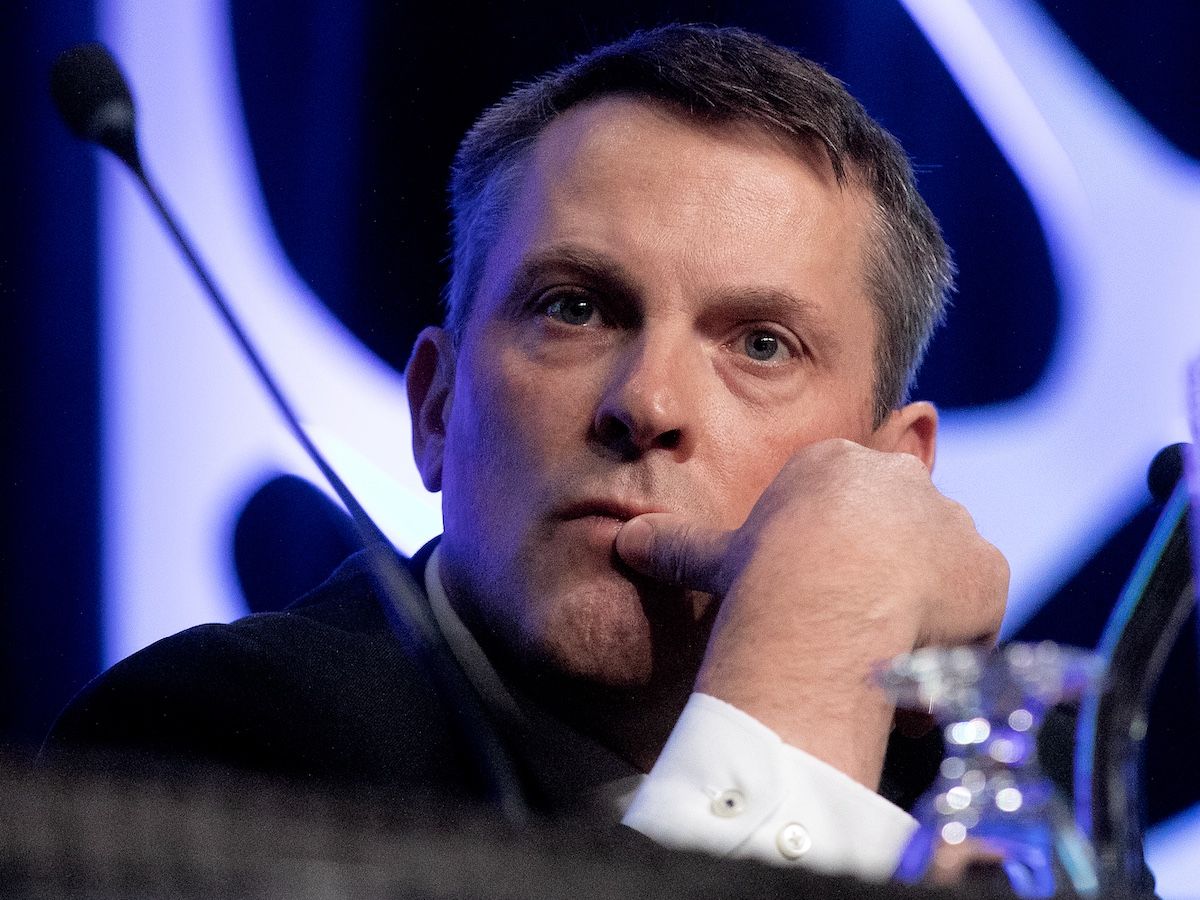
The nature of Canada’s military deployment is set to change dramatically in the coming years, the country’s top military commander told a Montreal audience this week.
Since the end of the Cold War, Canada’s armed forces have mainly been sent overseas to take part in targeted campaigns.
“We were exporters of security,” Gen. Jennie Carignan said in a talk organized by the Montreal Council on Foreign Relations. “But we invested very little in our defence here in Canada, and in the Arctic.”
Meanwhile, the shift in the geopolitical landscape means the threat of large scale conflicts pitting state against state that could draw Canada in has increased. The country’s main challenge is posed by its vast territory that is difficult to patrol and surveil, and which is primarily at risk from long-range ballistic missiles and hypersonic cruise missiles.
This new emphasis on self-defence means Canada will need to ramp up its ability to produce military equipment and supplies domestically in order to protect itself from supply chain disruptions seen internationally, Carignan said.
There are serious doubts, however, as to whether Canada has the capacity to meet its defence ambitions, and if it remains too reliant on the United States and their military might.
Carignan acknowledged it’s been difficult for Canadian companies to navigate the complicated procurement process to get contracts with the military, forcing many to export to other countries instead. But there are multiple recent encouraging signs, she said.
The federal government recently announced its “defence industrial strategy” that is meant to shift Canada’s dependence on U.S. suppliers, creating more than half a trillion dollars in investments in the next decade by moving 70 per cent of defence spending to Canada-based firms. A proposed international defence bank that would aid NATO countries to grow their militaries will be set up in Canada, officials announced last week, and could come to Montreal. And the Liberal government is creating a Defence Investment Agency to accelerate military procurement.
Canada is also studying a plan to increase the number of its part-time soldiers from the current 28,000 to 400,000, in order to assure “the defence of Canada against domestic threats ranging from a low-intensity natural disaster response to high-intensity large scale combat operations.”
There are questions, however, as to how Canada will be able to achieve those ambitions when it’s can’t fulfill its current duties. A report by Auditor General Karen Hogan released in October revealed the Canadian Forces is not recruiting enough individuals to meet its operational needs. It’s having trouble training enough highly skilled recruits to staff occupations like pilots or ammunition technicians. The force is also struggling to train new recruits. Internal documents obtained by the CBC shows the military was concerned about its ability to clothe, arm and equip a force of more than 400,000 members.
Prime Minister Mark Carney has responded the government will continue to grow the military and its reserves over the coming years and he’s confident in their abilities.
In her address to the Montreal Council on Foreign Relations, Gen. Carignan noted the military’s new focus on working with Canadian industries represents a major shift and will require a transition period. The armed forces, she noted, is not currently well-equipped to deal with sub-contractors and other smaller suppliers in the defence supply chain.
Judging by the sold-out crowd of 400 participants at the talk, mostly from the defence industry field, and a similarly popular Defence Strategy Conference recently hosted by the Chamber of Commerce of Metropolitan Montreal, there is large interest from the business community in the billions in potential contracts.
Justin Massie, head of the political science department at Université du Québec à Montréal and co-director of the Network for Strategic Analysis, says the concern is Canada’s new defence industrial strategy is more focused on creating jobs and boosting the economy than on national defence. Since many of the firms receiving defence contracts in Canada are the subsidiaries of U.S. companies like Lockheed Martin and General Dynamics, it puts into question the autonomy of Canada’s military, he said.
Massie gives the example of the roughly 2,000 Canadian troops stationed in Latvia to bolster NATO presence in Eastern Europe. What would happen if the troops have to enter into war with Russian forces, but the U.S. says it’s not getting involved and refuses the right to use its weapons.
“I’m not sure we’re thinking through the exact implications of the world we’re slowly getting into with the U.S. and its changing defence policy,” Massie said.
At the same time, much of the billions earmarked for defence in Canada are going to catching up on longstanding needs, like fighter jets and submarines. Little is going toward research and development for capabilities that will be needed in the future — primarily autonomous fighting systems.
“The future of warfare will be robots,” Massie said. “This is what we’re seeing in Ukraine. They took trench positions without any humans involved. They are putting out drones on land, in the air, under the sea, all sorts of types, and this is what we will be needing on the battlefield.”
Canada needs to enter into agreements with European consortiums, companies and militaries who “have skin in the game” and will help Canadian soldiers when needed, Massie argues.
“We need a second track to develop more autonomy and resilient capabilities,” he said. “If we want to defend both Europe and Canada, we need to have that in our defence strategy.”
Editor’s Picks


The post Canada must ramp up military supply chain to prepare for threats, defence chief says appeared first on Montreal Gazette.

























 Bengali (BD) ·
  English (US) ·