.png)
 53 minutes ago
9
53 minutes ago
9
Jun 27, 2026 11:00 AM CUT
Jun 27, 2026 11:00 AM CUT
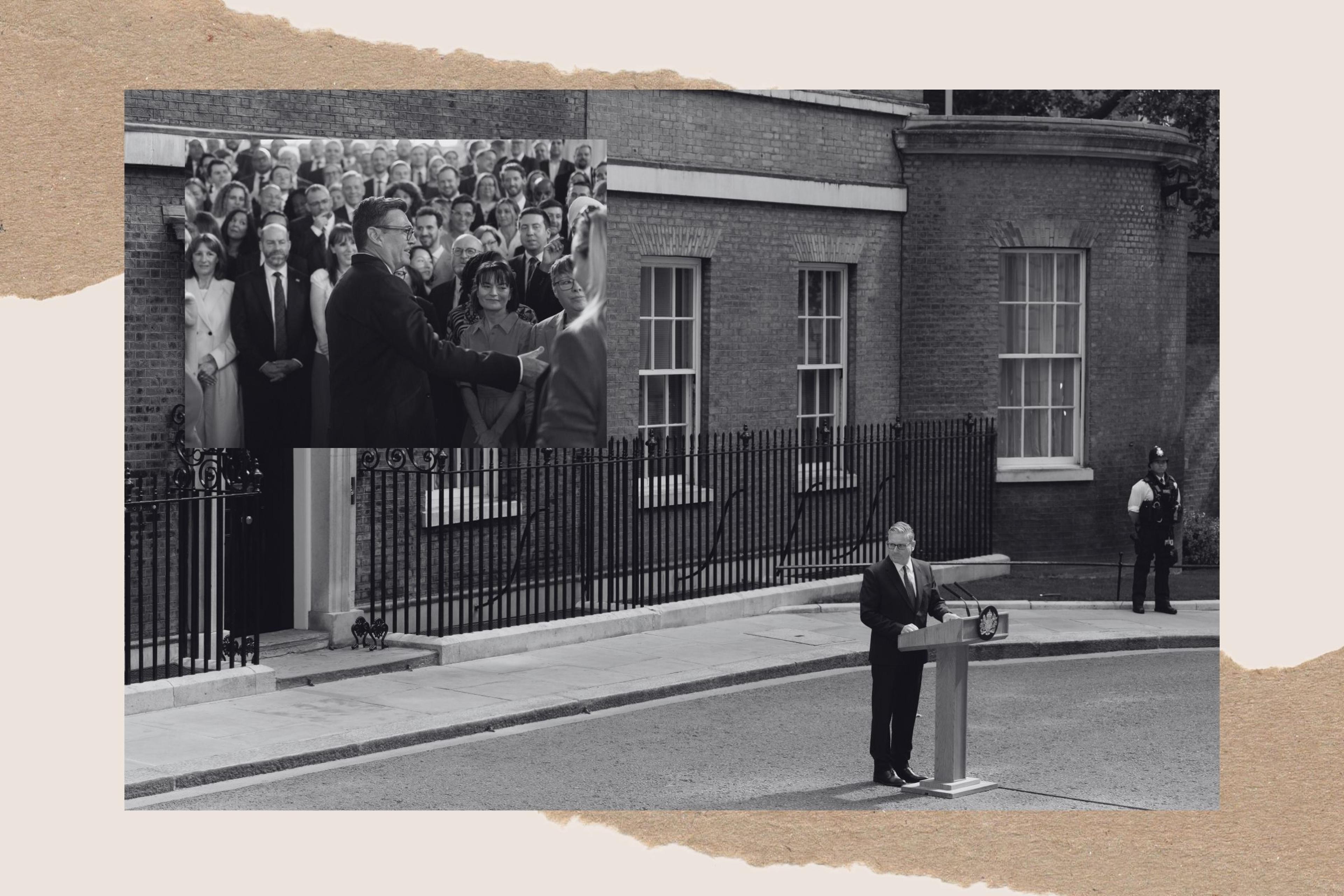
It has become an all too familiar ritual in the United Kingdom. A somber Prime Minister emerges, delivers a list of achievements in office—some real, others less so—and then accepts the game is up. To applause from staff gathered on the pavement, and amid much emotion, the Prime Minister turns, waves, and heads back inside No. 10 to serve the remaining days of another failed U.K. premiership.
It was Keir Starmer’s turn to partake in this ritual on Monday. Just weeks after the Labour Party’s poor performance in local polls, he announced his resignation, clearing the way for Britain to get its seventh Prime Minister in 10 years.
Starmer, a stellar lawyer before entering politics in 2015, failed to inspire or articulate a convincing plan to revive a country held back by creaking, unreformed public infrastructure and an unproductive economy. Despite convincingly winning the country’s last general election, his resignation, announced 10 years to the week after Britain’s Brexit vote, opens the way for Andy Burnham, the newly sworn-in Member of Parliament (MP) for Makerfield, to become the new Prime Minister. Outsiders might justifiably wonder what’s going on: Burnham has only won a local poll, yet because of the quirks of the British parliamentary system, he is overwhelmingly likely to inherit the country’s top job.
All of which raises a critical question: If Burnham does succeed in becoming the next Prime Minister, how long can he realistically last, given that he will confront the same deep-seated economic and structural problems as his predecessors?
Robert Peston, ITV News’ political editor, suggested Monday evening that the omens were not good.
“We are now one of those ridiculous countries which are incapable of delivering stable government,” he said.
So how did Britain’s political system come to be so fractured?
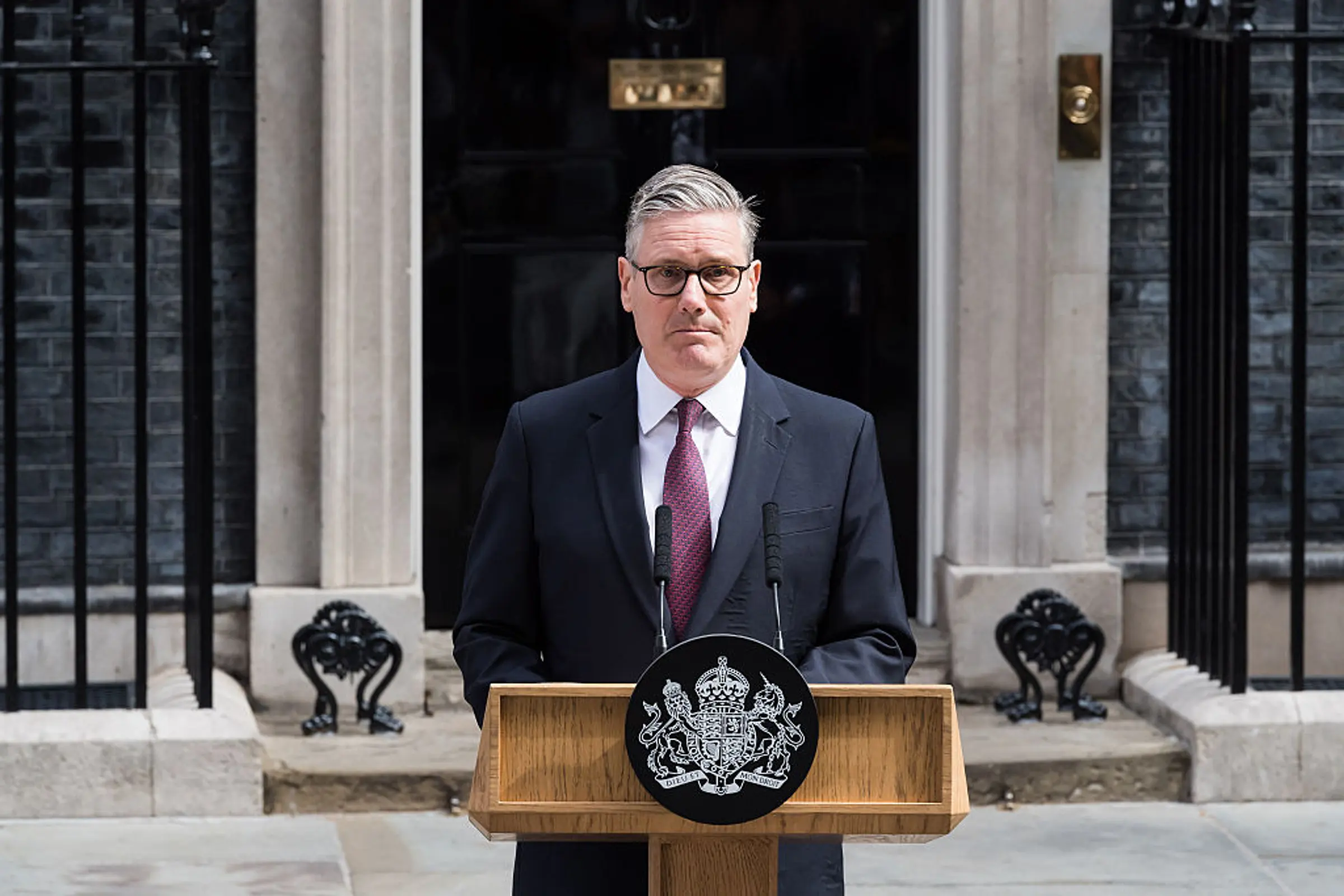
British Prime Minister Keir Starmer announces his resignation during a speech outside 10 Downing Street in London, England, on June 22, 2026. Wiktor Szymanowicz—Future Publishing/Getty Images
The fracture of U.K. politics
In the 31 years from 1979 to 2010, the U.K. had just four Prime Ministers—the Conservatives’ Margaret Thatcher and John Major, then Labour’s Tony Blair and Gordon Brown. Since then, tenures have shortened dramatically.
The five leaders before Starmer were all Conservatives. David Cameron quit in June 2016 after six years, his credibility shot by the disastrous loss of the Brexit referendum that he himself had called. Then with Brexit’s effects and the COVID pandemic both adversely hitting the national finances and mood, the task of governing became ever more difficult by the month. Money was critically short. Demands on health and other services were growing, but the cash to fund them adequately was simply not there. Young people, the COVID generation, who had had Brexit foisted on them by their elders, were hearing from endless reports and surveys that they would be the first generation in living memory that would not grow up to be better off than their parents.
Against this troubled backdrop of national angst, Prime Ministers came and went, making the U.K., not so long ago a bastion of political stability on this side of the Atlantic, look more and more like some of its formerly unstable southern European neighbors. Between 2011 and 2022, Italy, for example, cycled through six different leaders. With Giorgia Meloni now firmly ensconced in Rome, and the U.K. once again awaiting a new leader, the revolving door has moved north.
After Cameron, Theresa May fell on her sword in 2019, when she failed to break a parliamentary deadlock over how Britain should navigate its departure from the E.U. Boris Johnson’s more colourful occupancy of No. 10 followed, but he was forced out after a similar length of time, dragged down by COVID chaos and accusations that parties at Downing Street broke the very social-distancing rules he had asked the nation to abide by.
His successor Liz Truss’ tenure of just 45 days was a disaster. Her controversial mini-budget of unfunded borrowing unleashed complete panic on the financial markets. She did notch up a couple of records, not just for the shortest term in office, but also for being the first leader since Winston Churchill to govern under two monarchs. King Charles III ascended to the throne following the death of his mother Queen Elizabeth II, just two days after Truss took over. During Truss’ final days in Downing Street, a British newspaper tracked whether her tenure would outlast a lettuce. It did not. Rishi Sunak restored some stability post-Truss, but resigned in July 2024 after a crushing Conservative election defeat.
The problems with being Prime Minister
Starmer’s fall, though he had endured for almost two years in Downing Street, was arguably the heaviest descent from the greatest heights. He had led the Labour Party to a record general election landslide victory as recently as July 2024, but simply never had a plan.
Anthony Seldon, a political historian of recent times, who has charted the careers of every U.K. Prime Minister since Major, lists a string of reasons why so many have failed. He says too often the choices were either too young or too inexperienced, or both. As a result, if and when they reached No. 10, they turned out to struggle with the job.
“Boris Johnson thought he could just run the country like he had run the London mayoralty (which he occupied from 2008 to 2016). Theresa May thought she could move to No. 10 and run it like her previous job as Home Secretary. They just failed to recognize the opportunity and the scale of the challenge that fell to them,” Seldon tells TIME.
There is also the added disruption of the social media discourse, Seldon says, noting how it creates intense pressures for instant solutions that are counterproductive.
Hannah White, CEO of the Institute for Government, says: “U.K. Prime Ministers have an ever-diminishing window to deliver perceptible change before the public and fellow MPs lose confidence and begin to contemplate changing them for a more promising candidate.”
Politicians and commentators cite a particular structural problem in British politics that builds in instability for leaders and Prime Ministers. This results from the way the Conservative and Labour parties outsource the final choice of their political leaders these days to party memberships, who do not always choose wisely. Nor do they often select the leader their MPs want.
John Stevenson, a Conservative MP until the last general election, tells TIME: “Tory MPs have no buy-in to the choice of leader, which is the decision of members. So the problem occurs in parliament.” As for Starmer, the pressure for change from within the Parliamentary Labour Party was the main reason he essentially had no option but to go.
Andrew Haldenby, managing director of the Effective Governance Forum, a cross-party Westminster campaign for better government in the U.K., says Prime Ministers are way more vulnerable than U.S. Presidents.
“British Prime Ministers don’t sit for a fixed term of four years. They sit as long as they command the confidence of the Members of Parliament in their party,” he explains. “If those MPs suspect that they will lose their seats in parliament because the Prime Minister is not good enough, then the pressure for change can become irresistible.”
Robert Ford, a professor of politics at Manchester University, agrees, noting the “very high bars” to remove a U.S. President and the relatively low bars to remove U.K. political leaders. “There is also an institutional problem in that Labour or Tory MPs don’t necessarily agree with the leader chosen by the party members, and yet they (the MPs) can press the eject button (to kick them out)," he says.
Charles Walker, who served as a senior Tory MP until the last general election when he stepped down, suspects that Burnham, or whoever succeeds Starmer, will face all the same challenges as those who went before and could suffer the same fate. He notes the rise in U.K. government borrowing and the country’s creaking public services after decades of neglect, as examples of what problems the next Prime Minister will inherit.
“The task before him [Burnham] is enormous as there are no short-term fixes. There is no money. He cannot address that task without becoming unpopular, but as soon as he becomes unpopular, his MPs will fear losing their seats and they could say, ‘Hey let’s just have another leader,’” says Walker.
TIME Ideas hosts the world's leading voices, providing commentary on events in news, society, and culture. We welcome outside contributions. Opinions expressed do not necessarily reflect the views of TIME editors.

























/https%3A%2F%2Fsportsmole-media-prod.s3.gra.io.cloud.ovh.net%2Fuploads%2F2026%2F05%2Fscheffler-6a034d9fca412032057779.jpg)
/https%3A%2F%2Fsportsmole-media-prod.s3.gra.io.cloud.ovh.net%2Fuploads%2F2026%2F06%2Ficonsport-111147-0089-1-6a27d006a81d1227497324.jpg)
/https%3A%2F%2Fsportsmole-media-prod.s3.gra.io.cloud.ovh.net%2Fuploads%2F2026%2F06%2Fimago-xinhua-nestory-irankunda-celebrates-scoring-for-australia-in-the-world-cup-on-june-14-2026-6a2f348854d1b663111439.jpg)
 Bengali (BD) ·
  English (US) ·