.png)
 1 week ago
23
1 week ago
23
Article content
Article content

Article content
Article content
Latest News
Article content

Article content
The NOAA says El Niño expected to grow to ‘historic strength’
Article content
El Niño — a climate cycle that causes unusually warm ocean surface temperatures in the equatorial Pacific, altering global weather patterns — has begun and is expected to grow to historical strength, the U.S. National Oceanic and Atmospheric Administration said this week.
Article content
The NOAA also issued an El Niño advisory, saying there’s a 63 per cent chance of sea surface temperatures exceeding 2 C in the Pacific. If this threshold is surpassed, the NOAA considers the event a “very strong” El Niño.
Article content
El Niño tends to be strongest during the winter months, and its global impacts are typically most significant in the Northern Hemisphere winter, the agency said.
Article content
During an El Niño winter, the jet stream over the north Pacific Ocean tends to shift southward and cause a warmer than usual winter in the Pacific Northwest.
Article content
On the West Coast, there’s a higher risk of coastal flooding and the formation of harmful algae blooms, the NOAA said.
Article content
Article content
Meteorologists told the Associated Press that it will likely rival a record El Niño that began in 1997, leading to billions of dollars in damage from heat waves, floods and drought.
Article content
—Tiffany Crawford
Article content

Article content
Calgary first Canadian city to rescind climate emergency declaration
Article content
Calgary is no longer in a climate emergency, according to city council.
Article content
Council voted 10-5 a couple of weeks ago to repeal the climate emergency declaration the previous council led by then mayor Jyotia Gondek passed in November 2021 as one of its first orders of business.
Article content
Wednesday’s vote was in response to two notices of motion, from councillors Landon Johnston and Andre Chabot, who argued the declaration was purely symbolic and has not helped the city leverage additional funding to support climate initiatives.
Article content
Calgary is the first major Canadian city to rescind its climate emergency declaration. According to a city official, more than 600 municipalities across the country have passed similar declarations.
Article content
—Calgary Herald
Article content
Article content
A standing ovation for former federal environment minister Steven Guilbeault. A call for a national windfall tax on oil companies. In Alberta.
Article content
Article content
These were all part of Thursday’s keynote address at the Elbows Up for Climate conference at Edmonton’s Art Gallery of Alberta.
Article content
Elbows Up for Climate is a collection of more than 300 mayors and municipal councillors from across Canada, pushing for action on the environment.
Article content
John Vaillant, author of the bestselling Fire Weather, noted the irony of Guilbeault, who had been the bane of the Alberta government during his time as the federal environment minister, being saluted by hundreds of municipal politicians only a short walk from the provincial legislature.
Article content
—Edmonton Journal
Article content
Article content
Human activities pushed global warming to 1.37 C in 2025: climate scientists
Article content
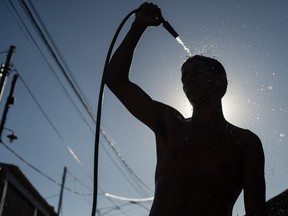
Human activities pushed global warming to 1.37 C above pre-industrial times in 2025, and its level is projected to surpass 1.5 C in about four years, climate scientists with the Copernicus Climate Change Service warned this week.
Article content
Some of the key findings from the latest Indicators of Global Climate Change report are that global greenhouse gas emissions are at an all-time high and that 2025 was the third warmest year on record.























/https%3A%2F%2Fsportsmole-media-prod.s3.gra.io.cloud.ovh.net%2Fuploads%2F2026%2F05%2Fscheffler-6a034d9fca412032057779.jpg)
/https%3A%2F%2Fsportsmole-media-prod.s3.gra.io.cloud.ovh.net%2Fuploads%2F2026%2F06%2Ficonsport-111147-0089-1-6a27d006a81d1227497324.jpg)
/https%3A%2F%2Fsportsmole-media-prod.s3.gra.io.cloud.ovh.net%2Fuploads%2F2026%2F06%2Fimago-xinhua-nestory-irankunda-celebrates-scoring-for-australia-in-the-world-cup-on-june-14-2026-6a2f348854d1b663111439.jpg)
 Bengali (BD) ·
  English (US) ·