.png)
 1 hour ago
6
1 hour ago
6
Three days after Tiffany McElroy was taken to an Alabama jail just north of the Florida state line, she felt her water break.
Subscribe to read this story ad-free
Get unlimited access to ad-free articles and exclusive content.

Her baby was coming several weeks early, and McElroy, 26, would later learn she was experiencing a pregnancy complication that could deteriorate into sepsis. She told a guard that her water had broken, expecting her to call an ambulance or take her to a hospital.
Instead, according to a federal lawsuit filed in the Middle District of Alabama, another guard who checked on her that morning in May 2024 accused her of urinating on herself and told her to go back to her cell. Over the next 24 hours, the complaint alleges, McElroy was at the mercy of jail staff members who failed to call 911 as other inmates beat their cell windows and tables, begging for help.
Health professionals, according to the lawsuit, provided McElroy with only a diaper and Tylenol as pain racked her body and she feared for her baby.
“Just — it was such a strong sense of fear,” McElroy, now 28, said in an interview with NBC News. “It just overtook me, like I was completely out of it.”
A fellow inmate ultimately helped McElroy as she pushed out a baby girl who wasn’t breathing, according to the lawsuit. Two women in her pod, the complaint says, worked to resuscitate the newborn, sucking mucus from her mouth and rubbing her until she began to cry.
 McElroy alleges in a lawsuit that after she went into labor at the Houston County Jail in Dothan, staff members ignored her pleas for help.Charity Rachelle for NBC News
The filing alleges that what happened that day was the result of multiple failures in the Houston County Jail, including a system in which budget-wary local officials prioritized cost savings over ensuring adequate care for inmates. Twenty defendants — including guards on duty while McElroy was in labor, a nurse, a physician’s assistant and the county sheriff, who runs the jail — are named in the complaint and accused of violating her constitutional rights.
“Ms. McElroy was basically being tortured over the course of hours, and that should really make all of the hairs stand up on everybody’s necks, regardless of what people think about people who are incarcerated,” Karen Thompson, the legal director for Pregnancy Justice, which is representing McElroy in the suit alongside the Southern Poverty Law Center, told NBC News. “I think we can all agree this is not the way to treat a pregnant person, and this most certainly is not the way to treat someone in labor and delivery.”
The Houston County Sheriff’s Office didn’t respond to requests for comment.
Kathy Youngblood, a former deputy at the jail and one of the defendants in the lawsuit, called the incident “barbaric” in an interview with NBC News.
“I tried to help her, but I was told I was going to be fired if I did help her, so I could not assist,” Youngblood said.
Brandon Shoupe, the Houston County Commission chairman, declined to comment, citing the pending legal matter.
The lawsuit paints a picture of dangerous gaps in pregnancy and postpartum care that advocates say loom over those incarcerated in Alabama, which leads the nation in pregnancy criminalization cases. Last year, officials in Etowah County, north of Houston County, settled a lawsuit also brought by Pregnancy Justice on behalf of a woman who gave birth alone in a jail shower.
McElroy was arrested after she was accused of endangering her unborn child through substance use, a felony. Court records show she later pleaded guilty. She said she was released from custody last year.
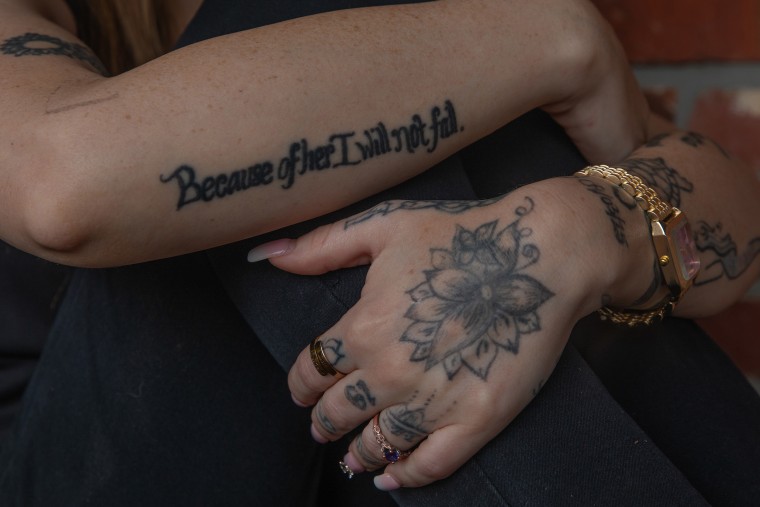 McElroy said she is still haunted by giving birth to her youngest child inside the Houston County Jail.Charity Rachelle for NBC News
Alabama’s chemical endangerment law was initially meant to target offenders exposing children to dangerous chemicals in meth cook houses, but the state’s Supreme Court has interpreted the law to also apply to pregnant women who use drugs, a practice opposed by the American College of Obstetricians and Gynecologists.
From 2022 to 2024, at least 192 people in Alabama were charged with pregnancy-related crimes, according to a report from Pregnancy Justice. Such arrests, according to Pregnancy Justice, are tied to the concept of fetal personhood, which extends legal rights to fetuses and embryos.
The mishandling of pregnancies behind bars is a widespread problem, with women around the country saying they were neglected or harmed while they were locked up. An investigation by Bloomberg Law and NBC News last year found dozens of women who were jailed, often for low-level offenses, and suffered miscarriages or excruciating births in dirty cells. Some babies died, and several of those who survived were afflicted with infections or long-term health problems, their mothers said. Two women died.
Maternal health advocates — and some law enforcement officials — say the solution is to jail fewer pregnant women, especially those charged with nonviolent crimes. Some states have tried to solve the issue by passing laws that raise standards of care or allow shorter sentences or alternatives to jail for pregnant women. Some lawmakers, including a member of Congress and a state senator in Pennsylvania, have said the Bloomberg Law/NBC News investigation prompted them to act.
McElroy, the complaint says, was roughly eight months pregnant when she was arrested. From her arrival at the facility, jailers didn’t follow their own procedures for pregnant inmates, the suit alleges.
Officials told McElroy to take a top bunk bed, the complaint says, in violation of a policy saying pregnant inmates should be assigned bottom bunks to prevent injuries and falls. One of McElroy’s pod mates switched beds with her.
Early May 26, 2024, McElroy felt her amniotic sac break in the bathroom.
“Her water broke on my shoe,” Youngblood told NBC News.
According to the lawsuit, Youngblood notified her supervisor, who brushed it off.
“They told me it wasn’t time for her, that she was playing, that there wasn’t nothing going on,” Youngblood said.
McElroy said she went back to sleep.
“I didn’t really get too terrified until the point that I realized they wasn’t coming in to check on me,” she said.
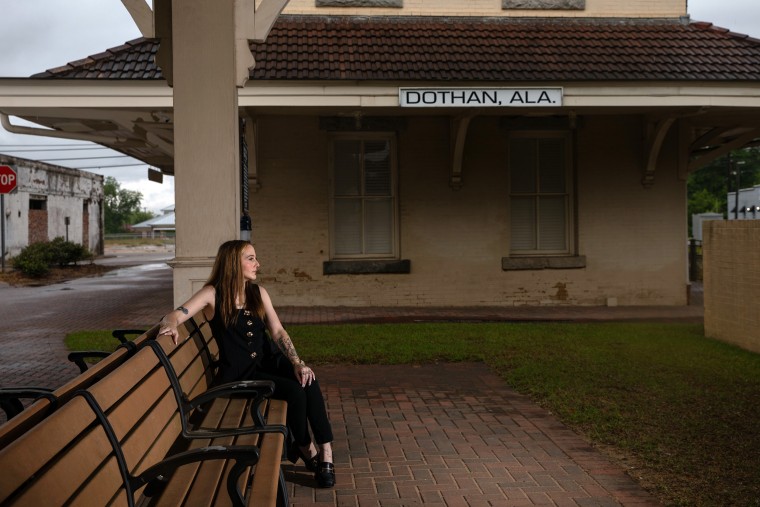 After she was released from custody, McElroy said, she's starting fresh.Charity Rachelle for NBC News
Another inmate, the complaint says, told her she wouldn’t leave her side.
Later that morning, a guard took McElroy to the jail’s medical clinic. Although McElroy was going into preterm labor, according to the lawsuit, the on-call nurse didn’t send her to the hospital. Instead, the suit alleges, McElroy was given a diaper and a clean jumpsuit and sent back to her pod to rest.
Over the course of the day, McElroy struggled to walk, according to the complaint. As her contractions intensified during the night, she screamed. When the contractions were about three minutes apart, an inmate asked a guard to call 911, the lawsuit says.
The suit alleges that a supervisor instructed a guard not to intervene because “the jail could be held accountable if anything happened to Tiffany or her baby.”
McElroy began to worry her child would become stuck in her birth canal. A pod mate told her it was time to push.
McElroy said she remembers the women in her cell kissing her and encouraging her as they delivered her limp, blue baby.
Youngblood told NBC News you could hear McElroy screaming in pain throughout the jail.
“I still dream about it,” she said. “I still ask myself: ‘What can I do? What could you do to be different? What could I have done if that baby had died?’”
During and after the birth, the complaint says, staff members berated other inmates for assisting McElroy. One guard, the lawsuit says, used a disability slur and chastised an inmate as “stupid” for helping. The complaint also alleges that a guard threatened to “tase” another inmate if she didn’t return to her bay. The jail later punished the women for helping, the suit alleges.
McElroy said she was unable to deliver her placenta. She said she was in shock as paramedics placed her on a stretcher and took her to the hospital.
Her daughter was admitted to the neonatal intensive care unit, while McElroy remained in the hospital for three days. McElroy, the lawsuit says, was diagnosed with anemia from blood loss while she was giving birth.
“At the end of the day, I felt like I was made to give birth like an animal,” McElroy said.
Thompson, of Pregnancy Justice, called McElroy’s experience “particularly egregious.”
“No one should be forced to either go through that scenario as someone who is laboring, and no one should be forced to become a midwife out of necessity like this,” she said, referring to the pod mates who helped McElroy.
The women are the reason McElroy believes she and her daughter survived. She said she remains in touch with some of them.
“I pray that they get everything in life that they deserve as a person, because they didn’t have to do anything that they did for me,” she said.
NBC News couldn’t reach the women for comment.
McElroy’s daughter is now just shy of 2 years old. McElroy said she’s a happy toddler, joking that she has a “diva” temperament. The child’s paternal grandmother, whom McElroy is close with, has temporary custody.
Since she was released, McElroy said, she has begun a new chapter, working in the hospitality industry. But at times, she said, she’s still haunted by the way her youngest daughter entered the world.

























/https%3A%2F%2Fsportsmole-media-prod.s3.gra.io.cloud.ovh.net%2Fuploads%2F2026%2F05%2Fchamp-69fa166311171530187348.jpg)

 Bengali (BD) ·
  English (US) ·