A Nebraska immigration raid shut businesses down a year ago. The fallout is ongoing, officials say.

1 hour ago 5

It’s been a year since federal immigration authorities detained 76 employees at a meatpacking plant in Nebraska’s second-largest worksite immigration raid.

Subscribe to read this story ad-free

Get unlimited access to ad-free articles and exclusive content.

But the effects are still being felt.

South Omaha’s business district has not fully recovered from the negative economic effects of the raid on the Glenn Valley Foods meatpacking company, city officials and community leaders said at a press conference Tuesday.

Following the raid last June, federal authorities had touted the operation as uncovering “massive identity theft,” accusing the immigrant workers of using stolen Social Security numbers to obtain employment.

Yet, a year later, only one woman has been charged with the crimes federal immigration authorities said drew them to the meatpacking plant in the first place. The person pleaded guilty and was sentenced to a year in prison.

“If they’re meant to make our community safer, they’re not doing that,” Roger Garcia, chairman of the Douglas County Board of Commissioners, said at the press conference about the raid and other subsequent immigration actions in Omaha.
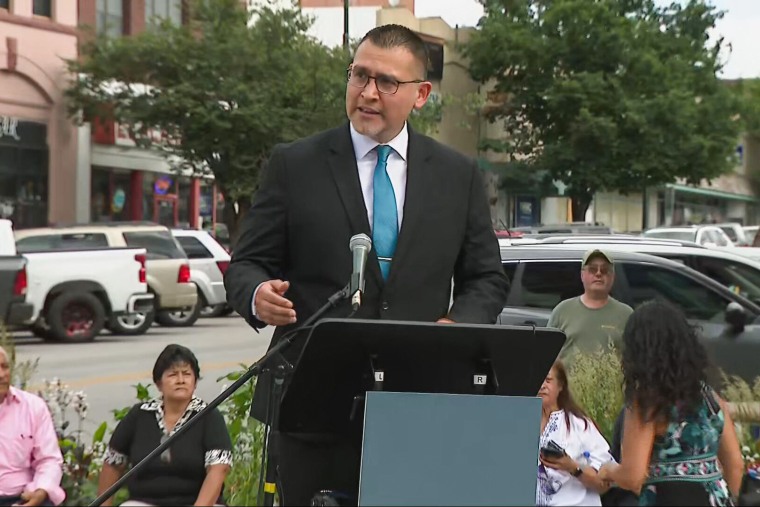
Roger Garcia speaks at a podium outside, facing away from the street, some people sit behind himDouglas County Commissioner Roger Garcia during a press conference, in Omaha, Neb., on Tuesday.WOWT

Meanwhile, the people who were detained, their families and the broader community are still dealing with the enforcement action’s ripple effects, leaders noted, as they try to mitigate the effect on local businesses. The community leaders encouraged participation in a “Day of Joy” event Wednesday to support the businesses in the predominantly Latino 24th street corridor.

Two community surveys of the South Omaha business district show that business health and customer traffic remain low.

Forty local business owners surveyed by the Nebraska Hispanic Chamber of Commerce said uncertainty, misinformation about immigration enforcement actions and ingrained fears have affected consumer behavior so dramatically that it’s hurting businesses’ ability to bounce back.

The businesses surveyed include seven restaurants and food trucks, 18 retail establishments, three construction companies and a variety of other storefronts. Three business owners said they’re planning to transition to online operations to stay afloat.

Challenges in workforce retainment have caused six businesses to shut down, said Irma Villezcas, a grocery store owner and chair of the South Omaha Business Association.

South Omaha’s business district, known as a vibrant Hispanic enclave, is still seeing the impacts of last year's immigration raid, officials and business owners say.South Omaha’s business district, known as a vibrant Hispanic enclave, is still seeing the impacts of last year's immigration raid, officials and business owners say.Dan Brouillette for NBC News

The results echo some of the findings from recent nationwide workforce studies on the economic impact of last year’s immigration raids.

A Brookings Institution study found that last year’s immigration enforcement surge across the nation cost 668,000 jobs, and those losses affected both immigrant and U.S.-born workers. Another study from the University of Colorado Boulder found immigration enforcement didn’t expand opportunities for U.S.-born workers and instead reduced employment for some of them.

‘Unlike anything we had ever seen’

Of the 76 people immigration authorities arrested at Glenn Valley Foods, close to 10 self-deported, Garcia told NBC News on Tuesday. Others who were also detained were eventually granted bond and reunited with their families, though many of them are still facing immigration proceedings.

“They have this constant pressure of being tied up in that system that might ultimately lead to deportation eventually,” said Garcia, who is the first Latino commissioner of Douglas County, where Omaha is located.

Garcia’s family was also among those directly affected by the raids. His wife’s aunt was among the meatpacking workers taken into immigration custody.

The woman, a mother of three U.S.-born children, spent a couple of months in detention before she was released on bond. Garcia said his wife’s aunt was granted a temporary work permit — alongside others who had been detained — while they wait for their next immigration court hearing.

Luis Mejía, 20, said he went to work last June at Glenn Valley Foods “thinking it would be a normal day.” The Nebraska native who was raised in South Omaha said everything changed that morning when immigration officers entered their workplace.
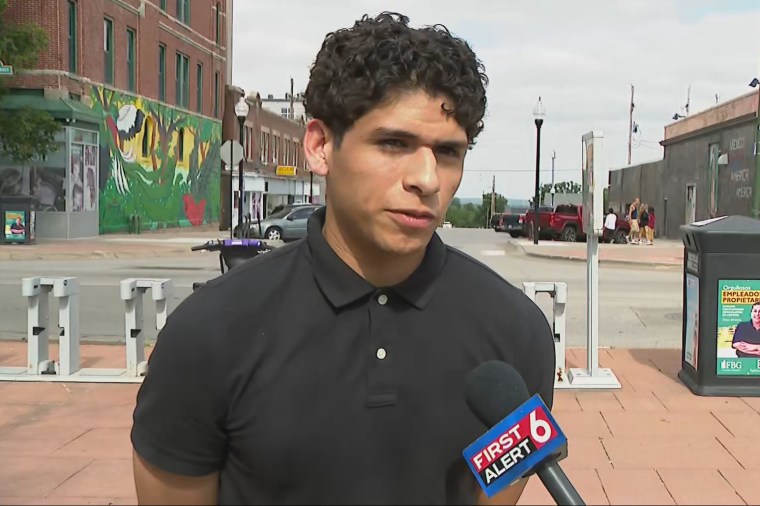
Luis Mejia speaks into a microphone being held in front of himLuis Mejia, a lifelong Nebraska resident, during an interview in Omaha on Tuesday.WOWT

As some ran away in fear, Mejía’s immigrant mother hugged him and told him to take care of his younger siblings. Then, she ran with the others.

Meanwhile, immigration officers asked Mejía to show proof of U.S. citizenship.

“I didn’t know how to do that since I’ve never been asked that before. I looked at the officer with confusion and told him I was born here,” Mejía recalled. The officers cleared him to go after looking him up in their system.

A couple of hours after authorities let him go, Mejía received a call from his mother, telling him she had been detained. After that, Mejía didn’t hear from her for a few days while she was in detention.

She was one of the at least 63 workers who were taken to the Lincoln County Detention Center, four hours away.

The situation forced Mejía and his older brother to provide for their two younger siblings while not knowing if they would get to see their mother again.

A diverse crowd of mostly Omaha residents protested workplace immigration raids in June 2025.A diverse crowd of mostly Omaha residents protested workplace immigration raids in June 2025.Dan Brouillette for NBC News

“What made this raid especially significant was what happened afterward. Many individuals were held for more than 60 hours before being processed. During those 60 hours, families did not know where their loved ones were being held and we legal service providers did not have access to them,” said Roxana Cortes-Mills, legal director at the Center for Immigrant and Refugee Advancement, an immigrant rights organization in Omaha. “It was unlike anything we had ever seen in Nebraska.”

Lina T. Stover, executive director of the Heartland Workers Center, agrees.

“One day a person may have authorization to work and remain with their family, the next day policy changes, processing delays or court decisions can place their future in jeopardy,” she said at the press conference.

Her organization supports workers in the meatpacking, construction, restaurant and cleaning industries. The group, alongside the Center for Immigrant and Refugee Advancement, were crucial in helping the families directly affected by last year’s raid.

Meatpacking employees at Glenn Valley Foods in Omaha, Neb., in June 2025.Meatpacking employees at Glenn Valley Foods in Omaha, Neb., in June 2025.Dan Brouillette for NBC News

Two other people were sentenced in connection with the events surrounding the raid at Glenn Valley Foods. One man who worked at the plant was sentenced to 14 months in prison after being convicted of wielding a box cutter while attempting to resist an immigration arrest. Another worker who protested the raid was sentenced to 22 months in prison for using a rock to assault and impede a federal officer.

“At the end of the day, only like two or three people were prosecuted with any kind of charge,” Garcia said. “It’s just really quite silly that this huge effort led to like two or three prosecutions.”

Even though Omaha police do not cooperate with ICE to enforce immigration, state police do. Garcia said he gets weekly calls informing him of individuals who have been detained by immigration officials.

“Immigration enforcement did not end a year ago,” Cortes-Mills said.

After the one worker from the Glenn Valley Foods raid was charged with identity fraud last year, Elhrick Cerdan, the assistant special agent in charge of Homeland Security Investigations who led the operation, told NBC News “that number could change.”

The Department of Homeland Security and the U.S. Attorney’s Office-District of Nebraska did not immediately respond to a request for comment regarding the investigation and the workplace raid last year.

U.S. Attorney Lesley Woods said last year that a five-year statute of limitations had expired for much of the Glenn Valley workforce that otherwise would have been similarly charged.

Demonstrators in Omaha, Neb., following immigration raids in June 2025. Demonstrators in Omaha, Neb., following immigration raids in June 2025. Dan Brouillette / Dan Brouillette for NBC News

It’s been a year since federal immigration authorities detained 76 employees at a meatpacking plant in Nebraska’s second-largest worksite immigration raid.

Subscribe to read this story ad-free

Get unlimited access to ad-free articles and exclusive content.

But the effects are still being felt.

South Omaha’s business district has not fully recovered from the negative economic effects of the raid on the Glenn Valley Foods meatpacking company, city officials and community leaders said at a press conference Tuesday.

Following the raid last June, federal authorities had touted the operation as uncovering “massive identity theft,” accusing the immigrant workers of using stolen Social Security numbers to obtain employment.

Yet, a year later, only one woman has been charged with the crimes federal immigration authorities said drew them to the meatpacking plant in the first place. The person pleaded guilty and was sentenced to a year in prison.

“If they’re meant to make our community safer, they’re not doing that,” Roger Garcia, chairman of the Douglas County Board of Commissioners, said at the press conference about the raid and other subsequent immigration actions in Omaha.

Roger Garcia speaks at a podium outside, facing away from the street, some people sit behind himDouglas County Commissioner Roger Garcia during a press conference, in Omaha, Neb., on Tuesday.WOWT

Meanwhile, the people who were detained, their families and the broader community are still dealing with the enforcement action’s ripple effects, leaders noted, as they try to mitigate the effect on local businesses. The community leaders encouraged participation in a “Day of Joy” event Wednesday to support the businesses in the predominantly Latino 24th street corridor.

Two community surveys of the South Omaha business district show that business health and customer traffic remain low.

Forty local business owners surveyed by the Nebraska Hispanic Chamber of Commerce said uncertainty, misinformation about immigration enforcement actions and ingrained fears have affected consumer behavior so dramatically that it’s hurting businesses’ ability to bounce back.

The businesses surveyed include seven restaurants and food trucks, 18 retail establishments, three construction companies and a variety of other storefronts. Three business owners said they’re planning to transition to online operations to stay afloat.

Challenges in workforce retainment have caused six businesses to shut down, said Irma Villezcas, a grocery store owner and chair of the South Omaha Business Association.

South Omaha’s business district, known as a vibrant Hispanic enclave, is still seeing the impacts of last year's immigration raid, officials and business owners say.South Omaha’s business district, known as a vibrant Hispanic enclave, is still seeing the impacts of last year's immigration raid, officials and business owners say.Dan Brouillette for NBC News

The results echo some of the findings from recent nationwide workforce studies on the economic impact of last year’s immigration raids.

A Brookings Institution study found that last year’s immigration enforcement surge across the nation cost 668,000 jobs, and those losses affected both immigrant and U.S.-born workers. Another study from the University of Colorado Boulder found immigration enforcement didn’t expand opportunities for U.S.-born workers and instead reduced employment for some of them.

‘Unlike anything we had ever seen’

Of the 76 people immigration authorities arrested at Glenn Valley Foods, close to 10 self-deported, Garcia told NBC News on Tuesday. Others who were also detained were eventually granted bond and reunited with their families, though many of them are still facing immigration proceedings.

“They have this constant pressure of being tied up in that system that might ultimately lead to deportation eventually,” said Garcia, who is the first Latino commissioner of Douglas County, where Omaha is located.

Garcia’s family was also among those directly affected by the raids. His wife’s aunt was among the meatpacking workers taken into immigration custody.

The woman, a mother of three U.S.-born children, spent a couple of months in detention before she was released on bond. Garcia said his wife’s aunt was granted a temporary work permit — alongside others who had been detained — while they wait for their next immigration court hearing.

Luis Mejía, 20, said he went to work last June at Glenn Valley Foods “thinking it would be a normal day.” The Nebraska native who was raised in South Omaha said everything changed that morning when immigration officers entered their workplace.

Luis Mejia speaks into a microphone being held in front of himLuis Mejia, a lifelong Nebraska resident, during an interview in Omaha on Tuesday.WOWT

As some ran away in fear, Mejía’s immigrant mother hugged him and told him to take care of his younger siblings. Then, she ran with the others.

Meanwhile, immigration officers asked Mejía to show proof of U.S. citizenship.

“I didn’t know how to do that since I’ve never been asked that before. I looked at the officer with confusion and told him I was born here,” Mejía recalled. The officers cleared him to go after looking him up in their system.

A couple of hours after authorities let him go, Mejía received a call from his mother, telling him she had been detained. After that, Mejía didn’t hear from her for a few days while she was in detention.

She was one of the at least 63 workers who were taken to the Lincoln County Detention Center, four hours away.

The situation forced Mejía and his older brother to provide for their two younger siblings while not knowing if they would get to see their mother again.

A diverse crowd of mostly Omaha residents protested workplace immigration raids in June 2025.A diverse crowd of mostly Omaha residents protested workplace immigration raids in June 2025.Dan Brouillette for NBC News

“What made this raid especially significant was what happened afterward. Many individuals were held for more than 60 hours before being processed. During those 60 hours, families did not know where their loved ones were being held and we legal service providers did not have access to them,” said Roxana Cortes-Mills, legal director at the Center for Immigrant and Refugee Advancement, an immigrant rights organization in Omaha. “It was unlike anything we had ever seen in Nebraska.”

Lina T. Stover, executive director of the Heartland Workers Center, agrees.

“One day a person may have authorization to work and remain with their family, the next day policy changes, processing delays or court decisions can place their future in jeopardy,” she said at the press conference.

Her organization supports workers in the meatpacking, construction, restaurant and cleaning industries. The group, alongside the Center for Immigrant and Refugee Advancement, were crucial in helping the families directly affected by last year’s raid.

Meatpacking employees at Glenn Valley Foods in Omaha, Neb., in June 2025.Meatpacking employees at Glenn Valley Foods in Omaha, Neb., in June 2025.Dan Brouillette for NBC News

Two other people were sentenced in connection with the events surrounding the raid at Glenn Valley Foods. One man who worked at the plant was sentenced to 14 months in prison after being convicted of wielding a box cutter while attempting to resist an immigration arrest. Another worker who protested the raid was sentenced to 22 months in prison for using a rock to assault and impede a federal officer.

“At the end of the day, only like two or three people were prosecuted with any kind of charge,” Garcia said. “It’s just really quite silly that this huge effort led to like two or three prosecutions.”

Even though Omaha police do not cooperate with ICE to enforce immigration, state police do. Garcia said he gets weekly calls informing him of individuals who have been detained by immigration officials.

“Immigration enforcement did not end a year ago,” Cortes-Mills said.

After the one worker from the Glenn Valley Foods raid was charged with identity fraud last year, Elhrick Cerdan, the assistant special agent in charge of Homeland Security Investigations who led the operation, told NBC News “that number could change.”

The Department of Homeland Security and the U.S. Attorney’s Office-District of Nebraska did not immediately respond to a request for comment regarding the investigation and the workplace raid last year.

U.S. Attorney Lesley Woods said last year that a five-year statute of limitations had expired for much of the Glenn Valley workforce that otherwise would have been similarly charged.

Demonstrators in Omaha, Neb., following immigration raids in June 2025. Demonstrators in Omaha, Neb., following immigration raids in June 2025. Dan Brouillette / Dan Brouillette for NBC News

*** Disclaimer: This Article is auto-aggregated by a Rss Api Program and has not been created or edited by Bdtype.

(Note: This is an unedited and auto-generated story from Syndicated News Rss Api. News.bdtype.com Staff may not have modified or edited the content body.

Please visit the Source Website that deserves the credit and responsibility for creating this content.)

Watch Live | Source Article