.png)
 3 days ago
23
Tom Hardy’s Harry Da Souza has spent two seasons putting out fires for the Harrigans, but the London crime family is far from out of the woods. MobLand Season 2 concludes on November 20, 2026, with its tenth episode, The Queen Is Dead. As detailed in FandomWire’s Season 2 finale, coordinated police raids and internal betrayals threaten to dismantle the Harrigan empire. Fortunately, Paramount+ renewed the series for a third season in September, securing the return of Hardy, Pierce Brosnan, and Helen Mirren.
With an 83% average Rotten Tomatoes critics’ score and a 75% audience rating, Ronan Bennett’s crime drama has established a respectable foothold in the genre. However, several predecessors have explored criminal hierarchies, generational corruption, and moral bankruptcy with greater finesse. Ranked by narrative craftsmanship, performances, critical reception, and cultural influence, these six crime dramas give MobLand a run for its money.
6 Gomorrah Strips Crime of Glamour
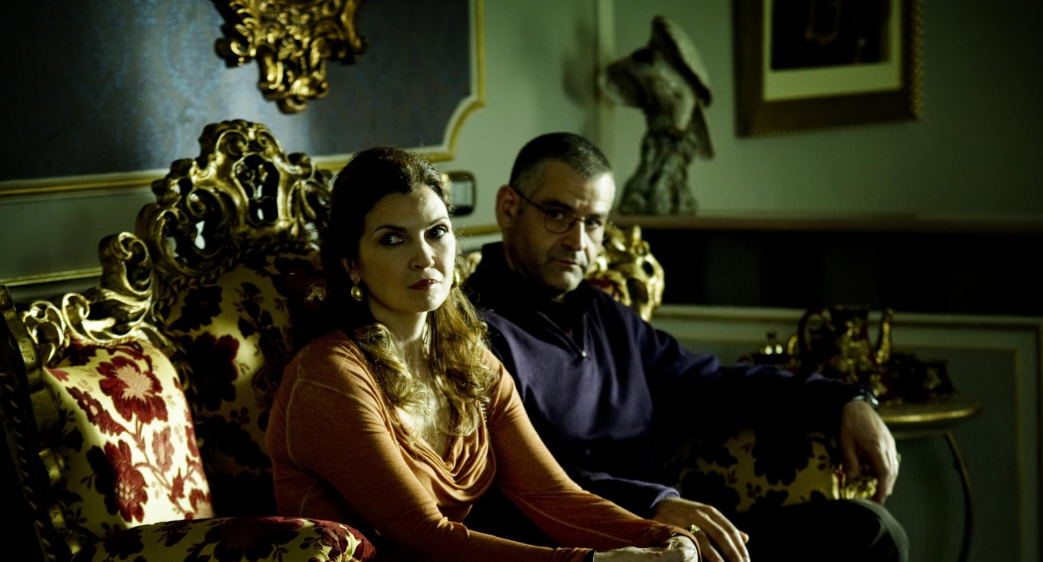 Credit: Emanuela Scarpa/Sundance TV
Inspired by Roberto Saviano’s bestselling investigative book, Gomorrah plunges viewers into the Neapolitan Camorra, where loyalty has an alarmingly short shelf life. Running from 2014 to 2021, the Italian crime drama spans five seasons and 58 episodes. It holds an 85% critics’ score and a 93% audience rating on Rotten Tomatoes. Marco D’Amore’s Ciro Di Marzio, much like Harry Da Souza, operates within a volatile criminal dynasty. His relationship with Gennaro Savastano (Salvatore Esposito) becomes the backbone of an increasingly vicious power struggle.
Where MobLand occasionally revels in its charismatic gangsters, Gomorrah offers little romanticism. Its unvarnished depiction of poverty, drug trafficking, and territorial warfare dismantles the seductive image of organized crime. Even its protagonists feel expendable, making every betrayal considerably more unnerving.
5 Boardwalk Empire Weaponizes Politics
 Credit: HBO
Steve Buscemi’s Enoch “Nucky” Thompson makes a lucrative business out of exploiting Prohibition in 1920s Atlantic City. Created by The Sopranos writer Terence Winter, the HBO drama ran for five seasons between 2010 and 2014. Martin Scorsese directed its pilot and served as an executive producer. The series accumulated 20 Primetime Emmy wins from 57 nominations, alongside a 92% average Tomatometer score. Its incorporation of historical gangsters, including Al Capone and Lucky Luciano, lends considerable authenticity to its fictionalized criminal enterprise.
Unlike the Harrigans’ predominantly familial disputes, Nucky’s operations expose the marriage between political authority and criminal wealth. Elections, legislation, and social upheaval carry as much narrative weight as gangland executions. Its meticulous period reconstruction is the icing on the cake.
4 Peaky Blinders Redefines Gang Warfare
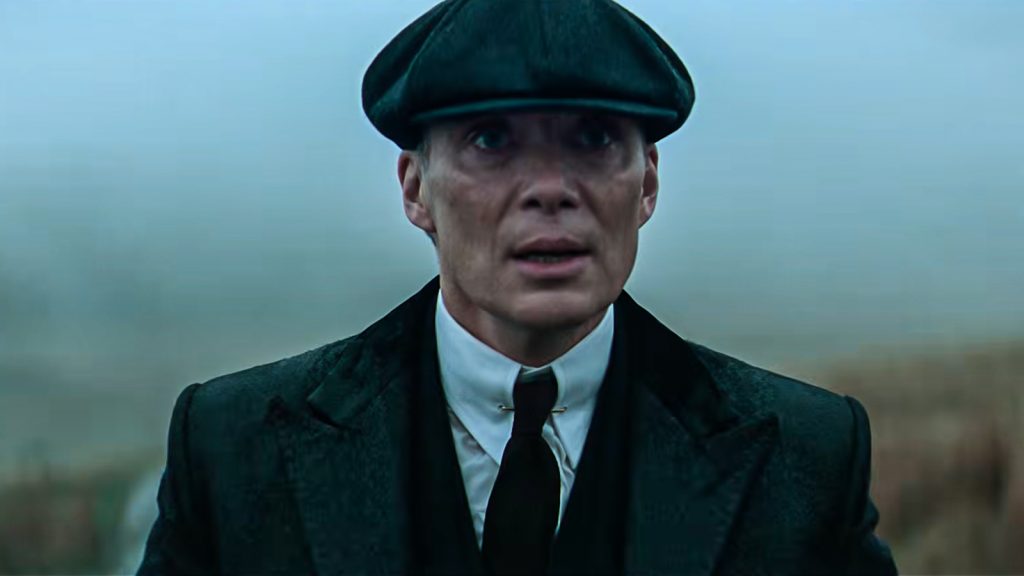 Credit: Netflix
Steven Knight’s Birmingham gangster saga follows Cillian Murphy’s Thomas Shelby, a traumatized World War I veteran who transforms his family’s street gang into a formidable criminal enterprise. The original series ran for six seasons from 2013 to 2022, winning four BAFTAs. Murphy’s portrayal gives Tommy a psychological complexity that distinguishes him from conventional mob bosses. His ambitions repeatedly collide with wartime trauma, political extremism, and familial obligations. The franchise remains commercially viable four years after its television finale.
Netflix released Peaky Blinders: The Immortal Man on March 20, 2026. Knight also confirmed plans for the sequel series in an interview with The Playlist:
There’s a time jump to the early ’50s, so we’ll pick up the story there.
Radio Times subsequently confirmed Jamie Bell and Charlie Heaton’s involvement as Tommy’s sons. For viewers craving another British criminal dynasty, the Shelbys are arguably the Harrigans’ fiercest competition.
3 Breaking Bad Dissects Moral Decay
 Credit: AMC
Few television protagonists have undergone a transformation as meticulously constructed as Bryan Cranston’s Walter White. Vince Gilligan’s AMC drama aired between 2008 and 2013, following a chemistry teacher whose cancer diagnosis precipitates his descent into the methamphetamine trade. Across five seasons, Breaking Bad secured 16 Emmy wins from 58 nominations. Cranston won four lead actor Emmys, while Aaron Paul collected three supporting actor trophies.
Its 96% critics’ score and 97% audience rating reinforce its enduring reputation. Unlike Harry, whose criminal identity is established from the outset, Walter constructs his through incremental moral compromises. Gilligan also excels at narrative cause and effect. Seemingly innocuous decisions can have devastating repercussions several episodes later, making the storytelling exceptionally rewarding on subsequent viewings.
2 The Wire Indicts Broken Institutions
 Credit: HBO
David Simon’s The Wire treats Baltimore’s drug trade as a symptom of institutional dysfunction rather than an isolated criminal phenomenon. Across five seasons, the HBO drama examines law enforcement, dockworkers, municipal politics, public education, and journalism. It boasts a 94% average critics’ score and a 96% audience rating, with its third and fourth seasons both earning 100% Tomatometer scores. During a discussion covered by the Los Angeles Times, Simon invoked Greek tragedies to explain his characters’ seemingly inevitable fates:
Strap on a helmet, get in the game and read Antigone. Read Medea. It had to happen.
Characters such as Stringer Bell and Omar Little challenge conventional distinctions between legitimate enterprise and criminality. While MobLand concentrates on who controls the underworld, The Wire interrogates the economic and political conditions allowing that underworld to flourish.
1 The Sopranos Dethrones the Mob Myth
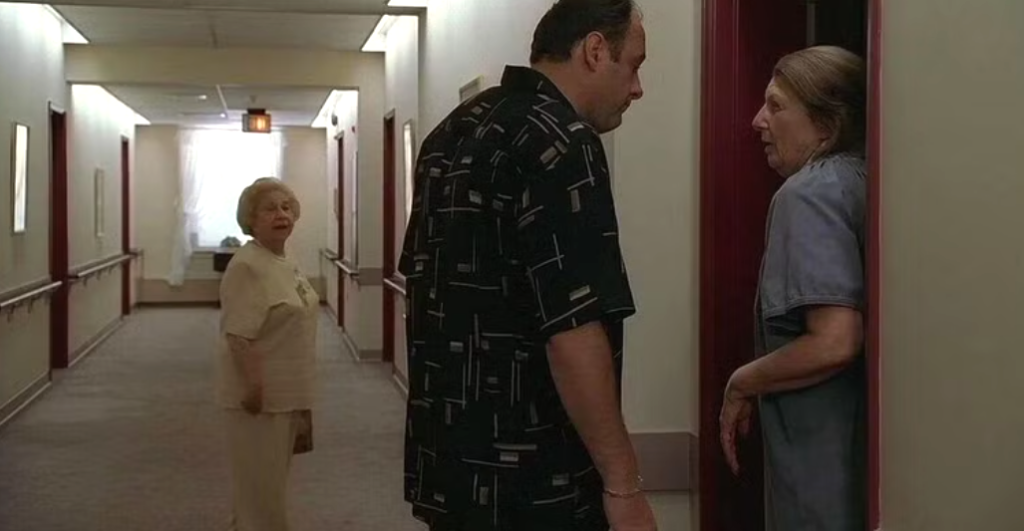 Credit: HBO
David Chase’s seminal HBO drama remains the gold standard for television’s exploration of organized crime. Across six seasons and 86 episodes, The Sopranos earned 21 Emmy wins from 111 nominations, alongside a 92% critics’ score and 96% audience rating. James Gandolfini’s Tony Soprano navigates New Jersey’s Mafia while confronting panic attacks, domestic troubles, and existential dissatisfaction. Chase described his unconventional premise in an interview with the Television Academy:
[The Sopranos] was just this idea about a mobster in therapy.
The series’ greatest triumph lies in making its domestic conflicts as gripping as its criminal conspiracies. Tony’s psychological contradictions, Carmela’s complicity, and Christopher’s self-destructive ambitions give the ensemble extraordinary depth. Even without its trailblazing influence on prestige television, The Sopranos tops this ranking for its intricate characterization and refusal to offer its protagonist moral absolution.
Which crime drama do you think outclasses MobLand? Share your picks in the comments, and follow FandomWire for more television coverage.
MobLand is available to stream on Paramount+ (U.S.).





















 Bengali (BD) ·
 English (US) ·